


XINJIANG: Every summer, the vast dunes of China’s Kumtag Desert transform into an unusual wellness destination, drawing visitors eager to experience a traditional form of sand therapy that has been practised for generations in the Xinjiang Uygur Autonomous Region.
Between June and August, tourists travel to Shanshan County in Turpan, where they are partially buried in naturally heated desert sand as part of an ancient Uygur therapeutic treatment believed to improve circulation, stimulate metabolism and relieve symptoms associated with rheumatic conditions.
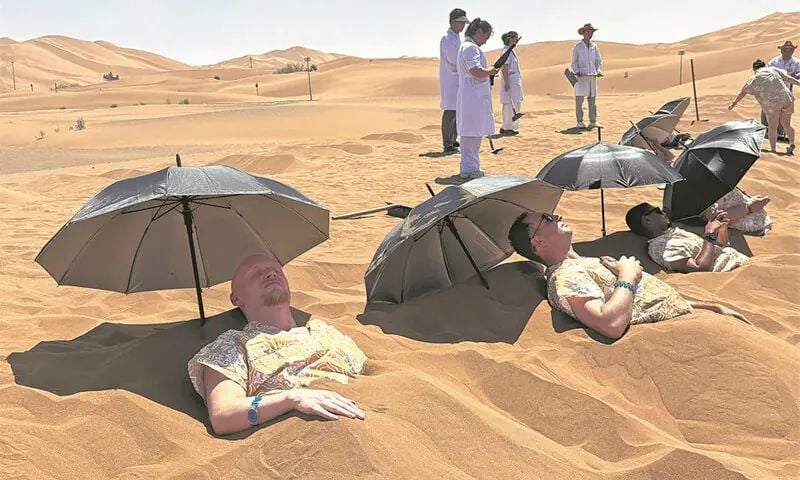
According to China Daily, the treatment, carried out at the edge of the Kumtag Desert, involves participants being buried up to their chests in hot sand while resting beneath sun umbrellas. Sessions typically last around 20 minutes, allowing visitors to experience the intense dry heat of one of China’s hottest regions.
Among those trying the therapy was South African visitor Tswelopele Makoe, who described the experience as deeply calming and unlike anything she had encountered before. She said the session left her feeling exceptionally relaxed, comparing the sensation to floating peacefully.
Turpan, situated in China’s lowest basin, regularly records summer temperatures of around 40°C while receiving minimal annual rainfall, creating ideal natural conditions for the therapy. The desert sand can reach temperatures of nearly 50°C during the hottest months.
According to staff at Shanshan County’s Uygur medicine hospital, which has operated the sand therapy centre since July 2024, the intense warmth encourages heavy perspiration, boosts blood circulation and helps stimulate the body’s natural metabolic processes.
Practitioners also believe the treatment supports detoxification through sweating and provides relief for people suffering from rheumatic and rheumatoid arthritis.
The centuries-old practice has become an increasingly popular attraction, combining traditional medicine with wellness tourism and offering visitors a distinctive cultural experience in one of China’s most extreme landscapes.