
Key Points
- The South Korean Foreign Ministry, however, reserved a decision on whether the attack may have been intentionalOne crew member was injured after explosions and fire erupted aboard the ship earlier this month
ISLAMABAD: South Korea said on Wednesday it would summon Iran’s ambassador in Seoul to lodge a formal protest after investigators concluded that Iranian-developed anti-ship missiles were likely used in an attack on a South Korean vessel in the Strait of Hormuz earlier this month.
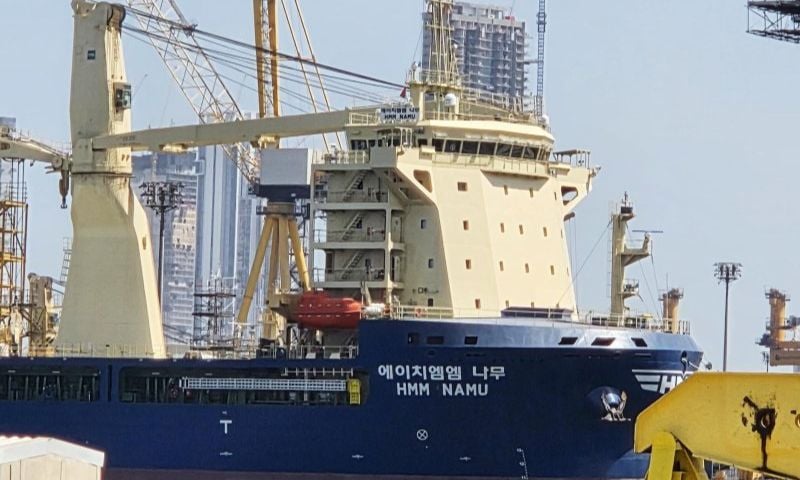
South Korea’s Foreign Ministry said a weeks-long investigation into the May 4 incident found that the “unidentified airborne objects” that struck the vessel were likely Noor-series anti-ship missiles developed and operated by Iran.
“Technical analysis concluded that the unidentified airborne objects were likely Noor-series anti-ship missiles developed by Iran,” First Vice Foreign Minister Park Yoon-joo told a press briefing in Seoul.
“The ministry, however, reserved a decision on whether the attack may have been intentional,” according to the South Korean media.
The vessel HMM Namu, operated by major South Korean shipping company HMM Co., was hit while stranded in the strategically vital Strait of Hormuz during heightened tensions in the ongoing US-Iran confrontation.
A South Korean government investigation team conducted an extensive forensic analysis of debris recovered from the scene to determine the nature of the attack and identify those responsible.
The foreign ministry said Seoul would summon the Iranian envoy to demand “responsible measures, including steps to prevent a recurrence,” after the probe linked the strike to Iranian-made weapon systems.
Officials, however, stopped short of directly accusing Tehran of intentionally targeting the vessel, saying the exact perpetrator and motive behind the attack could not yet be conclusively confirmed.
The attack triggered explosions and a fire aboard the ship, injuring one of the 24 crew members, though no fatalities were reported.
The Strait of Hormuz remains one of the world’s most sensitive maritime chokepoints, carrying a substantial share of global oil and liquefied natural gas shipments.
The incident has added to growing international concern over the security of commercial shipping routes amid escalating tensions between Washington and Tehran.