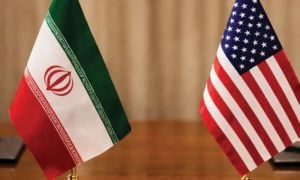



ISLAMABAD: Shipping traffic through the Strait of Hormuz increased over the past 24 hours for the first time since late last week as US President Donald Trump announced that the United States and Iranian negotiators would meet in Doha for talks under the Pakistan-brokered Islamabad Memorandum of Understanding (MoU).
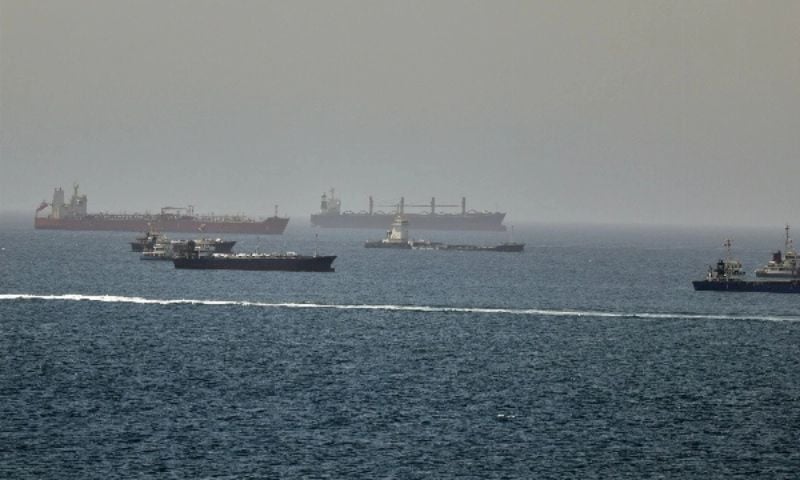
According to ship-tracking data from Kpler, cited by Bloomberg, a total of 24 commodity vessels, including oil tankers, liquefied natural gas (LNG) carriers, liquefied petroleum gas (LPG) carriers and bulk carriers, transited the strategic waterway in both directions on Monday.
The increase marked the first rise in tanker traffic since late last week, when attacks on commercial vessels prompted many shipowners to delay or suspend transits through the world’s most important oil shipping lane.
However, traffic remained around 90 percent below normal levels. More than 130 vessels typically pass through the Strait each day.
The data showed that more vessels entered the Arabian Gulf than departed, with several supertankers sailing inbound on Monday.
The trend suggested that oil producers and shipowners had become more confident that the vessels would later be able to leave the Gulf fully loaded with crude oil.
Iran also resumed oil loadings from Kharg Island, its main export terminal, after the United States waived sanctions on Iranian oil sales, including transactions in US dollars, until August 21 as part of the Islamabad MoU between the US and Iran.
Shipping through the Strait had slowed sharply over the weekend after attacks on commercial vessels and subsequent US military strikes on Iranian targets heightened concerns over maritime security.
Trump announces US-Iran talks in Doha
US President Donald Trump said on Monday that American and Iranian negotiators would meet in Doha on Tuesday following a request from Tehran.
“Iran has requested a meeting. It will take place tomorrow in Doha,” Trump wrote on his Truth Social platform.
— Rapid Response 47 (@RapidResponse47) June 29, 2026
The planned meeting comes after Washington and Tehran agreed to halt military strikes and resume negotiations under the Islamabad Memorandum of Understanding, signed on June 18 with Pakistan acting as mediator.
A US official told AFP on Sunday that both sides had agreed to suspend military action and continue negotiations.
“Technical talks are slated to continue on all areas of the MOU,” the official said in an emailed statement. “Both sides will stand down for now, and vessels can move freely.”
Iran denied that technical negotiations had been scheduled. Deputy Foreign Minister Kazem Gharibabadi said no meetings between Iranian and US technical teams had been planned for the working groups established under the Islamabad MoU, according to Iranian state television.
Iran’s semi-official Tasnim news agency also quoted Gharibabadi as describing reports of technical talks in Doha as “untrue”.
Trump wants diplomacy
The White House said President Trump wanted diplomacy to continue while remaining prepared to respond to any further attacks.
“The president obviously wants to see the peace process play out, and the Iranians would be best to sign a good deal with the United States of America, because the president has proven he’s unafraid to use the might of our military,” White House spokeswoman Karoline Leavitt told Fox News.
Leavitt said Special Envoy Steve Witkoff and senior adviser Jared Kushner would travel to Doha for high-level meetings.
“Special Envoy Witkoff and Jared Kushner will be flying to Doha for high-level meetings this week, as we continue to discuss the memorandum of understanding. On the sidelines of those high-level talks, there will be the technical talks,” she said.
Trump also said oil prices had fallen despite recent tensions.
“WTI crude — $69, and heading down. This is less than it was prior to the start of the denuclearisation of Iran,” he wrote on Truth Social.
In a separate post, he said petrol prices were “coming down, fast” and urged consumers to report excessive retail prices.
Pakistan urges adherence to ceasefire
The renewed diplomatic effort follows days of military confrontation despite the ceasefire framework agreed on June 17.
Pakistan, which brokered the ceasefire and mediated subsequent negotiations, renewed its call for all parties to honour the agreement.
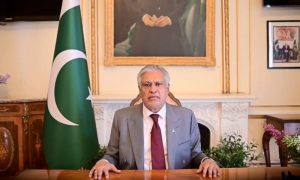
Pakistan’s Deputy Prime Minister and Foreign Minister Ishaq Dar on Sunday stressed the need for all parties to the Middle East conflict to uphold the ceasefire agreement.
Dar made the remarks during a phone call with European Union High Representative for Foreign Affairs and Security Policy Kaja Kallas.
During the telephone conversation, Dar and Kallas reviewed the evolving regional situation, according to a statement issued by Pakistan’s Foreign Office.
Ishaq Dar informed the EU’s top diplomat about Pakistan’s continued diplomatic efforts towards a comprehensive framework for peace and stability in the region.
“He also emphasised the necessity for all parties to abide by the ceasefire agreement,” the Foreign Office statement read.
Pakistan’s diplomatic efforts
Pakistan is the main mediator between the US and Iran after it secured a ceasefire on April 08 and hosted the highest level of talks between the two nations on April 12 and 13 in Islamabad.
On June 18, Prime Minister Shehbaz Sharif, President Donald Trump and Iranian President Masoud Pezeshkian signed the Islamabad Memorandum of Understanding to end hostilities and launch further negotiations.
On June 21, Pakistan and Qatar mediated the high-level US-Iran talks in Switzerland.
The first round of Pakistan and Qatar mediated US-Iran talks, led by US Vice President JD Vance and Iran’s Parliament Speaker Mohammad Baqer Ghalibaf, was held in Switzerland a week ago, and Washington waived sanctions on Tehran.
After the talks, Pakistan and Qatar announced significant progress in diplomatic efforts between the US and Iran following the conclusion of the first round of high-level talks in Switzerland.
Oil prices decline
Oil prices edged lower on Tuesday as investors weighed the prospect of renewed diplomacy against continued uncertainty over negotiations and global demand.
Brent crude futures for August delivery fell 64 cents, or 0.9 percent, to $72.51 a barrel in early trading, while the more actively traded September contract declined 31 cents, or 0.4 percent, to $73.60.
US West Texas Intermediate crude for August delivery fell 39 cents, or 0.6 percent, to $70.36 a barrel.
Market participants said expectations of renewed dialogue had reduced the geopolitical risk premium that had pushed oil prices sharply higher during the recent conflict.