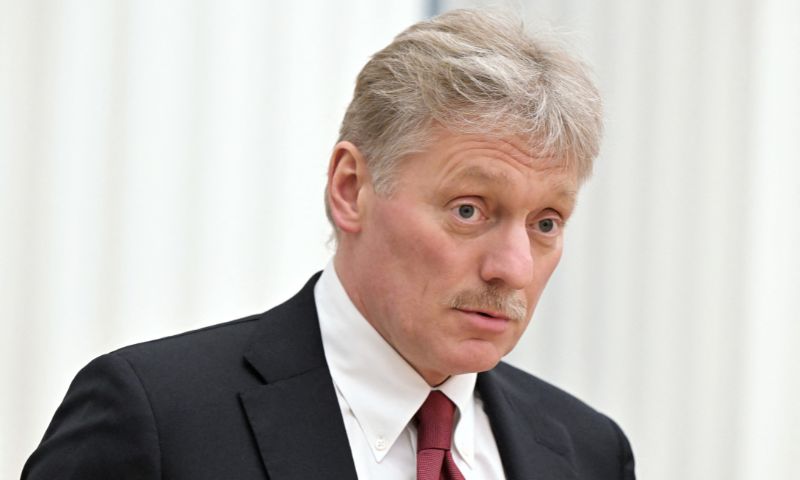



MOSCOW: Russia on Monday expressed hope that negotiations between the United States and Iran would continue to avoid negative consequences for the Gulf region and the global economy as Washington and Tehran are set to convene the second round of talks in Islamabad.
Kremlin spokesman Dmitry Peskov said the situation in the Gulf remained “fragile and unpredictable” and stressed the need to avoid a further escalation towards a military confrontation.
“We hope that the negotiation process will continue and that we will be able to avoid a further escalation towards a military scenario,” Peskov told reporters.
The spokesperson said that Russia was not acting as a mediator but remained open to supporting diplomatic efforts if requested.
“Russia is not currently a mediator in the negotiation process, but we are ready to provide any assistance to facilitate a peaceful resolution and help reach an agreement,” he said.
US-Iran talks in Islamabad on track
Diplomatic efforts have focused on Islamabad, where a second round of US–Iran talks is scheduled to commence as the US negotiation team is set to land today.
The US and Iran have privately assured participation in a second round of talks in Islamabad, despite public rhetoric and mixed signals from Tehran.
Syed Muhammad Ali, a senior security analyst, told We News English that both sides remain committed to dialogue and that recent statements by the US and Iranians were largely aimed at domestic audiences rather than reflecting a breakdown in diplomacy.
“Despite public posturing, both Iran and the US have assured participation in the second round of talks in Islamabad,” he said, adding that the rhetoric was primarily intended for domestic audiences and that the talks were expected to proceed as planned.
Pakistan has stepped up high-level contacts with both Washington and Tehran over the past 24 hours to keep the talks on schedule, expressing confidence that negotiations will proceed as planned.
The renewed push comes as a ceasefire between the two sides approaches its expiry on April 22, increasing pressure to secure an extension or broader agreement.
I had a warm and constructive conversation with President Dr. Masoud Pezeshkian this evening on the evolving regional situation.
I appreciated Iran’s engagement, including its high-level delegation to Islamabad for the historic talks, and recent discussions with Field Marshal…
— Shehbaz Sharif (@CMShehbaz) April 19, 2026
Active and constructive engagement
While Iran’s foreign ministry has said no final decision has been made on participation, Pakistani security analysts indicated that behind-the-scenes engagement remains active and constructive.
Security analysts in Islamabad said discussions are expected to focus on extending the ceasefire and moving towards a more comprehensive settlement.
Pakistan, which brokered the initial 14-day truce earlier this month, continues to position itself as an “honest broker”, facilitating communication between the two sides.
The first round of talks helped establish rare direct channels between Washington and Tehran, laying the groundwork for continued engagement despite ongoing tensions.
Security analysts said progress so far, combined with intensified diplomatic outreach, offers a realistic opportunity to sustain dialogue and prevent escalation.
Pakistan’s Prime Minister Shehbaz Sharif has also remained actively engaged, holding discussions with regional leaders and Iranian President Masoud Pezeshkian to build support for the peace process.
Deputy Prime Minister and Foreign Minister Ishaq Dar has emphasised that Pakistan’s objective goes beyond a temporary truce, aiming instead for a lasting and comprehensive resolution.
US negotiators arriving in Islamabad
On Sunday, US President Donald Trump said American negotiators would head to Islamabad on Monday.
Trump struck a sharply different tone, warning that failure to reach a deal could have severe consequences for Iran, and urging Tehran to accept what he described as a final opportunity.
IRANIAN STATE TV: Iran does not currently plan to participate in further talks with Washington.
PRESIDENT TRUMP to FOX correspondent: “If Iran does not sign this deal, the whole country is getting blown up.”
"LAST CHANCE FOR IRANIANS"
— Donald J Trump Posts TruthSocial (@TruthTrumpPost) April 20, 2026
The situation has been further complicated by developments in the Strait of Hormuz, where Iran has again restricted shipping, linking any reopening to the lifting of US measures on its ports.
Meanwhile, Iran’s parliament speaker, Mohammad Bagher Ghalibaf, said Tehran remained engaged in dialogue but was prepared for escalation, reflecting deep mistrust of Washington.