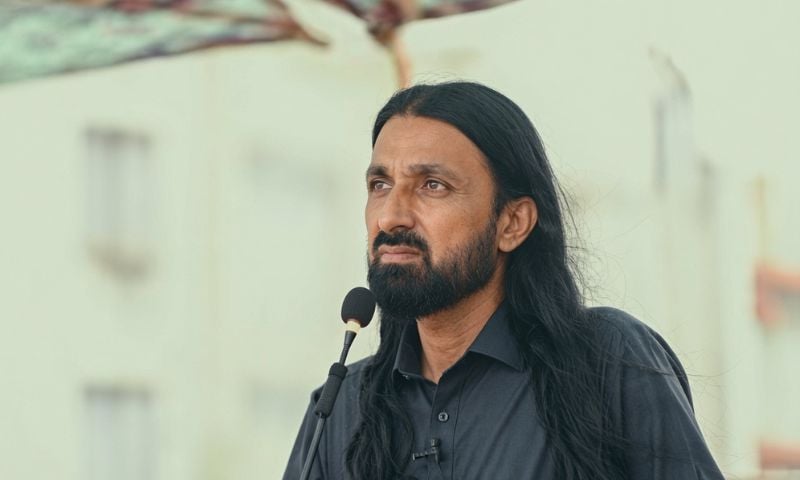



ISLAMABAD: The arrest of proscribed Pashtun Tahaffuz Movement (PTM) central committee member and information coordinator Zubair Shah Agha was part of a law enforcement crackdown on the banned organisation for violating state regulations and promoting anti-state narratives, security officials said.
Pakistan designated the PTM as a proscribed organisation under the Anti-Terrorism Act (ATA), citing its active involvement in creating domestic instability, holding illegal gatherings, aiding terrorism, and directly clashing with law enforcement personnel.
Zubair Shah Agha’s custody by the Quetta Police is part of a series of targeted legal measures intended to check the activities of a banned organisation trying to build cross-provincial alignment with the Baloch Yakjehti Committee (BYC), and supporting extremist and terrorist organisations like the banned Balochistan Liberation Army and Balochistan Liberation Front, security officials said.
From the perspective of Pakistan’s security apparatus, the nexus between the PTM and the BYC represents a coordinated effort by foreign proxies designed to destabilise the country under the guise of human rights and civil rights activism.
Enforcement of anti-terrorism laws against banned groups
According to the security officials, the detention of Zubair Shah Agha is a lawful action taken against a member of a formally proscribed organisation under Pakistan’s Anti-Terrorism Act. Law enforcement agencies are legally obligated to restrict the movement, assembly, and public messaging of any individual representing an entity banned for threatening national integrity.
Neutralising the PTM-BYC destabilisation nexus
The operational alliance between PTM and BYC at the Quetta camp represents a calculated attempt to merge ethnic fault lines and create artificial instability in strategically sensitive border regions. This coordination is not an organic political activism, but a dangerous alignment meant to disrupt public order and compromise national security.
Also Read: Pashtun Tahafuz Movement’s Selective Outrage
Exposing the subversive nature of foreign proxies
Sovereign states have a duty to investigate groups whose funding patterns, high-decibel international lobbying, and digital campaigns closely mirror the geopolitical objectives of hostile foreign intelligence agencies. The highly coordinated, anti-state rhetoric of PTM and BYC points toward an external proxy agenda designed to undermine Pakistan’s economic projects and security forces.
Zero tolerance for the endorsement of terrorism
Political dissent loses all democratic legitimacy the moment its core leadership openly validates, rationalises, or coordinates with armed terrorist groups like the BLA, BLF, or TTP (Tehrik-e-Taliban Pakistan). Pakistan’s judicial and security apparatus cannot tolerate groups that act as ideological wings or narrative shields for terrorists who actively kill civilians and security personnel.
Weaponising the “missing persons” narrative as political spin
The PTM and BYC consistently weaponise unverified allegations of “enforced disappearances” to generate emotional public outrage and manipulate international organisations, security officials said.
In reality, many of these individuals are either undergoing standard, intelligence-led screenings or have fled to join hostile terror camps operating across the border.
Rejecting external interference and upholding sovereignty
The state of Pakistan rejects the selective morality and interference of foreign human rights organisations and overseas chapters that ignore the realities of cross-border hybrid warfare. National security screenings and legal detentions are internal matters conducted within domestic constitutional frameworks to safeguard 240 million citizens from state-sponsored terrorism.