ISLAMABAD: For the first time in history, the Pakistan Meteorological Department (PMD) has used artificial rain over the Hindukush and Himalayan mountain ranges to increase rainfall in the upper regions.
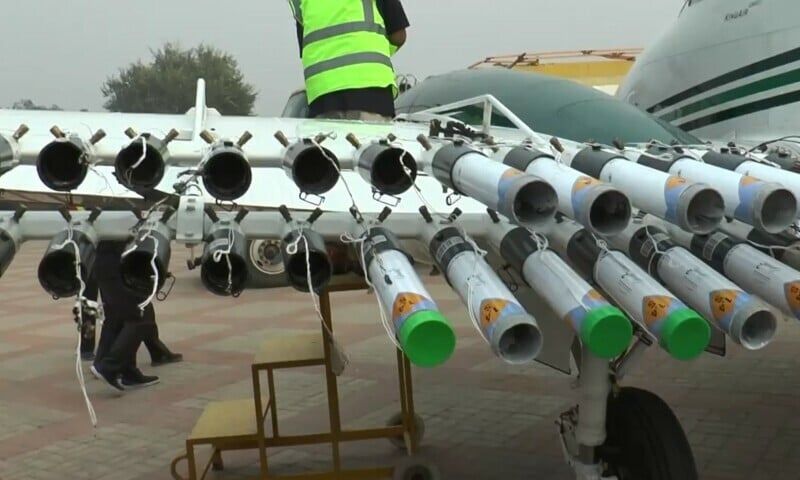
According to the weather department, the cloud seeding operation was carried out on 28 December 2025, using an aircraft. The operation ensured real-time meteorological evaluation, scientific oversight, and strict safety compliance.
Two cloud seeding sorties were flown over Khyber Pakhtunkhwa and Gilgit-Baltistan, targeting suitable cloud systems at operational altitudes, authorities reported.
Pakistan Meteorological Department has successfully conducted Cloud seeding operations on 28 December 2025, marking a historic milestone as the Hindukush and Himalayan mountain ranges were seeded for the first time in history.#CloudSeeding #RainEnhancement #PMD #NCRE pic.twitter.com/xKmdkCf0cw
— Pak Met Department محکمہ موسمیات (@pmdgov) January 1, 2026
The missions, carried out as part of the National Centre for Rain Enhancement (NCRE) initiative, resulted in measurable and localised precipitation across multiple areas, including Madaklasht, Reshun–Booni, Gabral, Parashing, Strangbut, and Arandu, demonstrating a clear positive response to the seeding activity.
Officials noted that while routine weather forecasts had predicted natural precipitation starting 30 December 2025, the NCRE operations successfully augmented rainfall two days earlier, on 28 December 2025, highlighting the effectiveness of the programme in enhancing rainfall ahead of the expected system.
The initiative is part of Pakistan’s broader efforts to address water scarcity and improve water availability in critical regions, particularly in mountainous areas that feed major rivers.
Experts say that cloud seeding involves introducing specific substances into clouds to stimulate condensation and precipitation, which can significantly improve rainfall in drought-prone or low-precipitation regions.
Authorities also highlighted that the programme not only supports agriculture and water resource management but also helps mitigate the risk of forest fires and dry-season water shortages, strengthening the country’s overall disaster preparedness.
The NCRE team stated that further sorties are planned in the coming weeks to maximize precipitation in key catchment areas, with continuous monitoring of rainfall patterns to assess the effectiveness of the operations.