


ISLAMABAD: Mediator Pakistan on Sunday stressed the need for all parties to the Middle East conflict to uphold the ceasefire agreement between the United States and Iran, following Tehran and Washington’s recent tit-for-tat attacks.
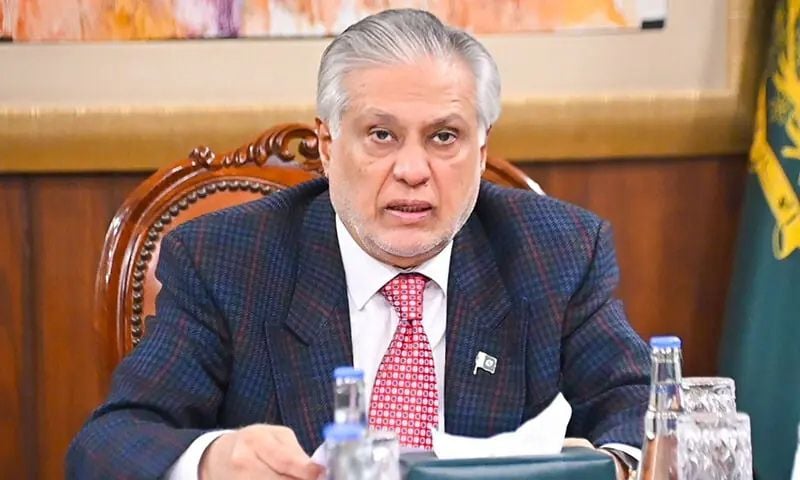
Pakistan’s Deputy Prime Minister and Foreign Minister Ishaq Dar made the remarks during a phone call with European Union High Representative for Foreign Affairs and Security Policy Kaja Kallas.
During the telephone conversation, Dar and Kallas reviewed the evolving regional situation, according to a statement issued by Pakistan’s Foreign Office.
The EU’s top diplomat appreciated Pakistan’s “sincere efforts” culminating in the signing of the Islamabad Memorandum of Understanding (MoU) between the US and Iran, the Foreign Office said.
However, Kallas expressed serious concerns about the recent ceasefire violations and stressed that channels of communication must remain open.
Ishaq Dar informed the EU’s top diplomat about Pakistan’s continued diplomatic efforts towards a comprehensive framework for peace and stability in the region.
“He also emphasised the necessity for all parties to abide by the ceasefire agreement,” the Foreign Office statement read.
Deputy Prime Minister / Foreign Minister Senator Mohammad Ishaq Dar @MIshaqDar50 spoke to EU HRVP Kaja Kallas today.
They reviewed the rapidly evolving regional situation.
She appreciated Pakistan’s sincere efforts culminating in signing of the Islamabad MOU however she… pic.twitter.com/hmYGYwD3PZ
— Ministry of Foreign Affairs – Pakistan (@ForeignOfficePk) June 28, 2026
Deputy PM Dar’s remarks come after Iran launched missiles and drones on Kuwait and Bahrain early on Sunday, shortly after US President Donald Trump threatened to wipe out the Iranian leadership if they did not stick to the interim agreement to end their war.
Israel said on Sunday it had struck Hezbollah in Lebanon on Saturday, just a day after it agreed the latest ceasefire deal with Lebanon to calm fighting that Iran says must end if the wider agreement is to stick.
The US military said earlier it had struck Iran again, hours after a tanker was hit in the Strait of Hormuz, the world’s most important energy shipping route, which Tehran has largely closed for most of the conflict.
“There may come a point when we are no longer able to be reasonable, and will be forced to militarily complete the job that we very successfully started,” Trump said on social media.
“If that happens, the Islamic Republic of Iran will no longer exist!” he added.
About an hour after Trump’s post, Kuwait’s army said its air defences were responding to missile and drone attacks, while Bahrain said sirens had sounded there.
Iran’s Islamic Revolutionary Guard Corps said in a statement its navy and air forces had launched missile and drone operations targeting US military sites in Kuwait and Bahrain.
A US official, confirming the attacks on US facilities, told Reuters there were no reported US casualties or major damage to US sites in the Middle East, but the situation was still unfolding.
Hours later, alarms sounded for a second time in Bahrain, where authorities said an Iranian attack damaged a residential building in Muharraq province, with no casualties reported. Bahrain urged the UN Security Council to hold an urgent session to hold Iran accountable.
The Kuwaiti army said it had intercepted two ballistic missiles with no damage or casualties.
Pakistan is the main mediator between the US and Iran after it secured a ceasefire on April 08 and hosted the highest level of talks between the two nations on April 12 and 13 in Islamabad.
On June 18, the US, Iran and mediator Pakistan signed the Islamabad Memorandum of Understanding (Islamabad MoU) to end the war.
Pakistan’s Prime Minister Shehbaz Sharif signed the Islamabad MoU as mediator.
US President Donald Trump and Iranian President Masoud Pezeshkian also signed the Islamabad MoU to end the war and start further negotiations.
On June 21, Pakistan and Qatar mediated the high-level US-Iran talks in Switzerland.
The first round of Pakistan and Qatar mediated US-Iran talks, led by US Vice President JD Vance and Iran’s Parliament Speaker Mohammad Baqer Ghalibaf, was held in Switzerland a week ago, and Washington waived sanctions on Tehran.
After the talks, Pakistan and Qatar announced significant progress in diplomatic efforts between the US and Iran following the conclusion of the first round of high-level talks in Switzerland.
“The Lake Lucerne Summit was conducted in a positive and constructive atmosphere. Encouraging progress has been made, including the creation of a mechanism for further technical talks,” the joint statement said.
The US and Iranian delegations, led by their chief negotiators, Vice President JD Vance and Parliament Speaker Mohammad Baqer Qalibaf, held a 100-minute first round of much-awaited direct talks in Burgenstock to discuss ways to implement the Islamabad Memorandum of Understanding signed on June 17.
Pakistan’s Prime Minister Shehbaz Sharif and Chief of Defence Forces and Chief of Army Staff Field Marshal Syed Asim Munir attended the US-Iran talks as mediators. The Qatari Prime Minister also attended the talks as a mediator.