
Key Points
- Saudi Arabia was the destination for nearly 70 per cent of Pakistan’s overseas workers in 2025
- Pakistan to supply skilled labour for Vision 2030 mega projects and the FIFA World Cup 2034
- Pakistan proposes a US$3.8 billion investment framework for skills development and education
ISLAMABAD: Pakistan has set an ambitious target of sending one million workers to Saudi Arabia by 2030 under a long-term workforce development strategy aimed at strengthening labour mobility and supporting the Kingdom’s Vision 2030 economic transformation.
The target is part of the Human Resource Deployment Plan (2025-2039), developed under the Saudi-Pakistan Economic Cooperation Framework (SPECF), which seeks to align Pakistan’s workforce planning with Saudi Arabia’s expanding demand for skilled labour.
The plan aims to strengthen human capital and expand economic cooperation between the two countries as the Kingdom accelerates its Vision 2030 transformation programme.
The framework institutionalises labour cooperation and aligns Pakistan’s workforce planning with Saudi Arabia’s rapidly expanding labour market.
According to official documents, the overall strategy aims to increase Pakistan’s annual overseas workforce deployment to 1.51 million by 2039.
It would be implemented through a structured pipeline of skilled, semi-skilled and highly qualified workers.
The programme prioritises employment opportunities in construction, hospitality and tourism, healthcare, information technology, logistics, aviation and infrastructure development.
Saudi Arabia continues to be the destination of Pakistan’s largest overseas employment.
According to the Bureau of Emigration and Overseas Employment (BE&OE), 762,499 Pakistani workers registered for overseas employment during 2025, with 530,256 or 69.54 per cent, moving to Saudi Arabia alone.
More than 96 per cent of Pakistanis leaving through official channels were employed in Gulf Cooperation Council (GCC) countries, particularly Saudi Arabia and the United Arab Emirates.
The documents note that Saudi Arabia’s Vision 2030 economic diversification programme has significantly expanded employment opportunities in infrastructure, construction, tourism, manufacturing and services.
The fresh demand would help the Kingdom retain its position as the largest overseas labour market for Pakistani workers.
Vision 2030 seeks to reduce Saudi Arabia’s dependence on oil revenues by investing heavily in tourism, entertainment, technology, renewable energy, logistics and advanced manufacturing.
The Kingdom has launched hundreds of major infrastructure projects, including futuristic cities, transport networks, airports, resorts and industrial zones, creating sustained demand for skilled foreign workers over the coming decade.
Pakistan’s workforce strategy alignment
Pakistan’s workforce development strategy is being aligned with these evolving labour market requirements.
Authorities plan to strengthen technical and vocational training programmes in construction, hospitality, healthcare, information and communications technology (ICT), engineering and industrial trades to ensure a steady supply of qualified manpower for Saudi employers.
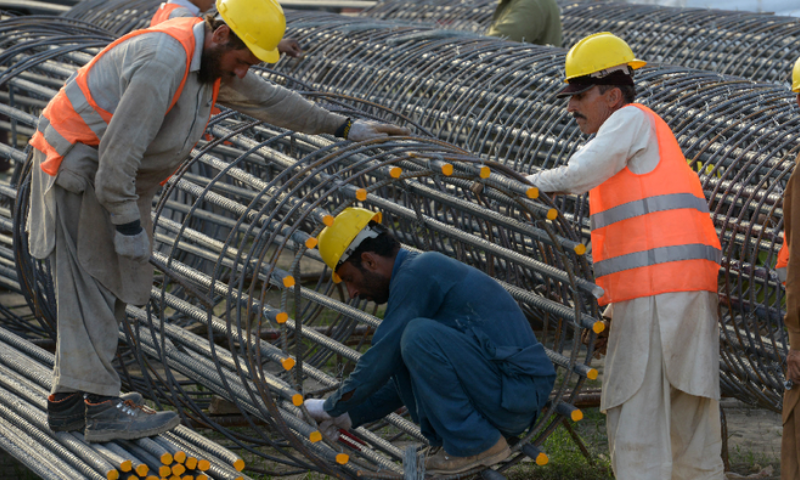
The demand is expected to extend well beyond traditional construction jobs. Mega projects are projected to require IT professionals, doctors, civil engineers, architects, project managers, construction supervisors, electricians, plumbers, welders, steel fixers, heavy equipment operators, surveyors, HVAC technicians, carpenters and other skilled trades.
Some of the Saudi mega projects include NEOM, The Red Sea Project, Qiddiya, Diriyah Gate, King Salman International Airport and large-scale urban expansion in Riyadh.
Saudi Arabia’s rapidly expanding tourism and hospitality industries are also expected to create substantial employment opportunities for a highly skilled workforce in the Kingdom’s emerging hospitality industry.
The tourism and allied industries would require hotel managers, chefs, cooks, restaurant staff, housekeeping personnel, customer service representatives, event managers, tour guides and hospitality supervisors.
Healthcare remains another priority sector for Saudi Arabia, with growing demand for doctors, nurses, pharmacists, laboratory technicians, radiographers, physiotherapists, emergency medical staff, caregivers and other allied health professionals.
The Kingdom’s digital transformation is creating increasing opportunities for software developers, artificial intelligence specialists, cybersecurity experts, cloud computing engineers, network administrators, data analysts, digital project managers and financial technology professionals.
Meanwhile, logistics, aviation and transport are emerging as high-growth sectors in Saudi Arabia that require aircraft maintenance engineers and airport operations specialists.
The Kingdom’s aviation growth would also require warehouse managers, supply chain experts, freight handlers, truck drivers, crane operators and port logistics professionals as Saudi Arabia positions itself as a global logistics hub linking Asia, Europe and Africa.
Officials say Pakistan intends to move beyond supplying predominantly low-skilled labour by producing internationally certified workers capable of securing higher-paying jobs.
The strategy emphasises technical training, digital literacy, occupational safety, English and Arabic language proficiency and internationally recognised certifications aligned with Saudi industry standards.
The framework also envisages wide-ranging policy and institutional reforms, including Mutual Recognition Agreements (MRAs), qualification alignment initiatives involving the National Vocational and Technical Training Commission (NAVTTC) and Saudi training institutions.
To support these objectives, Pakistan has proposed a US$3.8 billion investment framework for Saudi participation, comprising US$2.7 billion for technical and vocational education and training (TVET) and US$1 billion for higher education.
The proposal seeks to establish demand-driven training infrastructure, dedicated skill cities, centres of excellence and joint educational institutions capable of preparing workers for emerging labour market needs.
The official documents highlight early progress under the initiative. More than 70 Memorandums of Understanding and letters of intent were signed during 2024-25. Over 4,700 Pakistani workers secured employment following the Human Resources and Labour Services Expo.
The cooperation has expanded with Saudi institutions, including Takamol, Musaned and the Technical and Vocational Training Corporation (TVTC).
Pakistan is also aligning its workforce planning with future international opportunities linked to Saudi Arabia’s hosting of the FIFA World Cup 2034.
The strategy envisages training and deploying between 300,000 and 400,000 workers during 2026-2034 to support construction, aviation, hospitality, tourism, transport, event management and related services required for the tournament and associated infrastructure projects.
According to the official documents, the long-term strategy is expected to facilitate a gradual shift towards higher-skilled, higher-income overseas employment and strengthen institutional cooperation between Islamabad and Riyadh.
Pakistan would emerge as a preferred workforce partner for Saudi Arabia as the Kingdom pursues its ambitious economic transformation agenda through 2039.