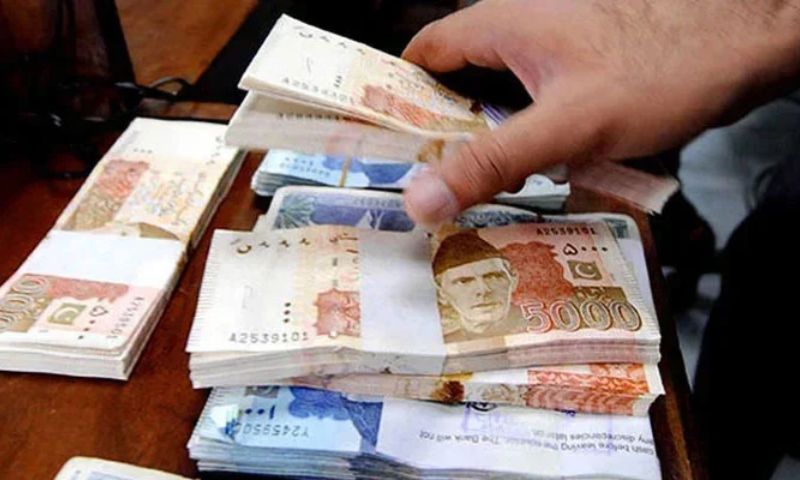
ISLAMABAD: Pakistan has stepped up efforts to reduce its dependence on the US dollar by fast-tracking currency swap agreements with key global and regional partners, while simultaneously meeting significant external debt obligations.
The Prime Minister’s Office has directed the Ministry of Finance to expedite negotiations on currency swap arrangements with the European Union, Russia, Iran and member states of the Association of Southeast Asian Nations (ASEAN), according to The Express Tribune.
The initiative forms part of a wider economic reform agenda aimed at strengthening trade integration and easing pressure on foreign exchange reserves.
Officials familiar with the development said the proposed agreements are modelled on the existing Pakistan-China currency swap framework, under which Islamabad has access to a trade facility worth $4.5 billion. However, much of that facility has been utilised to manage external debt repayments rather than boost trade.
The move comes as Pakistan navigates a heavy repayment schedule. The country has successfully cleared a $1.3 billion Eurobond, marking the first major payment out of approximately $4.8 billion due this month.
Finance Minister Muhammad Aurangzeb said the repayment was conducted in an orderly manner, underscoring Pakistan’s commitment to honouring its international financial obligations and maintaining credibility in global markets.
Government sources indicated that currency swap deals with countries such as Russia and Iran could also unlock new trade corridors, particularly in energy and regional commerce.
In parallel, authorities are exploring greater use of mechanisms like the Asian Clearing Union to facilitate cross-border payments without relying heavily on the dollar.
The Prime Minister’s Delivery Unit is monitoring progress on these reforms, with ministries required to report on implementation timelines. Currency swap arrangements have been categorised as “work in progress” under the government’s strategic economic roadmap.
Alongside external sector reforms, the Prime Minister has instructed the finance ministry, in coordination with the State Bank of Pakistan, to prepare a plan for reducing the policy interest rate to below 10% to stimulate economic activity.
This directive comes despite commitments made to the International Monetary Fund (IMF) to maintain tight monetary policy in order to curb inflation.
Authorities have also been tasked with ensuring exchange rate stability and preventing speculative activity in the currency market. Measures are being planned to curb hoarding, illegal trading and smuggling of foreign exchange, particularly amid market concerns over potential rupee depreciation due to ongoing debt repayments.
In discussions with the IMF, Pakistan has signalled its intention to gradually ease currency controls, including removing informal targets for commercial banks to surrender dollars and lifting certain restrictions on outward foreign currency flows, subject to adequate reserves.
At the same time, the government is under pressure to address structural fiscal challenges. Rising debt servicing costs continue to consume a large share of the federal budget.
While the Ministry of Finance has unveiled a Medium-Term Debt Management Strategy for 2026–28, officials acknowledge that key targets may prove difficult to achieve under current conditions.
The strategy aims to reduce the debt-to-GDP ratio to 61.5% by 2028, lower external debt to 17.9% of GDP, and bring interest payments down to 4.9% of GDP. Additionally, the government plans to limit the current account deficit to below $3 billion and eventually shift to a surplus position.
Economic growth is projected to remain between 4% and 5% in the near term, with ambitions to accelerate to 6–8% by 2029. The broader goal is to expand Pakistan’s economy to a $500 billion size over the coming years.
The renewed focus on currency swaps and regional trade integration signals Islamabad’s intent to build resilience against external shocks, diversify financial channels and gradually move away from heavy reliance on the dollar in international transactions.