Key Points:
- Financial Times describes Pakistan as a potential “hinge power.”
- Islamabad is balancing relationships with China and the United States.
- Pakistan maintains strong ties with Saudi Arabia and Türkiye.
- It also keeps diplomatic channels open with Iran.
- Pakistan sought to facilitate dialogue between Washington and Tehran.
- The Saudi-Türkiye defence pact expands Pakistan’s strategic partnerships.
- Islamabad hopes geography can connect Central Asia with Arabian Sea.
ISLAMABAD: Pakistan is seeking to turn its relationships with rival global and regional powers into greater diplomatic and strategic influence as the international system becomes increasingly defined by shifting alliances and transactional partnerships, the Financial Times says.
In an analysis titled “Pakistan and the new great game of Risk,” the British newspaper argues that nuclear-armed Pakistan is positioning itself as a potential “hinge power” — a strategically located country able to maintain relationships with competing powers while leveraging its geographical position.
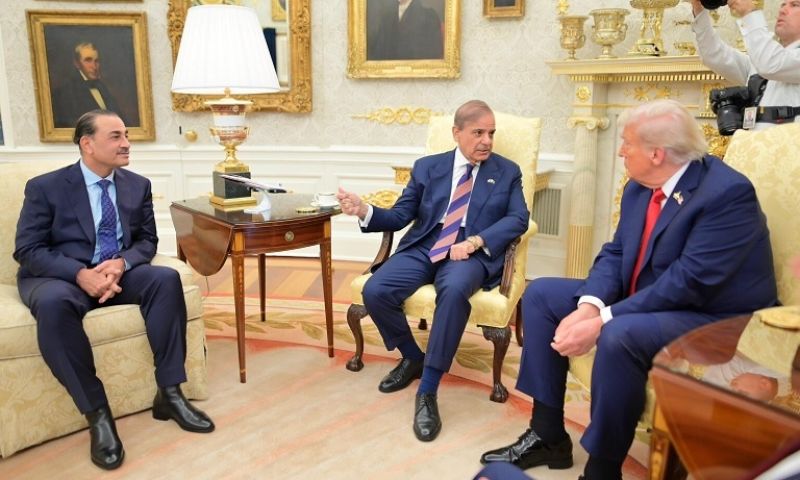
The assessment comes as Islamabad expands its engagement with Washington, Beijing, Riyadh, Ankara and Tehran while pursuing a more active role in regional diplomacy.
The Financial Times uses the board game Risk as a metaphor for the emerging geopolitical contest, suggesting that strategically positioned states can exercise influence beyond what their economic or military weight alone would imply.
According to the newspaper, Pakistan’s recent diplomatic initiatives indicate an attempt to occupy such a position.
Strategic flexibility takes shape
The Financial Times highlights Pakistan’s ability to maintain ties with countries that are themselves strategic competitors.
Islamabad’s longstanding partnership with China has not prevented it from pursuing closer relations with the United States. At the same time, Pakistan maintains close ties with Saudi Arabia and other Gulf states while keeping diplomatic channels open with Iran.
The newspaper describes Pakistan as an “à la carte” middle power, suggesting that Islamabad can choose when to cooperate with Washington and when to work with Beijing while maintaining relationships across the wider Middle East.
Such flexibility could become increasingly valuable as traditional geopolitical blocs give way to overlapping partnerships involving defence, commerce, energy, technology and regional security.
Bridging Washington and Tehran
The Financial Times identifies Pakistan’s role in facilitating US-Iran engagement as a particularly notable example of its diplomatic ambitions.
According to the newspaper, Pakistan drew on its relationships with Washington, Beijing and regional capitals to host the first direct talks between the United States and Iran since the 1979 Islamic Revolution.
The talks failed to produce a breakthrough, while Qatar subsequently took on a more prominent mediation role.
Nevertheless, the Financial Times argues that Islamabad demonstrated an ambition to act as a facilitator in major international disputes rather than limiting its diplomatic role to South Asian affairs.
A new strategic triangle
The newspaper also points to the recently concluded Mecca Joint Defence Agreement between Pakistan, Saudi Arabia and Türkiye as another indication of Islamabad’s expanding strategic engagement.
The Financial Times says instability in the Middle East has encouraged regional states to reconsider their security arrangements and hedge against excessive dependence on the traditional US security umbrella.
The pact’s commitment to collective deterrence resembles the language of broader mutual-defence arrangements, although its practical effectiveness has yet to be tested, the newspaper notes.
For Pakistan, the significance of the agreement could extend beyond defence cooperation.
Closer ties with Saudi Arabia and Türkiye could strengthen Islamabad’s links with the Gulf, Middle East and eastern Mediterranean while complementing its longstanding strategic relationship with China and its efforts to rebuild engagement with Washington.
Turning geography into opportunity
The Financial Times also argues that Pakistan’s location could increasingly work in its favour.
Rather than being viewed solely through the lens of its security challenges with India, Afghanistan and Iran, Pakistan could potentially use its position to become a link between Central Asia and the Arabian Sea.
Pakistani officials envisage transport and rail connections that could provide landlocked Central Asian states with access to Pakistani ports and create new commercial opportunities.
The newspaper says Islamabad also hopes that Saudi financial support and renewed international interest in the country could encourage investors to reconsider Pakistan’s economic potential.
Such developments could place Pakistan at the intersection of South Asia, Central Asia, China and the Middle East, giving its geography renewed geopolitical and commercial value.
Domestic faultlines
The Financial Times, however, presents Pakistan’s growing diplomatic activity alongside a stark assessment of its domestic difficulties.
The newspaper points to Pakistan’s continuing dependence on IMF support, governance problems and restrictions on democratic freedoms, arguing that domestic weaknesses could undermine its ability to convert diplomatic visibility into sustainable influence.
Security remains another major constraint.
According to the Financial Times, Pakistan is dealing simultaneously with violence along its western frontier, tensions with Afghanistan, the risk of renewed conflict with India and a counter-insurgency in its western provinces.
The newspaper also says security concerns have affected international interest in Pakistan’s mining sector.
This creates a fundamental challenge for Islamabad: its ambitions to attract investment and expand regional connectivity depend heavily on its ability to establish greater economic and internal security.
From conflict to connectivity
The Financial Times presents Pakistan’s current foreign-policy approach as a departure from the way its international importance has traditionally been understood.
For much of its history, Pakistan’s strategic relevance was closely associated with major conflicts and rivalries — from the Cold War and the Soviet intervention in Afghanistan to the post-9/11 war and its enduring rivalry with India.
The emerging approach, according to the newspaper, is more multidirectional.
Pakistan is attempting to preserve its strategic relationship with China, improve ties with the United States, deepen defence cooperation with Saudi Arabia and Türkiye, maintain engagement with Iran and Central Asia, and attract Western and Gulf investment.
That strategy does not transform Pakistan into a global great power, the Financial Times suggests. Instead, it potentially gives Islamabad something valuable in an increasingly fragmented international system: strategic flexibility.
The newspaper’s “hinge power” description therefore goes beyond conventional measures of military or economic strength. A hinge power derives influence partly from its ability to connect competing regions and major powers.
That creates a paradox for Pakistan, according to the Financial Times: its international diplomatic relevance may be growing even as serious political, economic and security problems remain unresolved at home.
The country’s ability to capitalise on its new diplomatic momentum will ultimately depend on whether it can overcome those internal constraints and turn strategic geography and diplomatic access into lasting economic and political gains.