KEY POINTS
- The Supreme Court in 2014 had directed the formation of the commission
- Non-Muslims constitute about three percent of Pakistan’s estimated population
- The commission would be a formal platform through which non-Muslims can convey their grievances
- The commission will consist of 13 members, 9 of whom will be from minority communities
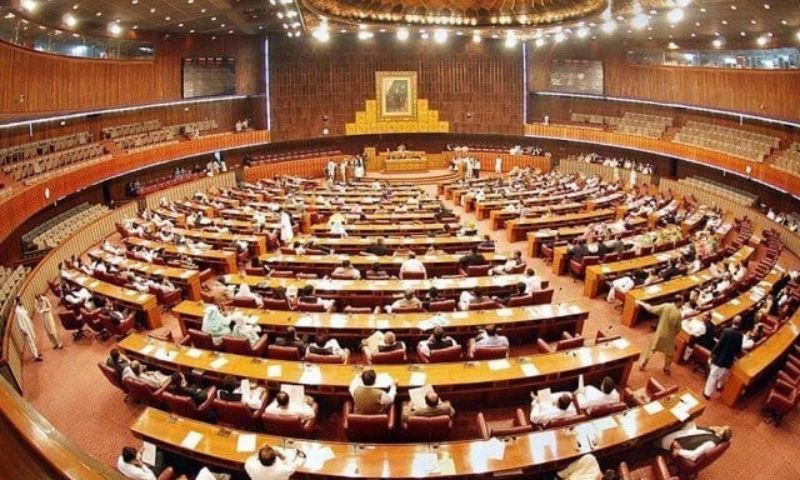
ISLAMABAD: Pakistan’s Parliament on Tuesday passed a bill establishing a National Commission for Minority Rights, a statutory body aimed at protecting the rights of minority communities across the South Asian country.
The joint session of the country’s Parliament passed the National Commission for Minorities Rights Bill, 2025. The development is widely seen as a milestone in safeguarding the rights of minority communities.
The bill was presented by Law Minister Azam Nazeer Tarar, who explained that its primary objective is to safeguard the rights of non-Muslims in the country.
Tarar mentioned that the Supreme Court in 2014 had directed the formation of a commission that works for the rights of non-Muslims.
Non-Muslims constitute about three percent of Pakistan’s estimated population of 240 million people.
The minister reiterated that the legislation contains nothing inconsistent with the Holy Quran and Sunnah, emphasising that such an important matter should not be politicized.
He noted that the Holy Prophet Hazrat Muhammad (Peace Be Upon Him) strongly advocated for the protection of non-Muslims, and that Pakistan’s Constitution also guarantees their rights.
The Minister further highlighted that the Supreme Court, in its 2014 judgment, had instructed the government to establish a commission dedicated to addressing the concerns of non-Muslims.
He said the commission created under this bill would serve as a formal platform through which non-Muslims can convey their grievances to the government for timely redressal.
Meanwhile, Deputy Prime Minister Ishaq Dar has invited the opposition to sit with the government to bring improvement in any law.
According to a statement issued by Pakistan’s Ministry of Religious Affairs, the commission will consist of 13 members, 9 of whom will be from minority communities.
In recent years, Pakistan has worked to promote religious inclusion and expand faith-based tourism, hosting Hindu and Sikh pilgrims from India and around the world, as well as welcoming visiting Buddhist monks.
Other bills that were passed by the joint sitting of the Parliament today included:
“The National Assembly Secretariat Employees (Amendment) Bill, 2025”, “The Biological and Toxin Weapons Convention (Implementation) Bill, 2024”, “The Pakistan Institute of Management, Sciences and Technology Bill, 2023”, “The National university for Security Sciences, Islamabad Bill, 2023” and “The Ghurki Institute of Science and Technology Bill, 2025.
Following the passage of these bills, the joint sitting of Parliament was prorogued.