ISLAMABAD: Pakistan has intensified diplomatic efforts to bring the United States and Iran back to the negotiating table following high-stakes direct talks in Islamabad, according to media reports citing senior government officials.
Pakistani government officials, cited by media reports, said Islamabad is maintaining active contact with both Washington and Tehran, urging an early resumption of dialogue before the expiry of the current ceasefire on April 21.
According to reports, mediators are also making efforts for an extension in the two-week US-Iran ceasefire to ensure a window for diplomatic process to end the conflict through meaningful negotiations.
The efforts follow last weekend’s 21-hour Pakistan-mediated negotiations in Islamabad, which ended without a final agreement but were described as a key step in establishing a continued diplomatic track for further engagement.
According to some reports, the second round of US–Iran peace talks can take place in Islamabad later this week. However, there is no official statement from any side so far.
Meanwhile, a senior Pakistani government official, cited by CBS News, said that Islamabad has intensified diplomatic efforts to bring Tehran and Washington back to the negotiating table to end the conflict.
Pakistani officials said that diplomatic contacts are ongoing to secure another round of talks before the current two-week ceasefire expires around April 21–22.
A senior Pakistani government official confirmed to CBS News that Islamabad has intensified diplomatic efforts to bring Tehran and Washington back to the negotiating table over the Iran war. https://t.co/KuT6Cr9VYF
— CBS News (@CBSNews) April 13, 2026
A senior Pakistani government official, cited by CBS News, said Islamabad has stepped up back-channel diplomacy under the direction of Prime Minister Shehbaz Sharif.
The official said Pakistan remains in active contact with both Washington and Tehran and is urging an early resumption of talks to prevent a return to full-scale war.
Authorities are “cautiously optimistic” about continued engagement, with diplomatic efforts focused on achieving a workable understanding within the narrow window before the ceasefire lapses.
Pakistan PM says ‘full efforts’ ongoing
Pakistan’s Prime Minister Shehbaz Sharif said on Monday that Islamabad remains fully engaged in diplomatic efforts to resolve issues between the United States and Iran.
“Today, the ceasefire still stands. As I am talking to you, matters that are not resolved, full efforts are underway to resolve them,” PM Sharif said in a televised address to the federal cabinet.
The prime minister said Pakistan played an important role in bringing the two sides to the table after nearly five decades, describing the engagement as the first direct, face-to-face dialogue at such a level.
“It was the first time that the two delegations sat face-to-face. I am a witness to it,” he said, adding that discussions continued for 21 hours.
He added that Pakistan’s efforts had helped sustain the ceasefire, while work continued to bridge remaining differences.
PM Sharif also said Pakistan’s mediation came at a critical time when the global economy was under strain due to the conflict, allowing Islamabad to contribute positively to regional stability.
Nuclear issue remains key sticking point
The main obstacle in the 21-hour negotiations held in Islamabad was Iran’s nuclear programme, according to US and regional sources cited by Axios.
The United States, led by Vice President JD Vance, proposed a 20-year moratorium on uranium enrichment, according to Axios, describing it as a “final and best offer”.
Iran, however, sought a shorter timeframe, proposing a “single-digit” number of years, while also resisting demands to fully dismantle its enriched uranium stockpile, according to Axios.
Sources cited by Axios said Washington had also pushed for the removal of all highly enriched uranium from Iran, while Tehran proposed a monitored process to down-blend the material instead.
Despite the differences, officials on both sides said progress had been made and that a deal remained very much possible.
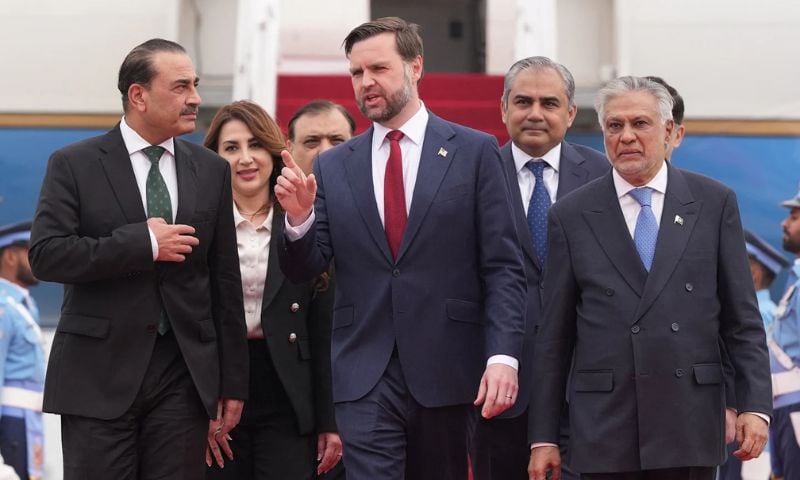
US Vice President JD Vance, who led the American delegation, said the discussions were substantive but failed to bridge differences over some issues, particularly over Iran’s nuclear programme.
“We’ve made very clear what our red lines are… and they have chosen not to accept our terms,” Vance said, adding that Washington had presented a “final and best offer”.
Trump claims Iran contacted US
US President Donald Trump said on Monday that Washington had been contacted by Iranian representatives seeking a deal.
“I can tell you that we’ve been called by the other side. They’d like to make a deal. Very badly, very badly,” Trump told reporters outside the Oval Office.
US officials, cited by CBS News, said engagement between Washington and Tehran had continued since the weekend talks in Islamabad.
One official, cited by CBS News, said there is “forward motion on trying to get to an agreement.”
Iran’s ambassador to Pakistan, Reza Amiri Moghadam, also said the Islamabad talks had not failed but had instead laid the foundation for a diplomatic process.
Pakistan-mediated talks between the United States and Iran concluded in Islamabad on Sunday after more than 21 hours of negotiations, marking the highest-level direct engagement between the two sides in decades.
The talks, facilitated by Pakistan following the securing of a two-week ceasefire, ended without a final agreement but with both sides indicating that diplomacy would continue.
Mediation efforts intensify
Pakistan, along with regional partners including Egypt and Turkiye, is working to bridge remaining differences, according to Axios.
Officials said mediators are trying to narrow gaps on key issues, including uranium enrichment limits and the release of frozen Iranian funds, in order to secure a deal before the ceasefire deadline.
The diplomatic push comes amid rising pressure from Washington, which has imposed a naval blockade targeting Iranian ports in the Strait of Hormuz.
President Trump has also warned of potential military action if diplomacy fails, with sources cited by Axios saying he is considering resuming strikes if Iran does not shift its position.
US-Iran talks in Islamabad
Pakistan-mediated talks between the US and Iran concluded in Islamabad on Sunday after more than 21 hours of intensive negotiations, with all sides signalling that diplomatic engagement would continue.
Following the talks, Pakistan urged both countries to maintain a “positive spirit” and uphold the ceasefire.
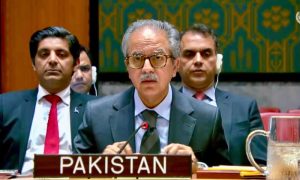
Pakistan’s Deputy Prime Minister and Foreign Minister Ishaq Dar reaffirmed Islamabad’s commitment to facilitating dialogue, stressing that diplomacy must continue despite the absence of a breakthrough.
“We hope that the two sides continue with the positive spirit to achieve durable peace and prosperity for the entire region and beyond,” Dar said, adding that adherence to the ceasefire remained critical.
He said Pakistan would remain actively engaged in supporting future negotiations between Washington and Tehran.
‘Final and best offer’
US Vice President JD Vance said the talks were substantive but fell short of an agreement.
“We’ve made very clear what our red lines are… and they have chosen not to accept our terms,” he told reporters in Islamabad.
Vance said Washington had presented what it described as a “final and best offer” and would await Iran’s response.
He reiterated that the US objective remained ensuring that Iran does not develop nuclear weapons or the capability to rapidly acquire them.
“We need to see an affirmative commitment… not just now, but for the long term,” he said.
Iran emphasises ‘good faith’
Iranian Parliament Speaker Mohammad Bagher Ghalibaf struck a cautiously constructive tone following the talks, saying Tehran had entered negotiations in good faith but remained sceptical due to past experiences.
“Before the negotiations, I emphasised that we have the necessary good faith and will, but… we have no trust in the opposing side,” he said in posts on X.
He said Iranian officials had presented forward-looking proposals.
Ghalibaf also expressed appreciation for Pakistan’s role in facilitating the engagement, thanking the country for its efforts.