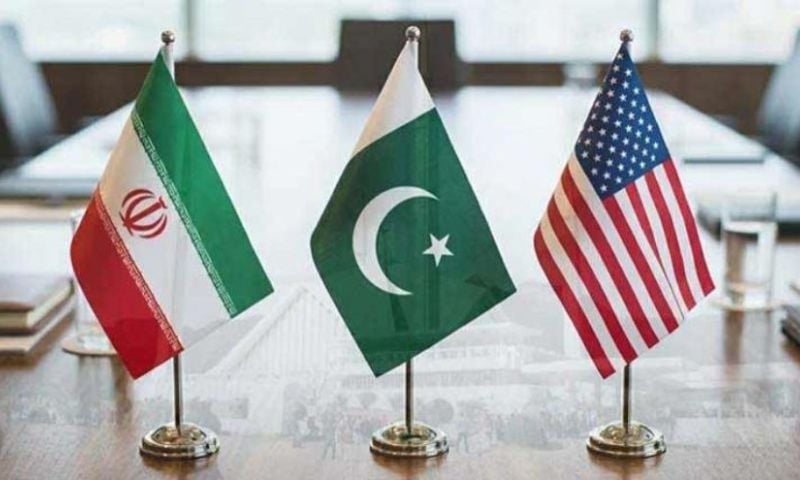
ISLAMABAD: Pakistan said on Tuesday it was in “constant” contact with the Iranian leadership over Tehran’s participation in the second round of peace talks in Islamabad, as uncertainty persists over the resumption of the high-stakes dialogue.
Pakistan’s Information Minister Attaullah Tarar said Islamabad, acting as mediator, was actively pursuing diplomacy and dialogue but was still awaiting formal confirmation from Tehran.
“Formal response from the Iranian side about confirmation of delegation to attend Islamabad Peace Talks is still awaited,” Tarar said in a statement posted on X.
He added that Pakistan was maintaining continuous engagement with the Iranian leadership to ensure participation in the Islamabad Talks before the expiry of a two-week ceasefire at 4:50 am PST on April 22.
“Decision from Iran to attend the talks before the end of two weeks ceasefire is critical,” he said.
The situation as it stands at 1930 PST
1. Formal response from Iranian side about confirmation of delegation to attend Islamabad Peace Talks is still awaited.
2. Pakistan as the mediator is in constant touch with Iranians and pursuing the path of diplomacy and dialogue.
3.…
— Attaullah Tarar (@TararAttaullah) April 21, 2026
Delays in US delegation’s departure
Meanwhile, US Vice President JD Vance’s planned departure for Islamabad is on hold. Vance will be leading the US negotiators’ team to hold talks with Iranian negotiators, The New York Times and Axios reported on Tuesday.
US officials and sources familiar with the matter, cited by Axios, said that Vance’s departure was delayed for hours on Tuesday due to a delay in confirmation of the Iranian leadership’s participation in the talks.
The New York Times reported that the trip had been put on hold after Tehran failed to respond to American negotiating positions.
A US official cited by the newspaper said the diplomatic process was effectively paused, although the trip had not been cancelled.
Conflicting signals on talks proceeding
Earlier, Associated Press reported, citing two regional officials, that the United States and Iran had signalled plans to hold talks in Islamabad on Wednesday.
The officials, according to AP, said Pakistani mediators had received confirmation that negotiations would take place on Wednesday.
The regional officials, cited by AP, said that US Vice President JD Vance and Iran’s parliament speaker Mohammad Bagher Qalibaf were due to arrive in Islamabad early Wednesday to lead their respective negotiation teams.
The White House has confirmed that Vance would head the US negotiation team.
Meanwhile, a Pakistan-brokered two-week ceasefire that began on April 8 is set to expire on Wednesday.
Pakistan urges ceasefire extension
On Tuesday, Pakistan’s Deputy Prime Minister Ishaq Dar urged the US and Iran to consider extending their two-week ceasefire and continue dialogue and diplomacy to end the conflict.
The Deputy PM made the call during a meeting with US Charge d’Affaires Natalie A Baker, according to a statement issued by the Foreign Office.
The two sides discussed recent regional developments. Ishaq Dar highlighted Pakistan’s consistent emphasis on dialogue and diplomacy as the only viable means to address challenges and achieve lasting regional peace and stability.
“He stressed the need for engagement between the United States and Iran, urged both sides to consider extending the ceasefire, and to give dialogue and diplomacy a chance,” the statement added.
U.S. Chargé d’Affaires Natalie A. Baker called on Deputy Prime Minister/Foreign Minister Senator Mohammad Ishaq Dar @MIshaqDar50 today. Discussions covered recent regional developments.
DPM/FM underscored Pakistan’s consistent emphasis on dialogue and diplomacy as the only… pic.twitter.com/1Roqj3R1gE
— Ministry of Foreign Affairs – Pakistan (@ForeignOfficePk) April 21, 2026
Baker expressed the United States’ appreciation for Pakistan’s constructive role in advancing regional peace and supporting dialogue.
Trump signals confidence in deal
Meanwhile, US President Donald Trump said on Tuesday he believed Washington is “going to end up with a great deal” with Iran to end weeks of conflict.
“I think they have no choice,” Trump said in an interview with CNBC.
“We’ve taken out their navy, we’ve taken out their air force, we’ve taken out their leaders,” the US President was quoted as saying.
Trump said the United States was entering talks from a position of strength, as the US negotiation team led by Vice President JD Vance prepared for dialogue with Iranian officials in Islamabad.
“We’re in a very, very strong negotiating position,” he told CNBC.
Pakistan intensifies diplomatic push
Meanwhile, Pakistan has stepped up high-level contacts with both sides, positioning itself as an “honest broker” and expressing confidence that the talks will proceed as planned.
Pakistan is hosting the second round of high-stakes talks following an initial meeting earlier this month that helped maintain direct communication between Washington and Tehran despite heightened tensions.
Deputy Prime Minister and Foreign Minister Ishaq Dar held a phone call on Monday with Iranian Foreign Minister Abbas Araghchi, with both sides agreeing to step up efforts for peace.
The talks come as a 14-day ceasefire between the United States and Iran, brokered by Pakistan earlier this month, approaches its expiry on April 22, adding urgency to efforts to secure an extension or broader agreement.
Pakistan’s Prime Minister Shehbaz Sharif remained actively engaged with regional stakeholders.
‘Entire world’ backs Pakistan’s mediation
Qatar said on Tuesday that there was broad international backing for Pakistan-mediated peace talks between the US and Iran.
“The entire world is supporting these negotiations, including us. And we are supporting our brothers in Pakistan,” Qatar’s foreign ministry spokesperson Majed al-Ansari said during a press briefing.
His remarks came as a high-level US delegation was due to arrive in Islamabad for the second round of talks with Iranian officials.
Spokesperson Ansari said Qatar remained in close contact with all stakeholders ahead of the talks, including Washington.
“Qatar is in contact with all parties, including the US, regarding the Islamabad talks,” he said.
China backs Pakistan’s mediation role
Meanwhile, China also expressed concern over the situation in the Strait of Hormuz.
China’s foreign ministry said it hoped transit through the strategic waterway would return to normal soon.
China urged both Washington and Tehran to maintain momentum in diplomatic engagement.
In Islamabad, Chinese Ambassador to Pakistan Jiang Zaidong met Deputy Prime Minister and Foreign Minister Ishaq Dar.
During the meeting, the Chinese ambassador conveyed Beijing’s “full support for and appreciation of Pakistan’s continued efforts to facilitate engagement between the US and Iran for sustained peace and stability in the region and beyond,” the Foreign Office said.
Pakistan is hosting the talks following an earlier round this month that helped maintain direct communication between Washington and Tehran despite heightened tensions.
The negotiations come as a 14-day ceasefire between the United States and Iran, brokered by Pakistan earlier this month, is set to expire on April 22.