
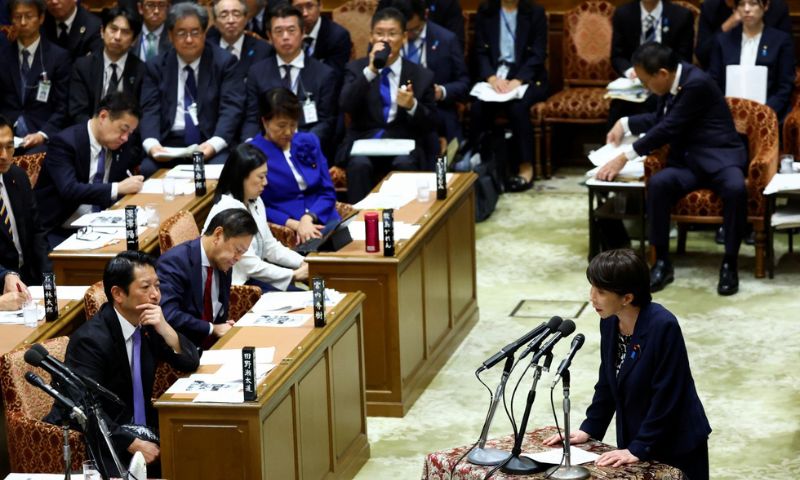
TOKYO: Japan’s Prime Minister Sanae Takaichi said on Wednesday that household chores add several hours to her daily workload compared with her male predecessors, as she struggles to balance domestic responsibilities with the demands of leading the country.
“In the morning, I bathe, fix breakfast and then wash dishes, not to mention apply makeup,” Takaichi told parliament. “I feel like I’m spending three or four more hours than male prime ministers doing these things,” she said.
Takaichi, who became Japan’s first woman prime minister last year, has described herself as a workaholic. She has previously said she sleeps only two to four hours a night and has sometimes scheduled meetings with staff as early as 3 am.
高市総理
私は女性だから男性よりも、化粧・朝風呂・朝食の支度片付けで1日3~4時間使うと。(今は男性も化粧するし、朝風呂も朝食の支度も性別関係ない。全国に「朝食は女性担当」との公言。アホやん。とても暇なのね)
#国会中継 https://t.co/ckJOSsayGi— お豆さん (@hanataretyuunen) October 14, 2026
Her remarks come against the backdrop of Japan’s traditionally strict gender roles and the continued under-representation of women in politics. Only 68 women lawmakers were elected to the 465-seat lower house in the February election.
The discussion about Takaichi’s time management arose after a member of the ruling coalition questioned the lengthy parliamentary sessions routinely attended by Japanese prime ministers.
Japanese leaders commonly spend five to seven hours a day attending parliamentary proceedings, answering opposition lawmakers’ questions or sitting through legislative sessions.
Fumitake Fujita, a lawmaker from the Japan Innovation Party, cited a study showing that Japan’s prime minister attended parliamentary sessions for 72 days in 2022, compared with 50 days for the British prime minister and 13 days for Germany’s leader.
READ ALSO: Japan PM Protests to US after Marine Arrested over Woman’s Murder
While recognising the importance of parliamentary scrutiny, Fujita argued that keeping the country’s leader in parliament for such extended periods was out of step with international standards.
Takaichi said in a post on X in July that she was often occupied until dawn studying documents taken home from work and preparing for parliamentary questioning.
Speaking in parliament on Wednesday, she said she enjoyed reading documents late at night but found it difficult to set aside time to think clearly about the country’s future.
“I do enjoy reading these piles of documents at midnight that I took home,” she said. “But it is difficult for me to squeeze out time to buckle down and think with a clear head” about the country’s future direction and her broader vision for Japan.