


BEIRUT, Lebanon: Israel intensified airstrikes across southern Lebanon on Monday after Prime Minister Benjamin Netanyahu ordered intense bombardments, while two far-right Israeli ministers called for heavier bombardment, including attacks on Beirut.
The escalation came despite a ceasefire between Israel and Lebanon that took effect on April 17 but has been repeatedly violated by Israel and Hezbollah through near-daily exchanges of fire.
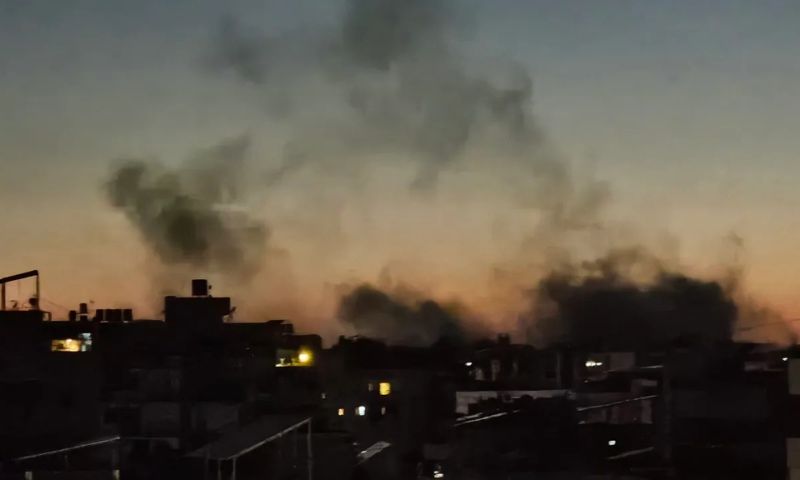
Lebanon’s National News Agency (NNA) reported that dozens of Israeli strikes hit towns and villages in southern Lebanon early Monday, killing three people travelling in two cars and on a motorcycle.
Later in the day, Israeli warplanes targeted several towns near the ancient coastal city of Tyre.
The Israeli military issued evacuation warnings for residents of 10 villages in southern Lebanon, accusing Hezbollah of violating the ceasefire agreement.
“In light of Hezbollah’s violation of the ceasefire agreement, the Israel Defense Forces are compelled to operate against it with force,” Israeli military spokesman Colonel Avichay Adraee said in a social media post listing the affected villages.
Later on Monday, Adraee issued further warnings for residents of buildings in Rashidieh and Burj al-Shamali near Tyre.
Hezbollah has continued launching drone attacks against Israeli troops positioned inside Lebanese territory and across the border, including several strikes reported on Monday.
According to Lebanese authorities, Israeli attacks since early March have killed more than 3,100 people and displaced large numbers of civilians.
Israeli Finance Minister Bezalel Smotrich called for harsher military action following Hezbollah drone attacks.
“There is an urgent need to put an end to the threat posed by Hezbollah’s explosive drones,” Smotrich wrote on Telegram. “For every explosive drone strike, 10 buildings must fall in Beirut.”
National Security Minister Itamar Ben-Gvir also urged a “return to intensive warfare” and called for Israeli control of the Zahrani River area, north of the Litani River.
The Israeli army currently maintains control over a strip of Lebanese territory roughly 10 kilometres deep and has designated the Litani River as the northern boundary of the zone it wants cleared of Hezbollah fighters.
Lebanese President Joseph Aoun defended ongoing indirect talks with Israel on Monday.
Lebanon and Israel, which do not maintain diplomatic relations, are expected to hold another round of negotiations in Washington on June 2 and 3, preceded by military discussions at the Pentagon on May 29.
Meanwhile, Hezbollah leader Naim Qassem reiterated his opposition to direct negotiations with Israel and rejected calls for the group to disarm.
US Secretary of State Marco Rubio criticised Qassem’s remarks, accusing him of seeking to destabilise Lebanon and “plunge Lebanon back into chaos”.