Key Points:
- The Wall Street Journal reports Islamabad talks end without agreement, but diplomacy remains ongoing
- Disputes persist over Strait of Hormuz access, uranium stockpile, and $27 billion in frozen Iranian funds
- Regional countries engage Washington to extend two-week ceasefire
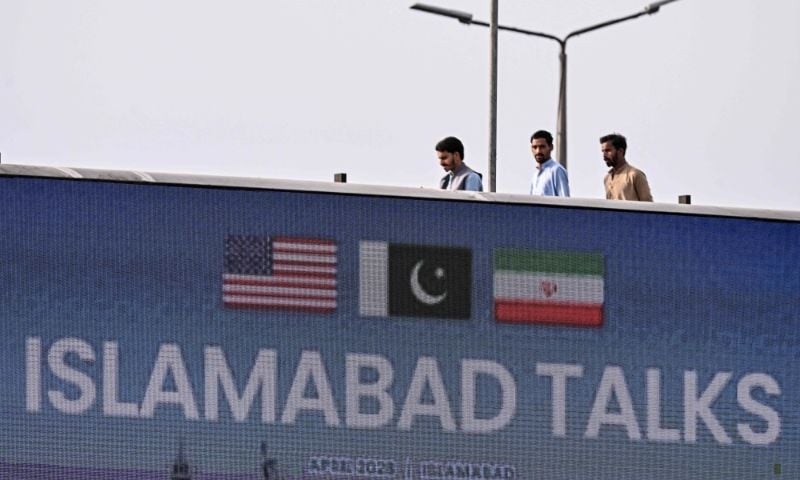
ISLAMABAD: High-level talks between the United States and Iran in Islamabad concluded without a breakthrough, yet diplomatic channels remain open and a second round could take place within days, The Wall Street Journal reported.
The WSJ, one of the leading American newspapers, cited regional officials familiar with the matter.
US President Donald Trump earlier inter alia, stated after the end of the Islamabad Talks on Sunday, “…the Iranians have not left the negotiation table.”
Likewise, an Iranian senior official also gave a similar impression about the continuity of the dialogue with the US, at the end of the talks sans deal.
“Diplomacy never stops,” was the bottom line of the statement from the spokesperson for Iran’s Ministry of Foreign Affairs, Esmaeil Baghaei.
“Although the two sides reached partial understandings on several issues, the latest round of negotiations between Iran and the United States in Islamabad concluded without a final agreement,” he said on Sunday.
“This round of talks was the longest in the past (over 40) years, wherein both sides discussed a wide range of issues, …“We reached understandings on some points, but there were still differences on two or three key issues, and ultimately the talks did not lead to an agreement,” he said.
Referring to the future of diplomacy, Baghaei stressed that diplomatic engagement never ends. He described diplomacy as an essential tool for protecting national interests, emphasising that diplomats must continue their work under all circumstances, in both war and peace.
Baghaei further highlighted the complexity of the discussions, noting that new issues—such as regional matters and the Strait of Hormuz—were added to the agenda, making the process more challenging.
According to the WSJ report, regional countries have stepped up efforts to bring both sides back to the negotiating table. They are also consulting with Washington to secure an extension of the Pakistan-mediated two-week ceasefire announced late Tuesday.
The Islamabad engagement marked the most senior-level face-to-face contact between American and Iranian leadership since 1979. Initiation of dialogue of such a rare nature in itself is a success, underscoring both the significance of the moment and the depth of unresolved disputes.
Officials cited by The Wall Street Journal said key sticking points included the reopening of the Strait of Hormuz without transit fees, disagreements over the future of Iran’s highly enriched uranium stockpile, and Tehran’s demand for the release of approximately $27 billion in frozen revenues held abroad.
Iranian negotiators presented counterproposals, including continuing enrichment at limited levels or reducing existing stockpiles, but these fell short of bridging differences with the US side, the report said.
Despite firm public positions from both governments, officials indicated that neither side has shut the door to diplomacy, raising the prospect of renewed talks in the coming days, yielding to sustained regional mediation efforts.
Pakistani journalists have claimed, quoting officials from both sides, that Pakistan is in contact with the USA and Iran for a second round of talks before the 22nd April ceasefire deadline.
Separately, ASEAN Foreign Ministers have also urged the US and Iran to sustain talks aimed at ending the conflict permanently.