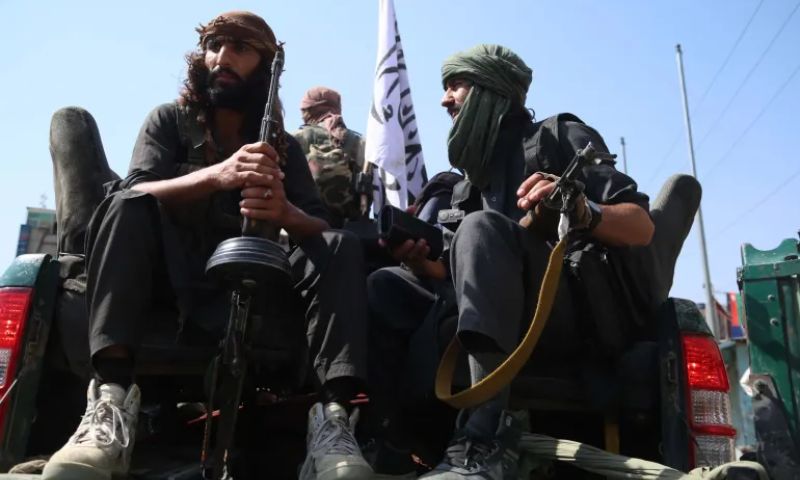
KABUL, Afghanistan: A regional affiliate of the Islamic State group, Islamic State-Khorasan (IS-K), has claimed responsibility for the killing of a senior Taliban official in northeastern Afghanistan, according to a militant monitoring organisation.
Zabihullah Amiri, head of the Information and Culture Department in Badakhshan province, was shot dead on Tuesday while travelling towards the provincial capital, Faizabad.
IS-K has claimed that its fighters carried out the attack, saying they had targeted a Taliban figure along with one of his guards. The claim was cited by the SITE Intelligence Group, which monitors extremist activities.
Afghanistan’s Information and Culture Ministry confirmed Amiri’s death, describing the incident as a “cowardly attack”. The ministry claimed one of the attackers was killed while another was arrested following the assault.
The ministry also vowed that such attacks would not weaken the Taliban administration’s efforts to maintain security, saying it remained committed to confronting those it described as enemies of the government.
The killing marks another high-profile attack claimed by IS-K against Taliban officials. The group had previously claimed responsibility for a suicide bombing in Kabul in December 2024 that killed Taliban minister Khalil Ur-Rahman Haqqani.
Although the Taliban has repeatedly pledged to restore security across Afghanistan since returning to power in 2021, sporadic attacks by militant groups, particularly IS-K, have continued in parts of the country. The United States designates the Islamic State-Khorasan (IS-K), as a terrorist organisation.
Rising instability in Taliban-run Afghanistan
The attack comes amid growing security and political challenges confronting the Taliban authorities, particularly in Afghanistan’s northern and northeastern provinces.
Badakhshan, a remote mountainous region bordering Tajikistan, has witnessed episodes of unrest, armed clashes and opposition activity since the Taliban returned to power in 2021.
Recent reports have pointed to clashes between Taliban forces and armed groups opposed to the administration in parts of the province, including Zebak district.
The Taliban’s control has also faced local grievances linked to governance, economic hardship and disputes over resources.
In Badakhshan, protests and clashes have erupted over issues including anti-narcotics operations and mining restrictions, with residents accusing authorities of failing to address their economic concerns.
The unrest has highlighted difficulties faced by the Taliban in consolidating authority beyond major urban centres.
Although the Taliban has claimed that it has restored security after decades of war, the administration continues to face threats from rival militant groups, including Islamic State-Khorasan (IS-K), as well as armed opposition movements.
Analysts say persistent attacks on officials and security targets demonstrate that the group’s nationwide security claims remain challenged by pockets of instability.
Beyond security concerns, the Taliban government has faced international criticism over restrictions on political freedoms, women’s rights and civil liberties.
Human rights organisations have accused Taliban authorities of using force against protesters and imposing policies that have further isolated Afghanistan diplomatically.
Taliban to deploy suicide bombers in Badakhshan
Afghanistan’s Taliban administration has warned that its suicide units are prepared to defend the authorities as clashes with armed opposition groups continue in the northeastern province of Badakhshan and other areas, highlighting ongoing security challenges nearly five years after the group returned to power.
Taliban spokesman Zabihullah Mujahid said the movement’s “fedayeen,” or suicide bombers, remained ready to make additional sacrifices to protect the government established after the Taliban’s takeover of Kabul in August 2021.
“Our country was liberated through sacrifices, and we are ready to make twice as many sacrifices to protect it,” Mujahid said in remarks carried by Afghan media outlets.
READ ALSO: Taliban to Deploy Suicide Bombers in Badakhshan
The mountainous region has long been viewed as a difficult area for central authorities to control, and it has emerged as a focal point for anti-Taliban resistance activity in recent years.
The Afghanistan Freedom Front (AFF), one of the armed groups opposing Taliban rule, has claimed responsibility for attacks on Taliban positions in the Zebak district.
The group said it had captured several checkpoints and inflicted casualties on Taliban fighters, although these claims could not be independently verified.
Badakhshan has witnessed intermittent unrest over the past several years, with both the Afghanistan Freedom Front and the National Resistance Front carrying out attacks against the regime’s targets in the country’s north.