BANGKOK: Productivity gains from artificial intelligence (AI) could help offset the economic impact of Asia’s ageing populations and shrinking workforces, provided its adoption is spread more evenly across the region, the International Monetary Fund (IMF) said on Monday.
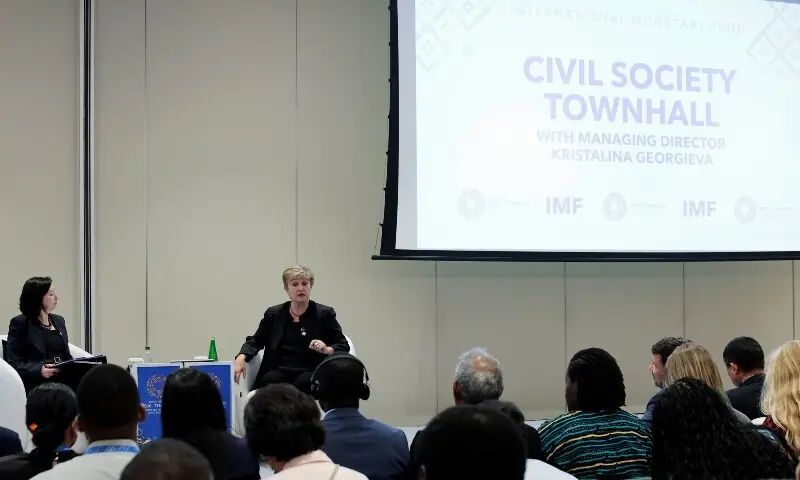
Speaking at the launch of an IMF book on Asia’s challenges and opportunities, Managing Director Kristalina Georgieva identified demographic change, economic integration and technological advances, particularly AI, as three major transformations shaping the region’s future.
AI could increase growth in advanced Asian economies by between 0.5 and 1 percentage point, Georgieva said, adding that productivity gains could more than compensate for the economic pressures caused by ageing populations.
The book’s findings suggest that China, Japan and South Korea could see their working-age populations shrink by nearly 25 per cent between now and 2050. Improvements in productivity driven by AI could help offset the impact of this decline.
However, Krishna Srinivasan, director of the IMF’s Asia and Pacific Department, warned that policymakers must balance the benefits of AI adoption against the risk of widening economic disparities between countries.
READ ALSO: IMF Warns Global Financial System Unprepared for AI-Driven Cyber Risks
“What matters is whether AI augments workers or automates jobs,” Srinivasan said at the launch, held during the IMF and World Bank annual meetings in Bangkok.
He said advanced economies were more exposed to AI but were also better positioned to benefit from it, while emerging markets faced lower exposure but were less equipped to capture its potential gains.
Reforms to improve skills and productivity could accelerate AI adoption by a decade or more, Srinivasan added.
Georgieva also said deeper regional trade agreements and fewer non-tariff barriers could increase Asia’s gross domestic product by around 1.8 per cent in the long term.
The IMF’s assessment highlights the potential role of technology and regional economic cooperation in helping Asian economies manage demographic pressures and sustain growth.