Key Points
- Iran reports progress in talks with the United States
- Ghalibaf says major differences still unresolved
- Tehran claims battlefield advantage influenced ceasefire
- US pressure tactics described as ineffective
- Iran retains significant portion of drone capability
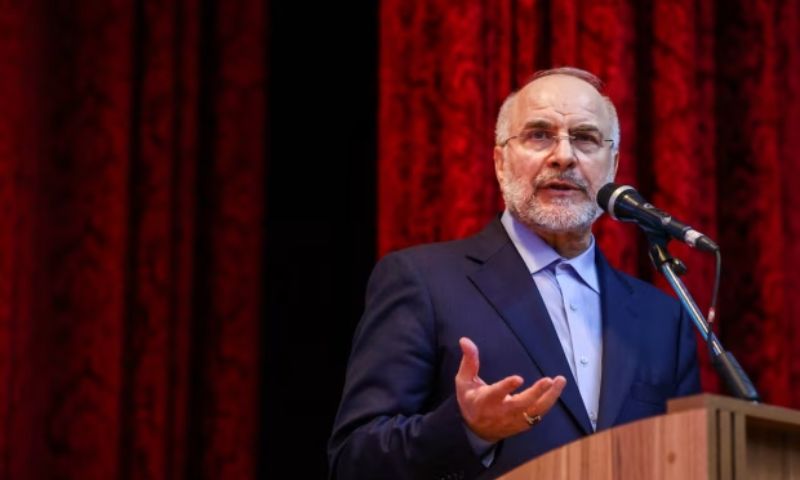
TEHRAN: Iran’s chief negotiator, Mohammad Bagher Ghalibaf, on Sunday acknowledged “measured progress” in ongoing discussions with the United States, while stressing that substantial differences continue to hinder any immediate breakthrough.
In a televised address, Ghalibaf, who is also Iran’s Parliament Speaker, said that although dialogue had advanced, “a significant distance” still separates the two sides, underscoring the complexity of reaching a final agreement. His remarks come amid continued diplomatic efforts following recent high-level talks held in Islamabad, which ended without a formal agreement but kept communication channels open.
Ghalibaf criticised Washington’s strategy, stating that pressure tactics such as threats and deadlines had failed to yield results, prompting the United States to engage indirectly through intermediaries. He maintained that Iran agreed to a temporary ceasefire to allow diplomatic engagement, while asserting that the US accepted it due to Iran’s perceived upper hand in the conflict.
He further rejected US objectives, claiming that attempts to force regime change or dismantle Iran’s missile capabilities had not succeeded. “They expected Iran to surrender within days, yet the conflict extended beyond forty days,” he said, portraying the outcome as a strategic failure for Washington.
Highlighting Iran’s military posture, Ghalibaf pointed to what he described as notable operational successes during the confrontation, including the interception of numerous drones and the downing of advanced aircraft. He also noted what he termed a lack of international backing for the US position.
Despite the rhetoric, both sides have signalled a willingness to continue negotiations. However, deep divisions remain, particularly over Iran’s nuclear programme and broader security arrangements, with no clear timeline yet established for the next round of talks.
Meanwhile, separate reports citing US officials indicate that Iran still retains a significant portion – around 40 per cent of its attack drone capabilities despite sustained strikes on its military infrastructure, suggesting that its operational capacity remains far from depleted. The fragile ceasefire continues to hold for now, but uncertainty persists as diplomatic efforts struggle to bridge the remaining gaps.