Key Points
- Iran is reviewing fresh US proposals amid ongoing diplomatic engagement.
- President Trump says talks with Tehran are “very good” and progressing.
- Tensions have again risen in the strategically vital Strait of Hormuz.
- Iran warns maritime restrictions will remain until US naval blockade is lifted.
- Both sides continue indirect engagement despite unresolved major differences.
WASHINGTON/TEHRAN: Iran has begun reviewing fresh proposals from the United States as diplomatic engagement continues under a carefully maintained ceasefire, even as tensions escalate once again in the strategically vital Strait of Hormuz.
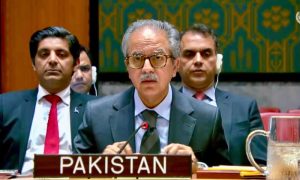
According to Iranian state media, the proposals were conveyed during a recent visit to Tehran by Pakistan’s Chief of Defence Forces, Syed Asim Munir. The Secretariat of Iran’s Supreme National Security Council confirmed that Tehran is assessing the proposals but has yet to issue a formal response.
🔺Recently, with the Pakistani army commander in Tehran as mediator, new proposals have been put forward by the Americans. The Islamic Republic of Iran is reviewing them and has not yet responded.
— Press TV 🔻 (@PressTV) April 18, 2026
The development comes at a critical juncture, with conflicting signals emerging from both sides. While diplomatic channels remain open, Iran has reimposed restrictions in the Strait of Hormuz, warning that the waterway would remain closed until the United States lifts what Tehran describes as an unlawful naval blockade on its ports.
The Islamic Revolutionary Guard Corps (IRGC) Navy said vessels should not attempt to transit the area, cautioning that any movement could be treated as hostile cooperation. The warning follows an earlier temporary easing that had allowed limited civilian maritime traffic under Iranian coordination.
Iran’s Islamic Revolution Guards Corps (IRGC) Navy issues a statement following claims made by US President Trump.
🔹 Iran’s IRGC Navy says that statements made by the US President have no credibility. pic.twitter.com/RemSWacggn
— Press TV 🔻 (@PressTV) April 18, 2026
Tehran maintains that Washington has violated the ceasefire by continuing its maritime restrictions. Iranian leadership has also issued strong rhetoric, with senior figures warning of further military retaliation if pressure persists.
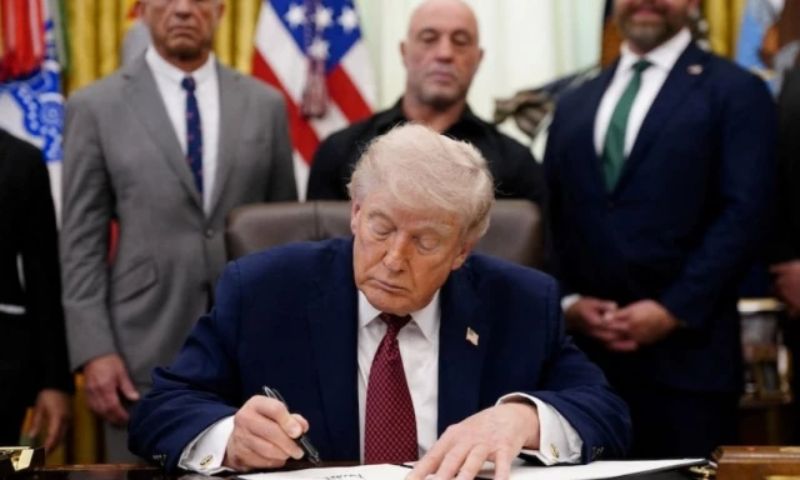
Despite the escalation, President Donald Trump struck an optimistic tone, telling reporters that “very good conversations” were underway with Iran. “We’re talking to them… we’re taking a tough stand,” Trump said at the White House, suggesting that negotiations were progressing while reaffirming a firm US position. He indicated that further updates on the talks could emerge soon but declined to take detailed questions.
Behind the scenes, the US administration has intensified consultations. A high-level meeting in the White House Situation Room brought together senior officials, including Vice President JD Vance, Secretary of State Marco Rubio, Defence Secretary Pete Hegseth, and CIA Director John Ratcliffe, to assess the evolving crisis.
According to Anadolu Agency, reports suggest that while there has been some progress on issues such as Iran’s uranium enrichment programme, major differences remain unresolved. Officials have warned that without a breakthrough, hostilities could resume within days.
The current pause in conflict follows a two-week ceasefire brokered by Pakistan on April 8, after weeks of intense confrontation triggered by US and Israeli strikes on Iran in late February. Tehran had responded with drone and missile attacks targeting Israel and US-linked assets in the Gulf.
Further rounds of talks are expected, with Islamabad once again emerging as a potential venue for continued diplomatic engagement.