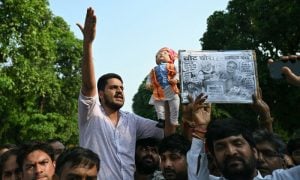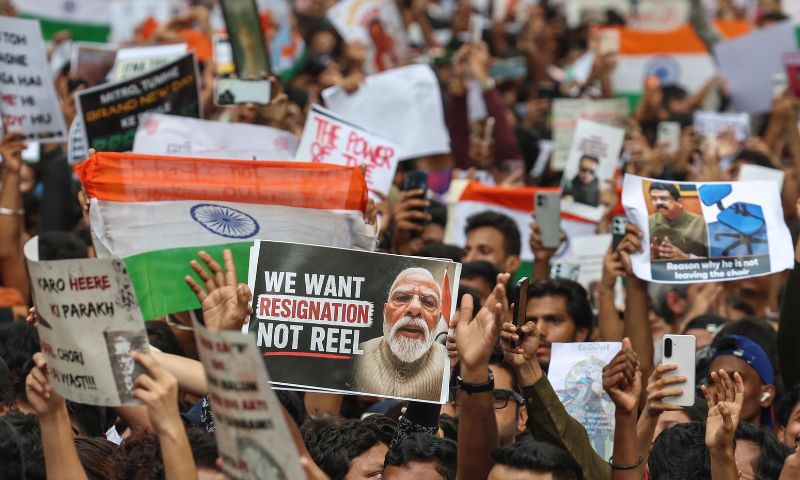
NEW DELHI: Indian youth-led protest movement has accused Prime Minister Narendra Modi’s government of reneging on assurances that led it to call off a month-long demonstration over a medical entrance examination paper leak, warning that it would resume protests if its demands are not honoured.
The Cockroach Janta Party (CJP), the youth-led movement that organised the protests at New Delhi’s Jantar Mantar, said the government had made commitments to end the agitation but had since begun retreating from them.
CJP leaders said any attempt to dilute, delay or disregard the commitments would amount to a betrayal of India’s young generation.
PRESS STATEMENT (Aug 23, 2026)
The Cockroach Janta Party expresses serious concern over the Union Government’s failure to honour the commitments made to India’s youth, particularly on the withdrawal/quashing of FIRs against students and protesters and compensation for the… pic.twitter.com/cubKpazIwg
— Cockroach Janta Party – CJP (@Cockroachisback) August 23, 2026
The movement said the government had also failed to provide a list of first information reports (FIRs) registered against student protesters, despite repeated court demands that such cases be withdrawn.
CJP co-convener Saurav Das and head of legal affairs Ratna Singh said the group would meet on August 24 to decide its next course of action. They urged students and supporters across India to remain prepared for possible renewed action.
Protest forced education minister’s resignation
The CJP protest, which lasted more than a month, was called off on July 25 after the government accepted its demands.
Those demands included maximum compensation for families of students who died by suicide in connection with the examination controversy, withdrawal of FIRs filed by the central and National Democratic Alliance (NDA) governments, and discussions on a five-point charter for examination reforms.
The youth protest movement had also forced Education Minister Dharmendra Pradhan to resign, dealing a serious blow to Prime Minister Modi’s government.
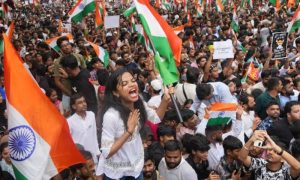
The CJP has said it will continue pressing the government until all commitments made to students are fulfilled.
Earlier, the group had warned that it would resume demonstrations if detained or arrested protesters were not released and cases against them were not withdrawn.
Also Read: India’s Gen Z Challenges Modi at Home
CJP spokesperson Ashutosh Ranka said the movement would be compelled to restart if the government failed to honour the agreement.
The CJP said at least 100 people had been arrested, many under stringent, non-bailable charges. It also said it had received reports of hundreds of students being detained or harassed by police.
Paper leak sparked youth anger
The protests grew out of anger over irregularities in India’s medical entrance examination.
More than two million students had competed for around 140,000 medical training places. Following reports of paper leaks, the examination was cancelled and students were required to sit for it again on June 21.
According to Indian media reports, at least 20 students died by suicide amid the controversy.
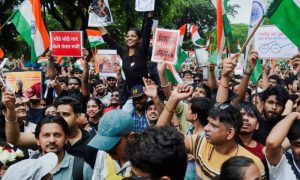
The CJP was formed by Abhijeet Dipke, a 30-year-old Indian student in Boston who had previously worked in political communications.
The group adopted the name in response to a May 15 remark by India’s Chief Justice Surya Kant, who compared unemployed young people with “parasites” and “cockroaches”.
Dipke launched the online parody organisation as the “Voice of the Lazy & Unemployed”. Its Instagram account amassed 20 million followers within days.
Dipke travelled to Delhi on June 6 carrying a copy of India’s Constitution and began the protest at Jantar Mantar. Hundreds of people attended on many days during June.
Also Read: India’s Shrinking Space for Protest Raises Democratic Concerns
On June 28, educator and activist Sonam Wangchuk and student activists began a hunger strike in support of the CJP and its demand for Pradhan’s resignation.
Police removed Wangchuk and others from the protest site on July 18 after they had been on hunger strike for 20 days. The action triggered wider public attention, with images and videos of the removal circulating online.
Police violence and arrests
The demonstrations later spread beyond the capital.
On July 20, large crowds attempted to march from Jantar Mantar towards Parliament. Police used tear gas and batons to disperse protesters, leading to clashes and a wave of detentions.
The CJP said police cases had been filed against students in Delhi, Assam, West Bengal and Bihar, all states governed by Modi’s Bharatiya Janata Party (BJP).
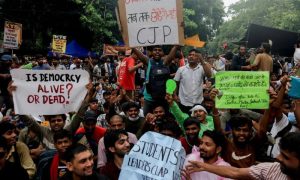
In Bihar, a police officer was suspended after allegedly using an assault rifle while dispersing student protesters.
India’s Supreme Court chief justice called for an independent investigation after a petition alleged police brutality at the Delhi protest.
He said the right to peaceful and lawful protest was guaranteed by the Indian Constitution. Opposition lawmakers also raised the police crackdown in Parliament.
Challenge to Modi’s BJP
The protests have also energised other youth-led organisations.
The left-leaning All India Students Association said the movement had demonstrated that the BJP could be challenged by a broad public mobilisation.
Its president, Neha, said the resignation of Pradhan was one achievement but that the movement had also shown that the government could be held accountable by public pressure.
Copycat protests by schoolchildren demanding improved facilities at government schools have also emerged in Uttar Pradesh, Bihar and Rajasthan.
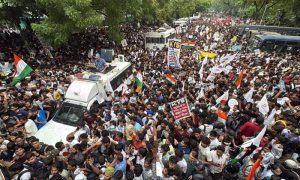
The movement has meanwhile prompted debate over whether youth anger could translate into electoral pressure on the BJP ahead of key state elections.
The first major electoral test is expected in Uttar Pradesh in the first quarter of 2027. The state is India’s most populous and is currently governed by the BJP.
Political strategist Amitabh Tiwari, founder of polling agency Vote Vibe, said the protests reflected concerns broader than examination paper leaks, including youth unemployment.
He said the movement posed an electoral challenge to the BJP but also exposed the opposition parties’ failure to effectively address longstanding concerns among young voters.
Tiwari said opposition parties would need to offer tangible solutions if they wanted to turn youth anger into electoral support.