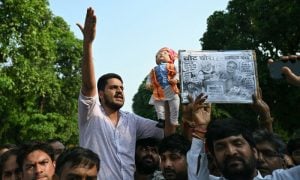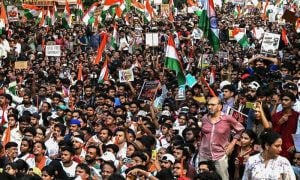
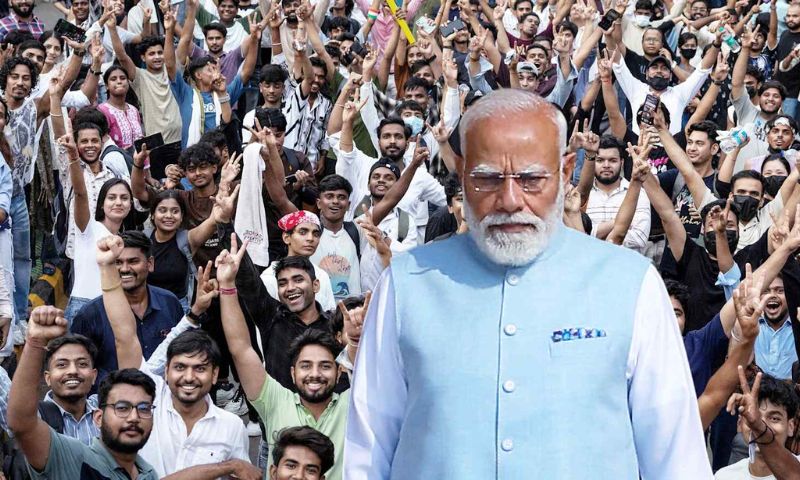
NEW DELHI: India’s recent Gen Z-led protests over education reforms are creating political divisions inside families, with young activists challenging parents who have long supported Prime Minister Narendra Modi’s Bharatiya Janata Party (BJP) and its ideological mentor, the Rashtriya Swayamsevak Sangh (RSS).
The tensions emerged during weeks of protests triggered by irregularities and leaked papers in a major medical entrance examination. The demonstrations ultimately contributed to Education Minister Dharmendra Pradhan’s resignation and prompted the government to overhaul entrance examinations.
Among the protesters was 19-year-old law student Kunal Choudhary, whose father is affiliated with both the BJP and RSS. Choudhary said he was previously an RSS member himself but left home to participate in demonstrations in New Delhi.
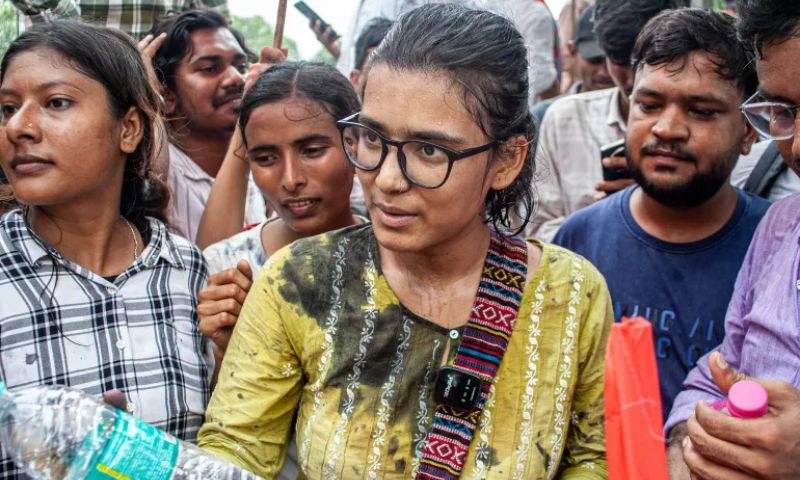
He said political differences with his family had become so deep that returning home was no longer an immediate option.
Other young protesters described similar tensions.
Priya Singh, a 24-year-old postgraduate student, said her BJP-supporting father opposed her participation in demonstrations and threatened her when she decided to join protesters at Jantar Mantar.
ALSO READ: India Loses Favour Among Americans
Anjali, a 25-year-old Delhi University student activist whose parents support the BJP and RSS, said she initially admired Modi before moving towards left-wing student politics. She said her activism had repeatedly caused disagreements with her family.
Generational political divide
The protests have also highlighted differences over education, religion, policing and the right to demonstrate.
Neha Bora, national president of the All India Students Association, has similarly spoken about political differences with her BJP-supporting parents. Despite those disagreements, her mother visited her during a 23-day hunger strike and later congratulated her following Pradhan’s resignation.
Prafulla Ketkar, editor of the RSS-linked Organiser, attributed such tensions partly to weakening communication between generations and social media echo chambers.
Sociologist Anubhav Sengupta said student movements often focus more strongly on values, while older generations can take a more practical approach to political questions.
The emerging divide suggests India’s youth-led education movement is extending beyond streets and campuses, bringing political debates directly into family homes.