
Key Points
- Indian rupee falls to record low amid Middle East-driven oil shock
- Foreign investors pull over $20 billion from Indian markets since February
- Rising import costs and widening deficits expose vulnerabilities in Indian economy
ISLAMABAD: India is under growing economic pressure as a steep decline in the rupee, soaring oil prices and sustained foreign investor outflows strain the country’s financial system and weaken its growth outlook.
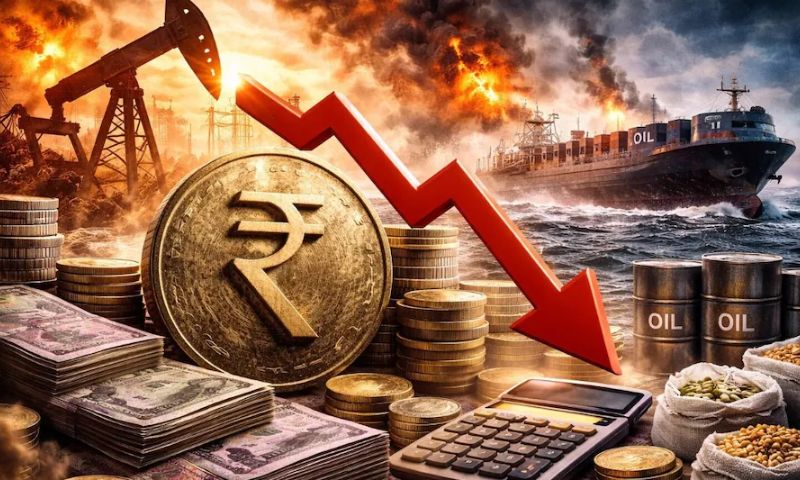
The Indian currency fell to a record low of more than 96 against the US dollar on Friday, extending losses that have made it Asia’s worst-performing major currency so far in 2026.
The rupee has fallen by over five per cent since the Middle East conflict intensified earlier this year, increasing pressure on Indian authorities to contain inflation, stabilise foreign exchange markets and manage a rapidly widening current account deficit.
India’s central bank has reportedly spent billions of dollars defending the currency through direct market intervention. The tighter controls on speculative trading and special financing arrangements for oil importers have not eased pressure on dollar demand, so far.
Indian Prime Minister Narendra Modi has also called for voluntary austerity measures, urging citizens to reduce non-essential imports such as gold purchases and overseas travel to conserve foreign exchange reserves.
Analysts say the crisis has exposed deeper structural vulnerabilities within the Indian economy, particularly its heavy dependence on imported energy and external capital inflows.
“The whole system has been disturbed,” market analyst Dilip Parmar was quoted as saying, citing elevated crude oil prices, slowing growth prospects and sustained foreign capital flight.
India’s current account deficit is expected to exceed two per cent of gross domestic product during the current fiscal year, more than double the previous year’s level and potentially the widest gap in more than a decade.
Foreign investors have also withdrawn more than $20 billion from Indian equity markets since the onset of the Middle East crisis. Still, there are growing concerns over inflationary pressures, slowing growth and economic uncertainty.
Economists have warned that India could face a balance-of-payments gap ranging from $67 billion to $88 billion if dollar inflows continue to weaken.
The Reserve Bank of India’s foreign exchange reserves have declined to around $697 billion from more than $720 billion before the regional conflict escalated, reflecting sustained intervention to defend the rupee.
The weakening currency has sharply increased costs for Indian manufacturers and food processors dependent on imported raw materials priced in dollars.
It has further added pressure on businesses already struggling with slowing domestic demand.
Industries reliant on imports have been particularly affected. In the southern state of Kerala, the cashew processing sector has experienced severe disruption.
Higher import costs have reduced purchasing capacity and squeezed profit margins.
The rupee’s decline has also increased the cost of overseas education for Indian students. Education consultants reported a sharp spike in study abroad expenses, especially in the United States.
The currency turmoil has further complicated India’s ambition to become the world’s third-largest economy.
The rupee’s depreciation has reduced the country’s dollar-denominated economic size relative to other major economies.
Analysts say Indian authorities may be forced to consider tougher economic measures in the coming months. They say measures, including fuel price adjustments, tighter restrictions on overseas remittances and efforts to attract foreign-currency deposits from overseas Indians would be essential.
Economists also warn that interest rate hikes remain a possibility if inflationary pressures intensify further after rising import costs and persistent rupee weakness.