
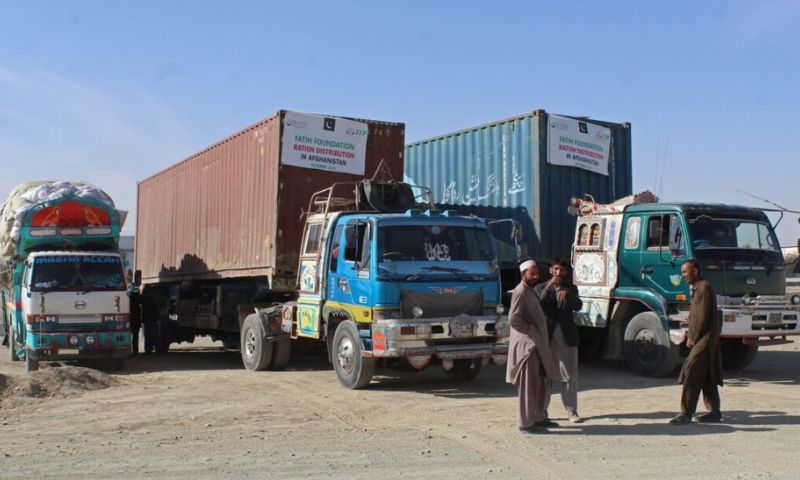
ISLAMABAD: The recent cross-border clashes between Pakistan and the Afghan Taliban have severely disrupted the Afghan transit trade, resulting in losses amounting to billions of rupees.
According to media reports, at least 291 containers are currently stranded at the Karachi Port Trust and Port Muhammad Bin Qasim due to the ongoing tensions between Pakistan and Afghanistan’s Taliban regime.
Junaid Makda, President of the Pak-Afghan Chamber, stated that 500 containers are stuck at the Chaman border, 400 at Torkham, 100 at Ghulam Khan, and another 100 at Kharlachi.
He further explained that warehouses at the Torkham border have reached full capacity, creating a severe backlog. Goods offloaded from ships cannot be cleared for onward transport, halting the unloading of additional cargo.
Makda added that hundreds of containers remain on ships awaiting clearance, while those already offloaded are stranded at ports, exacerbating congestion and further delaying trade operations.
It is worth noting that under the Afghan Transit Trade, around 1,000 containers normally cross the border each day. However, the current trade suspension has forced traders to sell perishable goods at half their usual prices.
Junaid Makda stated that the closure of the Afghan transit trade is causing losses of approximately one billion rupees per day.
The stranded cargo includes a wide range of goods such as electronics, electrical machinery, home appliances, textiles, confectionery, chocolates, medicines, and edible oils.
Within just four days, traders on both sides of the border have suffered losses amounting to billions of rupees.
Earlier, on Thursday, the Federal Board of Revenue (FBR) ordered the suspension of Afghan Transit Trade transportation from Karachi ports until further notice due to recent clashes at the Durand Line.
Following days of intense exchanges along the border, Pakistan and the Afghan Taliban agreed to a temporary 48-hour ceasefire on Wednesday, after a request from the Taliban regime in Kabul.
However, diplomatic strains remain deep, driven by Pakistan’s repeated demands that Afghan authorities curb cross-border militancy amid a sharp rise in terror incidents inside Pakistan.
Pakistan has repeatedly asked the Taliban regime to prevent Afghanistan’s territory from being used by terror groups for attacks inside Pakistan. However, the Taliban authorities failed to stop the terrorist groups from carrying out terror attacks in Pakistan.
Regional countries have also voiced concerns over the presence of terrorist groups in Afghanistan and expressed fear that these groups could endanger regional peace and stability.