
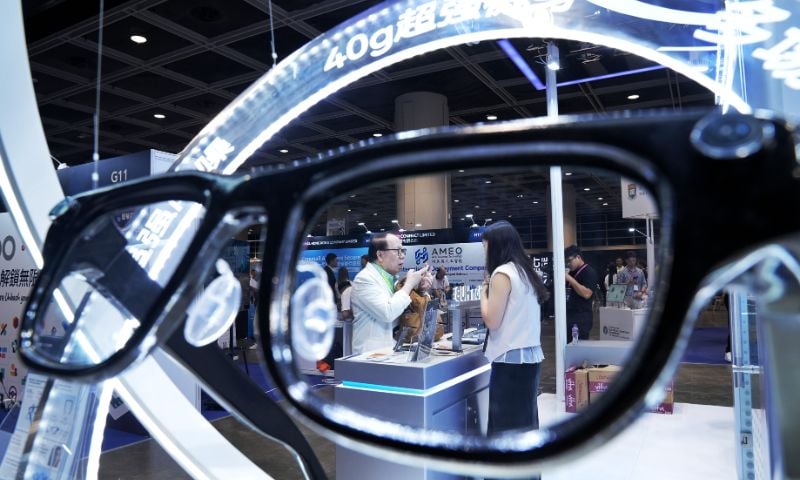



ISLAMABAD: Artificial intelligence-powered smart glasses are emerging as a new cheating threat in exams, with several recent cases in East Asia raising concerns among educators and testing authorities.
In South Korea, two people taking an English language test were caught last month using smart glasses. The exam is widely used for hiring decisions, making scores highly important for students and jobseekers.
In Taiwan, a student sitting for a medical school entrance exam was discovered wearing smart glasses after invigilators noticed unusual behaviour and later found the device was emitting heat.
Exams face new challenge
Smart glasses are not new, but experts say artificial intelligence-enabled wearable devices are becoming slimmer, cheaper and harder to detect. In test-focused societies, where one exam can shape university admission, career paths and social mobility, the technology has created a serious challenge for education authorities.
China recently required screening of all glasses during its national college entrance exam, taken by more than 10 million students each year. In the United Kingdom, England’s exam watchdog has also warned that artificial intelligence glasses and earpieces could worsen cheating.
South Korea’s college entrance exam administrator said it is discussing new measures with the Education Ministry and local education offices. Taiwan’s concerned university is also reviewing rules for artificial intelligence eyewear in examinations.
Technology forces education rethink
Thomas Corbin, a lecturer at Deakin University in Australia, warned that reported cases may be only a small part of the problem.
“If we’re seeing a few cases being reported, we’re seeing a lot more cases not being reported,” he said.
Researchers at the Hong Kong University of Science and Technology found that commercial smart glasses could perform strongly in an undergraduate exam setting, raising questions about traditional testing methods.
Education experts say the answer is not simply banning technology, but rethinking assessment. They argue schools must teach students to use artificial intelligence responsibly without outsourcing their thinking.