Key Points
- IMF says prolonged US-Israel-Iran conflict could drag global growth below 2% in 2026
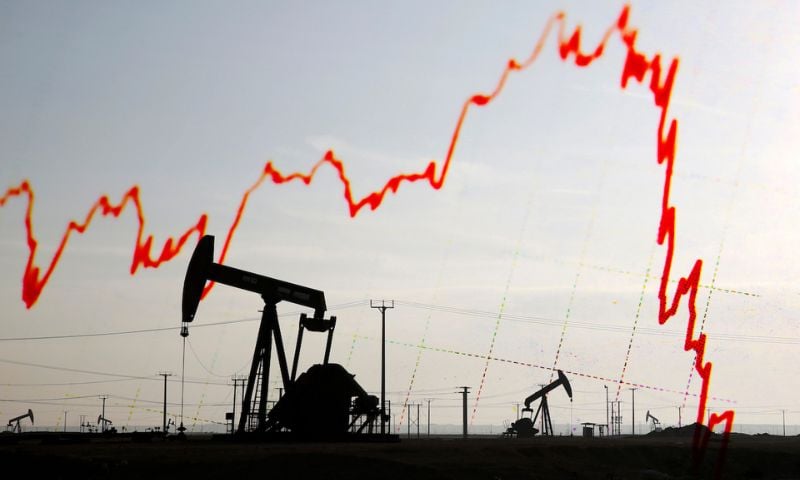
- Oil prices could average $110/barrel this year and push global inflation up to 6%
- Central banks may be forced to raise interest rates
NEW YORK: The global economy faces a growing risk of slipping into recession if the US-Israel conflict with Iran resumes and elevated energy prices continue to strain markets, the International Monetary Fund (IMF) has warned.
In its latest World Economic Outlook, the IMF cautioned that under a worst-case scenario—where oil, gas, and food prices surge and remain persistently high through this year, and the next—global growth could weaken sharply, potentially falling below 2% in 2026, signalling a severe slowdown in economic momentum worldwide.
“This would mean a close call for a global recession, which has happened only four times since 1980,” it said, the most recent being during the Covid pandemic.
IMF Growth Forecast 2026:
🇺🇸 US: 2.3%
🇩🇪 Germany: 0.8%
🇫🇷 France: 0.9%
🇮🇹 Italy: 0.5%
🇪🇸 Spain: 2.1%
🇬🇧 UK: 0.8%
🇯🇵 Japan:0.7%
🇨🇦 Canada: 1.5%
🇨🇳 China: 4.4%
🇮🇳 India: 6.5%
🇷🇺 Russia: 1.1%
🇧🇷 Brazil: 1.9%
🇲🇽 Mexico: 1.6%
🇸🇦 Saudi Arabia: 3.1%
🇳🇬 Nigeria: 4.1%
🇿🇦… pic.twitter.com/hs7T3ebF1v— IMF (@IMFNews) April 14, 2026
The warning comes as energy markets have already been shaken by more than six weeks of conflict, following the closure of the Strait of Hormuz.
The IMF said the global economy is once again being “thrown off course” by escalating tensions in the Middle East.
It added that the most severe scenario would see oil prices averaging around $110 per barrel this year, rising to $125 in 2027.
Such sustained price pressures could drive global inflation up to 6% next year, potentially forcing central banks to tighten monetary policy further by raising interest rates to contain rising prices.
IMF chief economist Pierre-Olivier Gourinchas told the BBC that while “global recession” is a complex concept in statistical terms, a 2% growth environment would feel like a downturn for much of the world, with higher unemployment and worsening food insecurity in vulnerable economies.
Oil prices have already shown extreme volatility, briefly nearing $120 per barrel during the conflict before easing to around $98.85 on Tuesday.
However, the IMF cautioned that risks would intensify significantly if high energy prices persist for an extended period.
Our reference forecast assumes a short-lived conflict with moderate energy price increases. Even so, global growth falls to 3.1% this year and headline inflation jumps to 4.4%, a sharp break from the disinflation trend of recent years. https://t.co/sWb1rBFqHc pic.twitter.com/WMDG39YHMz
— IMF (@IMFNews) April 14, 2026
In a more optimistic scenario, the Fund said global growth could ease to 3.1% in 2026 if the conflict is resolved within weeks and energy flows from the Middle East normalise by mid-year.
This would still mark a downgrade from its earlier projection of 3.3%, while the 2027 forecast remains unchanged at 3.2%.
The IMF also highlighted uneven regional impacts. The United Kingdom is expected to be among the hardest-hit advanced economies, with growth cut to 0.8% this year from 1.3%, before recovering to 1.3% next year.
Oil-exporting Gulf economies face potential slowdowns or contractions depending on exposure to disrupted trade routes and damaged infrastructure.
Iran’s economy is projected to contract by 6.1% this year, while Iraq is expected to slow by 6.8% before rebounding strongly in 2027.
Qatar could face an 8.6% contraction in 2026 following damage to key energy facilities, while Saudi Arabia is expected to remain relatively resilient due to alternative export routes, including its East-West pipeline.
The IMF noted that global outcomes will depend heavily on the duration of the conflict, the extent of damage to energy infrastructure, and the availability of alternative export routes.
It warned that prolonged instability could force further downward revisions to global growth forecasts.
Russia is among the economies projected to benefit from higher energy prices, with growth forecast at 1.1% this year and next, slightly above earlier estimates.
The country continues to adapt to sanctions imposed after its invasion of Ukraine, while shifting global energy dynamics have softened some of the earlier economic pressure.