As global demand for critical minerals accelerates — fuelled by electric vehicles, clean-energy infrastructure, and high-tech manufacturing — global supply chains are being reshuffled and mineral-rich countries are once again in the geopolitical spotlight.
Historically dependent on agriculture and textiles, Pakistan is now trying to reposition the vast but underutilised mineral endowment — from gemstones and copper to rare earths — as the foundation of an export-led growth strategy.
The opportunity is considerable, but its realisation depends not on geology alone, but on regulatory reform, value-addition, and the country’s ability to turn long-buried resources into bankable, investment-grade assets.
Supply chains redrawn
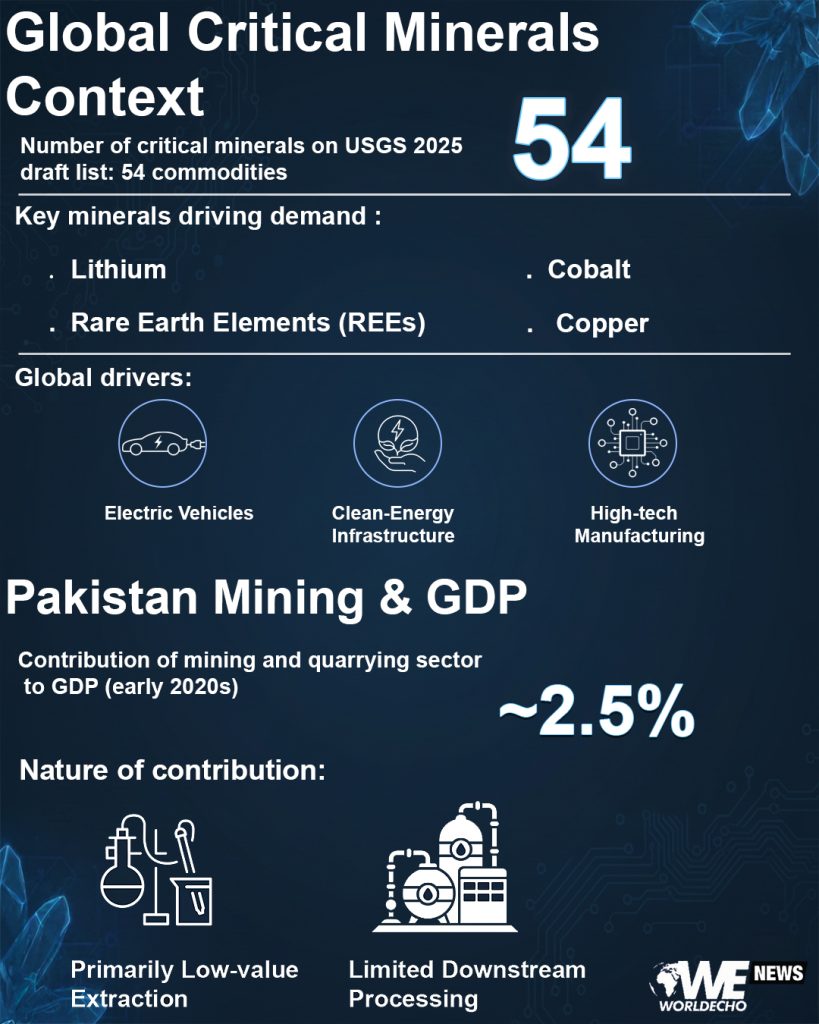
Globally, demand for critical minerals — including lithium, cobalt, rare earth elements (REEs) and copper — has surged, riding the momentum of the energy transition, electric mobility and high-tech manufacturing. According to the US Geological Survey (USGS), the draft 2025 list of critical minerals includes 54 commodities. In this new scramble for resources, mineral-rich states are no longer just suppliers of raw inputs but strategic players in a rapidly evolving geopolitical chessboard.
Pakistan’s mining and quarrying sector already contributed about 2.5 per cent of Gross Domestic Product (GDP) in the early 2020s, though this contribution remains dominated by low-value extraction rather than downstream processing, according to data published by the Pakistan Bureau of Statistics and World Bank country economic updates.
Rich reserves, poor returns
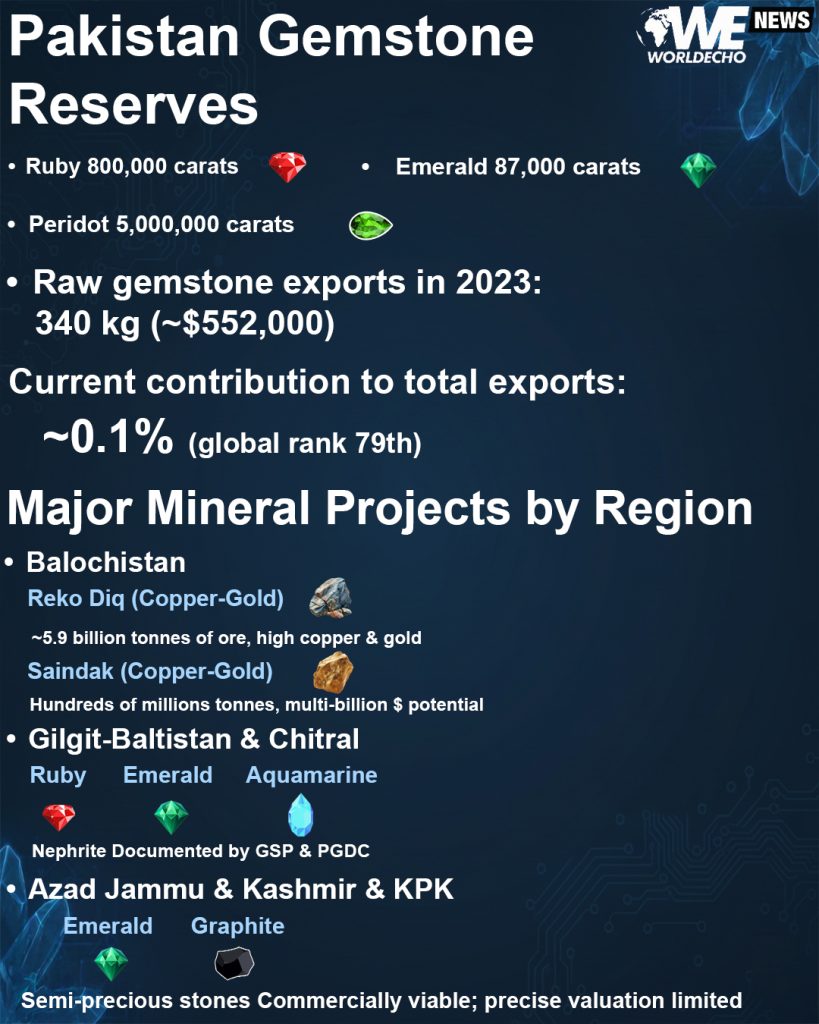
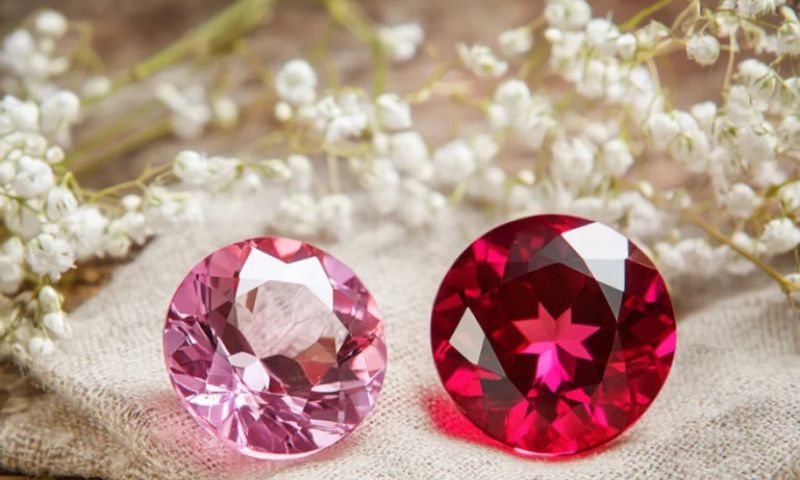
Pakistan hosts rich gemstone deposits: as per the Trade Development Authority of Pakistan, the country holds reserves including 800,000 carats of ruby, 87,000 carats of emerald and five million carats of peridot. Yet despite this mineral abundance, export performance tells a very different story. For instance, raw gemstone exports in 2023 totalled only about 340 kilograms valued at around $552,000 — a figure that barely scratches the surface of the sector’s potential.
Despite vast gemstone reserves, Pakistan’s exports remain limited due to informal mining practices, absence of modern cutting and polishing facilities, lack of internationally recognised certification systems, and widespread smuggling.
These persistent bottlenecks have repeatedly been flagged in Trade Development Authority of Pakistan (TDAP) and policy reviews of the Planning Commission of Pakistan.
Industry and policy experts suggest that expanding value-added processing, introducing traceability and certification mechanisms, and incentivising formal exports could substantially improve export volumes and foreign-exchange earnings.
Region mineral map
Balochistan hosts the Reko Diq copper-gold deposit, one of the world’s largest undeveloped mineral resources. According to official feasibility documents released by the Government of Pakistan and Barrick Gold, the project contains an estimated 5.9 billion tonnes of ore with substantial copper and gold content.
The Saindak copper-gold project, operational since the early 2000s, is estimated by the Geological Survey of Pakistan (GSP) to contain hundreds of millions of tonnes of copper-bearing ore, representing multi‑billion‑dollar long-term economic potential at prevailing global commodity prices.
Gilgit-Baltistan and Chitral are internationally recognised for ruby, emerald, aquamarine and nephrite deposits, with reserve estimates documented by the Geological Survey of Pakistan and the Pakistan Gemstone Development Company (PGDC).
Similarly, Azad Jammu & Kashmir and Khyber Pakhtunkhwa host commercially viable emerald, graphite and other semi‑precious stone zones. Experts caution, however, that precise reserve valuation remains constrained due to informal extraction and the absence of comprehensive geological surveys.
These resources form the basis for the new national gemstone policy and the broader mineral investment push.
Cross-border investment push
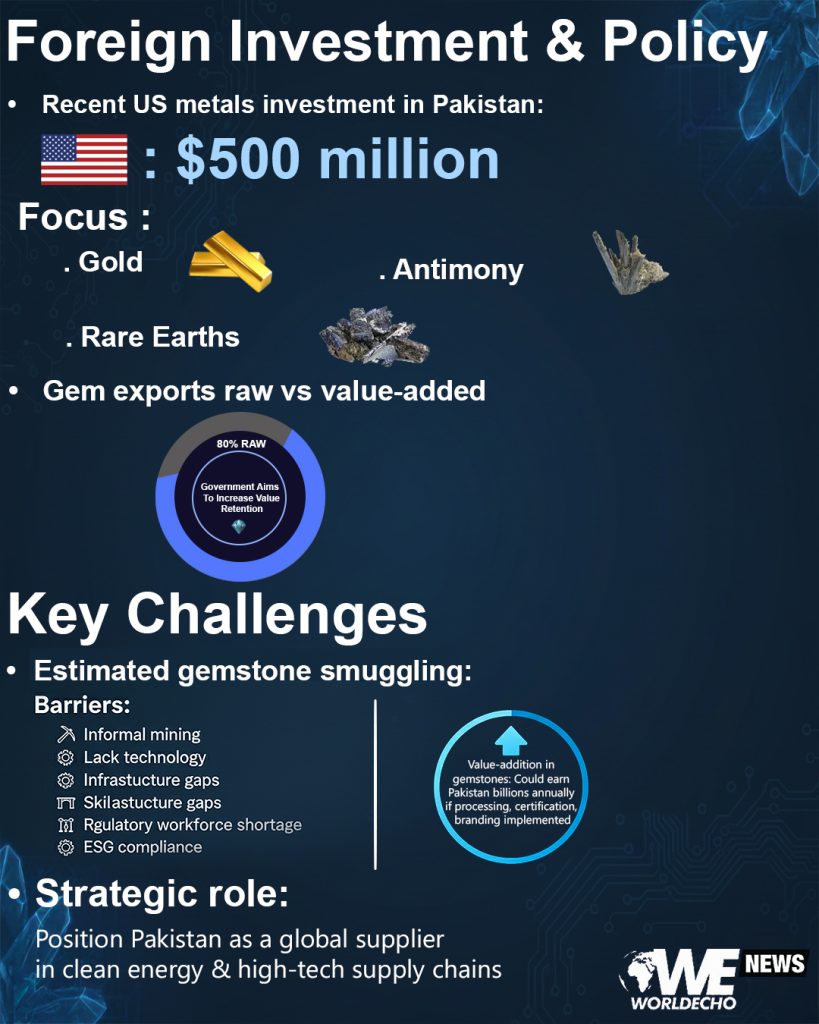
In recent months, Pakistan has signalled a shift: an American metals company signed a $500 million investment deal focused on Pakistan’s critical-minerals sector, targeting gold, antimony, rare earths and more.
US–Pakistan cooperation is deepening, as Washington looks to diversify supply chains away from China.
These international moves align with Pakistan’s recent statements on gemstone policy reform and value-addition objectives — that 80 per cent of its gem exports are currently raw, and the government aims to drastically improve value retention.
Value beyond extraction
The opportunity for Pakistan is two-fold to increase export revenues and move upstream in the value chain. Industry observers suggest that if the gemstone sector adds processing, certification and branding, Pakistan could earn billions annually. Meanwhile, the critical-minerals segment places Pakistan at the nexus of clean energy and high-tech manufacturing supply chains — offering the chance to leap from an “import economy” to an “export economy.”
According to industry analysts and government planning documents, Pakistan’s transition from an import‑dependent to an export‑driven mineral economy hinges on domestic processing, certification, branding and integration into global clean‑energy and high‑tech supply chains.
Current hurdles include regulatory uncertainty, infrastructure constraints, limited skilled manpower, and investor risk perceptions, which collectively slow large‑scale capital inflows.
However, current export contribution of gemstones remains negligible: just 0.1 per cent of Pakistan’s total exports, ranking the country at 79th globally.
Gemstones currently account for approximately 0.1 per cent of Pakistan’s exports, according to compiled trade data from UN Comtrade and Trade Development Authority of Pakistan (TDAP) — a stark reminder of how much value continues to slip through the cracks.
Persistent structural barriers
Despite the promise, significant challenges remain.
Informal mining and smuggling continue to undermine value capture — a parliamentary committee flagged $5 billion worth of gemstones smuggled out annually.
Infrastructure, technology and skilled workforce gaps.
The scale of smuggling has repeatedly surfaced in parliamentary oversight forums. A Senate Standing Committee on Industries and Production, during deliberations on mineral governance, highlighted that billions of dollars’ worth of gemstones are estimated to be smuggled out each year, bleeding national revenue.
Additional challenges include regulatory, environmental and social governance requirements expected by international investors, as well as country risk that may give long-term capital pause.
Roadmap to reform
To realise its mineral ambitions, Pakistan should:
Finalise and implement the national gemstone policy swiftly, providing regulatory clarity and incentives for value-added processing.
Encourage international partnerships with built-in technology transfer, certification standards and workforce development.
Ensure mining projects align with environmental and social safeguards to meet global Environmental, Social and Governance (ESG)-linked investment criteria.
Develop upstream processing capacity in-country to retain value, create jobs and anchor export growth locally.
Promote a transparent, predictable regulatory framework to signal seriousness and attract patient, long-term global capital in critical minerals.
Promise needs action
Pakistan’s mineral endowment is vast, but turning buried wealth into economic dividends will depend on institutional reform, global linkages and value-chain integration. The gemstones sector is only one chapter; the emerging play in rare earths and critical minerals could well define Pakistan’s next economic frontier.
For investors, policymakers and the country alike, the window of opportunity is open — the remaining question is whether Pakistan moves decisively or lets it close.