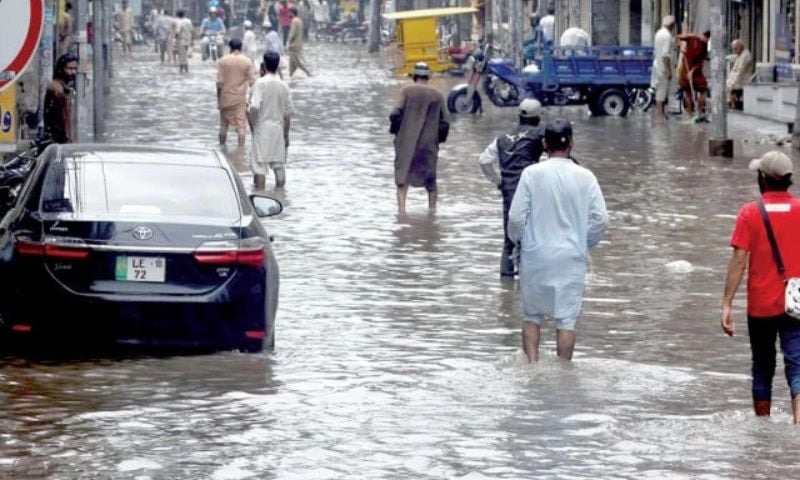
ISLAMABAD: The death toll from relentless monsoon rains, flash floods, and landslides across Pakistan has climbed to 122, with 388 people injured, according to the latest figures released by the National Disaster Management Authority (NDMA) on Friday.
As torrential downpours continue to lash vast swathes of the country on Friday, the Pakistan Meteorological Department (PMD) has issued a stark warning that heavy to very heavy rainfall is expected to persist until August 5, significantly heightening the risk of riverine flooding, flash floods, and urban inundation across several vulnerable regions.
Flood Hydrological Situation Report | 31 July 2026, 1200 PST#PMD #FFD #FloodForecastingDivision #FloodUpdate #HydrologicalSituation #RiverFlows #RiverIndus #RiverChenab #RiverRavi #Sidhnai #MediumFlood #TarbelaDam #ManglaDam #PakistanWeather #Monsoon2026 #WeatherUpdate pic.twitter.com/XjR8uCJzdf
— Pak Met Department محکمہ موسمیات (@pmdgov) July 31, 2026
The worsening situation is being driven by an intensifying monsoon system, reinforced by an approaching weather depression and a westerly wave, according to Pakistan’s Flood Forecasting Division (FFD).
The combination of these weather systems is expected to trigger widespread heavy rainfall, flash floods, and urban flooding across large parts of the country over the coming days, posing a grave threat to life and infrastructure.
Impact based Forecast for Potohar Region (1st to 3rd August, 2026) pic.twitter.com/Ti1UwDu0AL
— Pak Met Department محکمہ موسمیات (@pmdgov) July 31, 2026
Rivers on the rise as flood levels fluctuate
According to the latest daily flood bulletin issued on Friday, the River Indus is currently flowing at medium flood level at Guddu Barrage, while low flood conditions persist at Kalabagh, Chashma, and downstream Sukkur.
The River Ravi is also flowing at low flood level upstream of Balloki. Meanwhile, the Kabul, Jhelum, Chenab, and Sutlej rivers currently remain below low flood level, though authorities warn this could change rapidly as the monsoon intensifies.
Read Also: Pakistan Braces for More Flooding and Landslides as 113 Die in Monsoon Deluge
The PMD has identified the current wet spell as the result of a confluence of monsoon currents originating from the Arabian Sea and the Bay of Bengal, coupled with a westerly weather system affecting northern Pakistan. Adding to the complexity, a depression over southern Madhya Pradesh in India is expected to move westwards towards Gujarat within the next 24 hours, further fuelling the downpours.
Intense rainfall forecast for southern and central regions
The PMD has forecast widespread rain accompanied by thunderstorms and isolated heavy to very heavy downpours across much of the country until August 4. Under the influence of the approaching depression, southern Punjab, eastern Balochistan, and central and eastern Sindh are expected to experience particularly intense rainfall between August 1 and August 4, raising alarms about localised flooding and infrastructure damage.
The FFD has warned that River Chenab at Marala, Khanki, and Qadirabad could fluctuate between low and medium flood levels in the coming days, with Marala potentially reaching the high flood category if heavy upstream inflows materialise.
Additionally, medium to high flows are expected in several tributaries and seasonal streams connected to the Jhelum, Chenab, and Ravi river systems, including the Dora, Dotta, Dowara, Bhimber, Halsi, Aik, Palkhu, Bein, Bassanter, Deg, and Sakki nullahs.
Urban flooding threats loom large
Urban flooding remains a major concern across northern and central Punjab, with authorities identifying Rawalpindi, Jhelum, Gujranwala, Gujrat, Sialkot, Narowal, Lahore, Faisalabad, Sargodha, Mandi Bahauddin, Okara, and Sahiwal as districts facing a heightened risk of inundation due to intense rainfall.
The PMD has urged residents in these areas to remain vigilant as drainage systems are likely to be overwhelmed.
Impact based Forecast for Lower Sindh (1st to 3rd August, 2026) pic.twitter.com/BYbXE7Tp0Q
— Pak Met Department محکمہ موسمیات (@pmdgov) July 31, 2026
In Sindh, the PMD has warned of prolonged waterlogging and urban flooding in Badin, Hyderabad, Jamshoro, Khairpur, Matiari, Mirpur Khas, Sanghar, Shaheed Benazirabad, Sujawal, Tando Allahyar, Tando Muhammad Khan, Tharparkar, Thatta, and Umerkot, particularly during the peak of the wet spell from August 1 to 4. Flash flooding is also expected in the hill torrents of Dera Ghazi Khan and in mountain streams across Khyber Pakhtunkhwa and northern Balochistan.
PMD FFD reports River Indus at Guddu in Medium flood level. Heavy to very heavy rainfall is expected up to 04 Aug, with risks of urban flooding, flash flooding and rising flows in nullahs/eastern rivers. Stay alert and follow official updates.#PMD #FFD #FloodAlert #Monsoon2026 pic.twitter.com/eOIR6jBZcB
— Pak Met Department محکمہ موسمیات (@pmdgov) July 31, 2026
Reservoir levels under close watch
The latest hydrological observations indicate that Tarbela Dam is holding approximately 86.7 percent of its live storage capacity, while Mangla Dam stands at about 54.5 percent. While these levels provide a buffer against potential water shortages, authorities are closely monitoring reservoir storage as the monsoon season continues and inflows increase.
Glacier Lake Monitoring Update: Maximum Air Temperature Observed in Glaciated Valleys on July 31, 2026.#PMD #GLOFMonitoring #GlacierLakeMonitoring #PakistanWeather #AirTemperatureUpdate #GlaciatedValleys #GilgitBaltistan #KhyberPakhtunkhwa #NorthernPakistan #GlacierMelt pic.twitter.com/Q7VxPIU3Li
— Pak Met Department محکمہ موسمیات (@pmdgov) July 31, 2026
The PMD has forecast widespread rainfall over the upper catchments of the Sutlej, Ravi, and Chenab rivers during the next 24 hours, with scattered to widespread rain expected across Islamabad, Kashmir, Khyber Pakhtunkhwa, Punjab, Sindh, Balochistan, and Gilgit-Baltistan.
For the following 48 hours, heavy to very heavy rainfall is expected to expand across southern and central Punjab, much of Sindh, and parts of eastern Balochistan.
Read Also: Pakistan Braces for Major Monsoon Spell as Heavy Rains Predicted from July 29 to August 5
The weekly outlook confirms that the current monsoon spell will persist until at least August 4, with river flows in the eastern river system expected to rise steadily. Provincial administrations, disaster management agencies, and residents in vulnerable districts have been urged to remain vigilant and take precautionary measures against possible flooding, flash floods, and urban inundation.