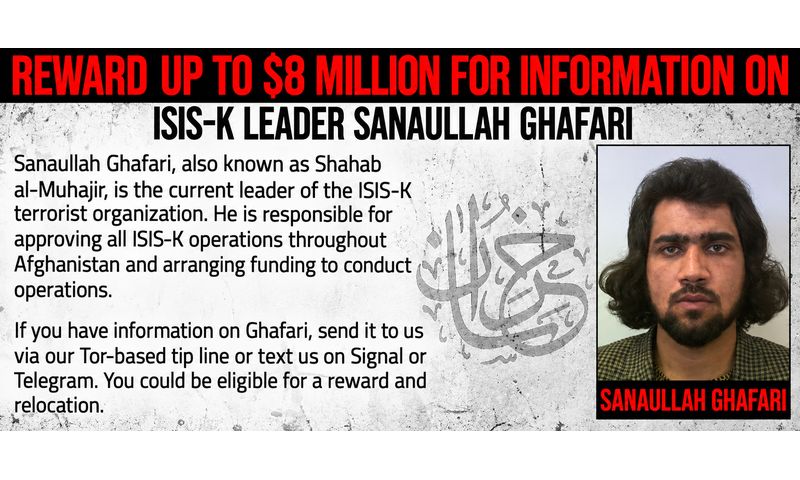
ISLAMABAD: Sanaullah Ghafari, also known as Shahab al-Muhajir and the chief of ISIS-K, was recently spotted in Afghanistan’s Kunar province, placing the group’s top leader directly on Afghan soil and raising fresh questions about the militant organisation’s continued presence and operational activity in the country.
The presence of Islamic State-Khorasan (ISKP) chief Sanaullah Ghafari in Kunar province has renewed attention on the terrorist group’s senior leadership and its continued ability to operate from Afghan territory.
Ghafari remains identified by the United Nations as the leader of ISIL-K, which he has headed since June 2020. The UN says he is responsible for approving ISKP operations across Afghanistan and arranging funding for them, and has linked him to terrorist attacks in Afghanistan and Pakistan.
A UN assessment has previously reported that several member states confirmed Ghafari was alive and remained ISIL-K’s leader, with his reported location in Kunar. The same assessment said he had possibly been targeted while leaving a Jamaat-ul-Ahrar training centre in the province.
A Fugitive Leader
Ghafari has remained a high-value target for counterterrorism agencies since taking over ISKP’s leadership.
UN assessments describe him as a key figure in transforming the group’s recruitment strategy and expanding its appeal beyond its traditional base. A 2025 UN report said he continued to lead ISIL-K and moved frequently, while the group expanded recruitment among Afghan communities and foreign fighters.
The UN sanctions listing says Ghafari was appointed by Islamic State’s central leadership and is responsible for approving ISIL-K operations and arranging their financing.
Kunar Stronghold
Kunar has long featured prominently in the history of ISKP operations.
UN reporting has identified Kunar and neighbouring Nangarhar as core areas of ISKP activity, although the group has progressively dispersed elements into other Afghan provinces. Earlier assessments reported that ISKP factions had moved towards Badakhshan, Herat and Nimroz as the group adapted to pressure from the Taliban.
The presence of Ghafari in Kunar therefore places the group’s top leadership in an area that has historically served as an important operating environment for ISKP.
Wider Militant Network
The development also comes amid continuing concerns over the interconnected nature of militant networks operating in Afghanistan.
UN assessments have reported ISKP recruitment among disillusioned Taliban members and foreign fighters, while also noting opportunistic links between ISKP and elements of other militant organisations. A 2025 UN report said some member states believed ISKP maintained such links with TTP and disillusioned Taliban elements.
The UN has separately reported that TTP has received assistance from Taliban rank-and-file members as well as elements associated with Al-Qaida.
These assessments do not establish a single unified militant structure. Rather, they point to overlapping recruitment pools, contacts and operational networks among groups pursuing different agendas.
Regional Threat
ISKP’s activities have increasingly extended beyond Afghanistan. UN assessments say the group retains the capability and intent to conduct external operations and has sought to recruit fighters from Central Asia and establish networks capable of supporting attacks outside Afghanistan.
The UN’s latest available ISIL reporting continues to treat ISIL-K as a significant terrorist threat emanating from Afghanistan.
For Pakistan, the reported presence of ISKP’s top leader in Afghanistan adds another dimension to Islamabad’s longstanding concerns over militant organisations operating from Afghan territory.