
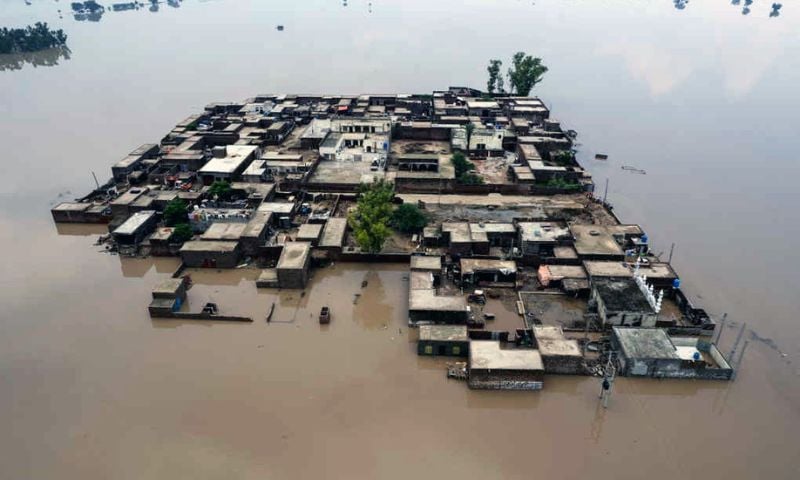
ISLAMABAD: Pakistan’s weather agency has issued a fresh warning of heavy rainfall and thunderstorms across central and northern parts of the country until August 5, as the monsoon death toll climbed to 113 with 364 injuries reported amid flooding and landslides.
The Pakistan Meteorological Department (PMD) cautioned that torrential rains could trigger urban flooding in major cities, landslides in vulnerable northern areas, and flash floods in local streams and hill torrents, posing a severe threat to life and property.
The National Disaster Management Authority (NDMA) confirmed that at least 113 people, including 50 children and 23 women, have lost their lives in monsoon-related incidents since June 26.
Read Also: Pakistan Braces for Major Monsoon Spell as Heavy Rains Predicted from July 29 to August 5
The northwestern Khyber Pakhtunkhwa province has recorded the highest number of fatalities, underscoring the devastating impact of this year’s monsoon season on already vulnerable communities.
Glacier Lake Monitoring Update: Air Temperatures Observed Across Glaciated Valleys on July 29, 2026 at 2000PST.#PMD #GLOFMonitoring #GlacierLakeMonitoring #PakistanWeather #AirTemperatureUpdate #GlaciatedValleys #GilgitBaltistan #KhyberPakhtunkhwa #NorthernPakistan #GlacierMelt pic.twitter.com/JnI2p0p0on
— Pak Met Department محکمہ موسمیات (@pmdgov) July 29, 2026
Multiple threats loom across regions
The PMD warned that heavy rains during July 30-31 may cause urban flooding in low-lying areas of Islamabad, Rawalpindi, the Pothohar region, Peshawar, Nowshera, Gujranwala, Gujrat, Sialkot, Lahore, and Faisalabad.
From July 31 to August 2, cities in Sindh including Nawabshah, Sukkur, Hyderabad, Thatta, Badin, and Mirpur Khas will also face a similar threat.
Landslides are expected to occur in vulnerable areas of upper Khyber Pakhtunkhwa, including Dir, Swat, Kohistan, Buner, Battagram, Mansehra, Shangla, and Abbottabad, as well as in Murree, Galliyat, and Kashmir through August 5.
The PMD also warned of flash floods in local streams and nullahs across Kashmir, Murree, Galliyat, northeastern Punjab, Islamabad, Khyber Pakhtunkhwa, Gilgit-Baltistan, and hill torrents in Dera Ghazi Khan and northeastern Balochistan.
Rain accompanied by thunderstorms is expected during the next 3 to 6 hours in parts of Faisalabad, Sargodha, Khushab, Chiniot, Toba Tek Singh and nearby districts.#WeatherAlert #PunjabWeather #HeavyRain #ThunderstormAlert #CentralPunjab #RainAlert #StaySafe #PMD #PakistanWeather pic.twitter.com/taeKSxSjgR
— Pak Met Department محکمہ موسمیات (@pmdgov) July 29, 2026
The weather agency cautioned that heavy rains, windstorms, and lightning could damage weak structures, including solar panels, electric poles, and billboards. Tourists and travelers have been advised to exercise caution, while farmers have been urged to manage crop activities and livestock care in view of the forecast.
Climate vulnerability on full display
Pakistan, ranked among the countries most vulnerable to climate change, has experienced increasingly erratic weather patterns in recent years, including extreme rainfall, floods, and heatwaves that have exposed weak infrastructure and gaps in disaster preparedness.
The current monsoon season has once again highlighted these challenges, with authorities struggling to respond to the cascading impacts of heavy rains.
The National Agromet Centre has issued a three-day high-alert weather bulletin. From Thursday to Saturday (جمعرات سے ہفتہ), partly cloudy skies with high-speed gusty winds, thunderstorms, and heavy torrential rainfall are expected across Pothohar, Northeast & Central Punjab, .. pic.twitter.com/DBXlijUIvM
— Pak Met Department محکمہ موسمیات (@pmdgov) July 29, 2026
The PMD attributed the current spell to monsoon currents from the Arabian Sea and the Bay of Bengal, which has penetrated upper and central parts of the country since July 29.
Read Also: Pakistan on High Alert as Monsoon Floods Swell Rivers, Threaten Multiple Regions
The ongoing rains come on the heels of devastating floods in recent years, including the 2022 catastrophic floods that killed more than 1,700 people and affected over 33 million nationwide. Last year, heavy monsoon rains again claimed over 900 lives, with Punjab among the hardest-hit provinces.