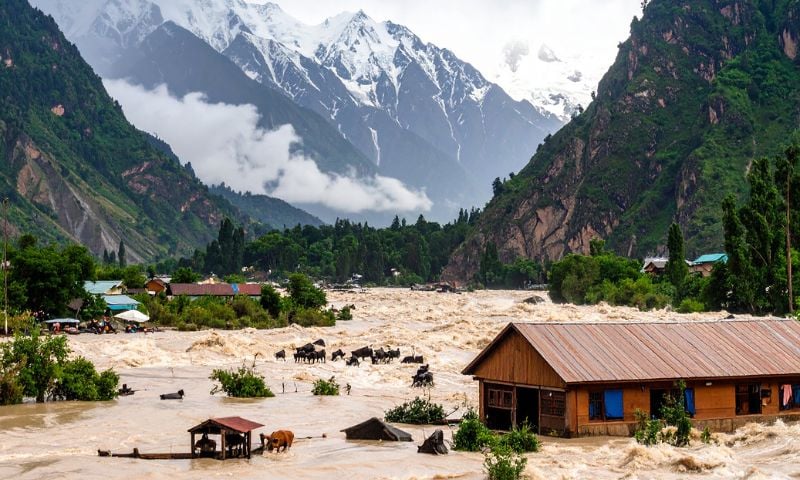
ISLAMABAD: Pakistan is on high alert as the National Disaster Management Authority (NDMA) on Saturday issued a stark warning of escalating flood risks across multiple regions, with relentless monsoon rains continuing to swell rivers and streams and threatening to unleash devastation on communities already bracing for the annual deluge.
According to the NDMA’s National Emergencies Operation Centre (NEOC), medium-level flooding has been reported at strategic points along the Chenab River, while flash flood threats loom over northern Balochistan, Khyber Pakhtunkhwa, and the hill torrents of Dera Ghazi Khan during the next 24 to 48 hours.
Read Also: Pakistan Weather Department Forecasts Nationwide Rainfall, Warns of Flooding
The warning comes as Pakistan grapples with the recurring nightmare of monsoon-induced flooding, a crisis that has become increasingly severe and frequent in recent years, exposing the country’s vulnerability to climate change and inadequate infrastructure.
🌊 Daily Flood Hydrological Situation Report | 25 July 2026 (1800 PST):
Most major rivers are flowing at normal to low flood levels, while River Chenab at Q.Abad and Chiniot is currently at medium flood level.#PMD #FloodUpdate #FloodSituation #HydrologicalReport #RiverChenab pic.twitter.com/xwuNH2JOMC— Pak Met Department محکمہ موسمیات (@pmdgov) July 25, 2026
Chenab River in spate
Medium-level flooding was recorded at Khanki, Qadirabad and Chiniot Bridge on the Chenab River, while the Palkhu Nala at Wazirabad was also flowing at medium flood level, the NDMA reported.
The authority warned that water flows in the Chenab River were expected to increase further during the next 24 hours at Marala, Khanki, Qadirabad and Chiniot Bridge. Water levels at Trimmu Barrage are also likely to rise to medium flood level during the same period.
Flash flood warnings for high-risk areas
The NDMA warned of possible flash floods in the hill torrents of Dera Ghazi Khan, seasonal streams in Khyber Pakhtunkhwa, and parts of northern Balochistan over the next 24 to 48 hours. These regions are particularly vulnerable due to their mountainous terrain and limited drainage infrastructure.
Glacier Lake Monitoring Update: Maximum Air Temperature Observed in Glaciated Valleys on July 25, 2026.#PMD #GLOFMonitoring #GlacierLakeMonitoring #PakistanWeather #AirTemperatureUpdate #GlaciatedValleys #GilgitBaltistan #KhyberPakhtunkhwa #NorthernPakistan #GlacierMelt pic.twitter.com/UYgBdBeaB5
— Pak Met Department محکمہ موسمیات (@pmdgov) July 25, 2026
The authority also cautioned that landslides, debris flows, and sudden flash floods remained a major threat in mountainous regions during the monsoon season. Citizens have been advised not to stop near riverbanks, steep slopes, or narrow mountain passages vulnerable to rockfalls and landslides.
Urban flooding risks loom over major cities
Urban flooding risks have also been forecast for several major cities as heavy monsoon rains continue to lash the country. The NDMA identified the following cities as high-risk zones:
- Gujranwala
- Mandi Bahauddin
- Sialkot
- Narowal
- Faisalabad
- Sargodha
- Jhang
- Multan
- Hafizabad
- Lahore
The warning comes as urban centres across Punjab struggle with inadequate drainage systems that routinely fail during heavy rainfall, leading to waterlogging, traffic chaos, and property damage.
Public safety advisory
The NDMA advised the public to avoid unnecessary travel to flood-affected areas and urged motorists to check weather forecasts and road conditions before setting out. The authority directed all relevant departments to maintain continuous monitoring of vulnerable locations, keep emergency response teams on standby, and ensure immediate restoration of roads in case of closures.
In a stern warning to citizens, the NDMA urged people not to cross flooded roads, streams, or fast-moving water on foot or in vehicles, cautioning that even shallow flowing water can sweep away people and vehicles.
Daily National Weather Forecast | 25-07-2026 pic.twitter.com/c6MCvvwa5P
— Pak Met Department محکمہ موسمیات (@pmdgov) July 25, 2026
Climate crisis deepens Pakistan’s vulnerability
Pakistan has emerged as one of the most climate-vulnerable countries in the world, with devastating floods in 2022 submerging one-third of the country, displacing millions, and causing over $30 billion in damages. The recurring monsoon floods have become a grim annual ritual, testing the government’s preparedness and exposing the fragility of the nation’s infrastructure.
Read Also: Pakistan’s Punjab Province Unveils First-Ever Drone System for Flood Monitoring
The current monsoon season has already claimed dozens of lives across the country, with the NDMA warning that the worst may yet be to come. The authority has called for coordinated efforts between federal and provincial governments, military and civil agencies, and local communities to mitigate the impact of the floods.
Provincial response
Provincial disaster management authorities have been placed on high alert, with rescue and relief teams positioned in vulnerable districts. The military has also been placed on standby to assist in rescue operations if the situation deteriorates.
🌧️ Latest Rainfall Update | Islamabad & Rawalpindi
The Pakistan Meteorological Department (PMD) has released the latest rainfall observations recorded up to 2:10 PM (PST) on 25 July 2026.
PMD continues to monitor weather conditions and will issue timely updates.#PMD pic.twitter.com/Y4ATVf06MM— Pak Met Department محکمہ موسمیات (@pmdgov) July 25, 2026
In Punjab, authorities have begun evacuating residents from low-lying areas along the Chenab River, while in Khyber Pakhtunkhwa and Balochistan, emergency response teams are monitoring flash flood risks.
What the NDMA is saying
The NDMA has emphasised that continuous monitoring and proactive measures are critical to minimising loss of life and property.
“All relevant departments have been directed to maintain continuous monitoring of vulnerable locations, keep emergency response teams on standby, and ensure immediate restoration of roads in case of closures,” the authority stated.