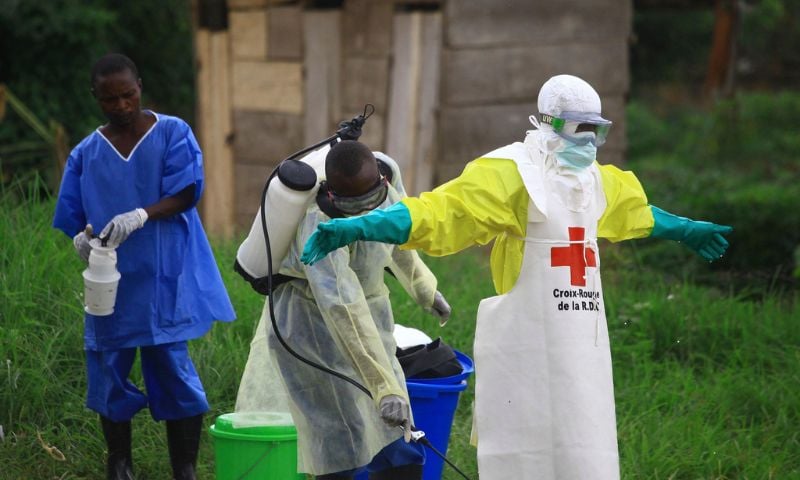



KIGALI, Rwanda: Confirmed Ebola cases in the Democratic Republic of Congo have surpassed 100 as health officials struggle to contain a fast-growing outbreak that has spread across multiple provinces, authorities said Sunday.
According to a report released by Congo’s Communications Ministry, the outbreak has affected 11 health zones since it was first declared on May 15 in the northeastern province of Ituri.
More than 900 suspected cases have also been recorded, raising fears of a wider regional health emergency.
The Ebola epidemic remains active in the provinces of Ituri, North Kivu and South Kivu, where health authorities have intensified surveillance, screening and public awareness campaigns.
“Vigilance and adherence to prevention measures remain essential,” the ministry said in a statement.
The recent Ebola and hantavirus outbreaks demonstrate that the world is still vulnerable to rapidly spreading infectious diseases, Tedros Ghebreyesus, the head of the (WHO), warned on Saturday.https://t.co/1EkEAkjUcE
— UN News (@UN_News_Centre) May 24, 2026
The World Health Organization (WHO) has confirmed at least seven deaths linked to the outbreak so far.
Authorities in Congo have suspended social activities in Ituri — the epicentre of the outbreak — including sporting events and large public gatherings in an effort to slow transmission.
Regional concern has also grown after Uganda confirmed three new Ebola cases on Saturday, bringing the country’s total number of infections in the current outbreak to five.
The Africa Centres for Disease Control and Prevention (Africa CDC) warned that at least 10 African countries face the risk of Ebola spread, including Rwanda, Kenya, Tanzania, Angola, Burundi, the Central African Republic, the Republic of Congo, Ethiopia, South Sudan and Zambia.
The WHO has raised the Ebola alert level to “very high”, prompting several neighbouring countries to tighten preventive measures, including increased border screenings and travel restrictions for arrivals from Congo.
Ebola is a highly infectious viral disease that spreads through direct contact with infected bodily fluids and can cause severe fever, bleeding and organ failure. Previous outbreaks in Congo have killed thousands of people over the past decade.
Health officials continue to monitor the situation closely as fears grow that the outbreak could expand further across Central and East Africa.