ISLAMABAD: A Court of Arbitration constituted under the 1960 Indus Waters Treaty (IWT) has issued a significant ruling affirming the continued validity of the landmark water-sharing agreement and the tribunal’s authority to hear Pakistan’s concerns regarding hydroelectric projects on the western rivers.
The court’s decision addressed Pakistan’s longstanding concerns over water flow management, treaty interpretation and the protection of downstream rights under the decades-old accord.
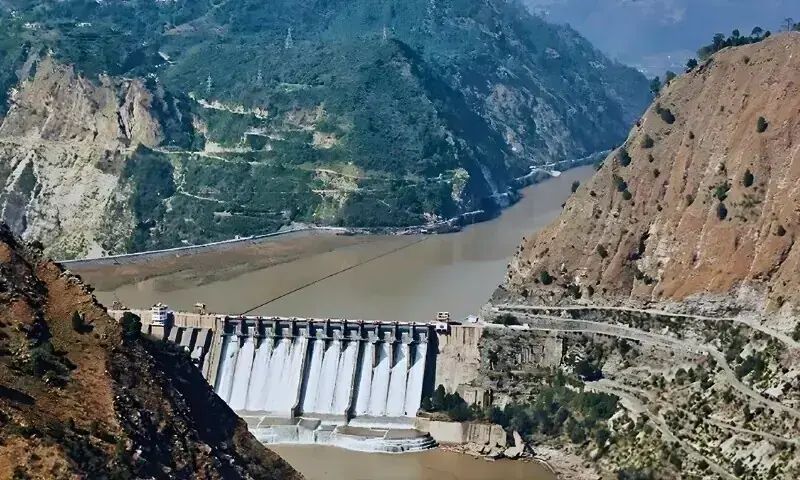
The dispute centers on the design and operation of India’s Kishenganga and Ratle hydroelectric projects being constructed on rivers allocated to Pakistan under the treaty framework.
Pakistan has consistently argued that certain technical features of the projects violate treaty provisions and could potentially allow India to manipulate water flows into Pakistan.
Pakistan has welcomed the latest supplemental award by the Court of Arbitration as a vindication of international law and the continued validity of the Indus Waters Treaty.
The Indus Waters Treaty, brokered by the World Bank in 1960, is regarded as one of the world’s most durable water-sharing agreements.
It allocates the eastern rivers — Ravi, Beas and Sutlej — primarily to India, while granting Pakistan rights over the western rivers — Indus, Jhelum and Chenab.
Origins of the Arbitration Case
Pakistan formally initiated arbitration proceedings in 2016 under Article IX and Annexure G of the treaty after raising objections to the design specifications of India’s Kishenganga and Ratle hydropower projects in Indian-illegally occupied Jammu and Kashmir (IIOJK).
Islamabad argued that some structural features, particularly gated spillways and low-level outlets, could enable India to exert undue control over downstream water flows.
Pakistan sought a full arbitration process, arguing that the issues involved interpretation of treaty provisions rather than purely technical disagreements.
In July 2023, the Court of Arbitration issued an Award on Competence affirming that it had jurisdiction to hear Pakistan’s case. The proceedings later advanced to hearings on the merits at the Peace Palace in The Hague during July 2024.
The dispute took a sharper turn in April 2025 after India announced that it was placing the Indus Waters Treaty “in abeyance” following heightened regional tensions.
Pakistan rejected the move as illegal and insisted that no party could unilaterally suspend or terminate the treaty.
Pakistan’s Core Concerns
Pakistan’s objections have largely focused on concerns that India’s hydropower infrastructure could alter natural river flows entering Pakistan, particularly during critical agricultural seasons.
Pakistani officials and water experts argued before the tribunal that specific design features in the Kishenganga and Ratle projects exceeded the limited rights granted to India under the treaty for run-of-river hydroelectric generation.
Islamabad maintained that the treaty permits India to generate hydropower on western rivers only under strict technical constraints that prevent storage or manipulation of water flows.
Pakistan also warned that any weakening of treaty mechanisms could threaten regional water security and undermine one of the few enduring agreements between the two countries.
The issue carries enormous strategic importance for Pakistan because the Indus River System supports the country’s agriculture, food production and hydropower generation.
According to international assessments, Pakistan relies heavily on waters flowing from the western rivers governed under the treaty.
Islamabad further argued that India’s unilateral declaration to suspend or hold the treaty in abeyance had no legal standing under international law or the treaty itself.
Pakistani officials stressed that the agreement contains no provision permitting unilateral withdrawal or suspension.
What the Arbitration Court Decided
In its Supplemental Award announced on June 27, 2025, the Court of Arbitration ruled unanimously that India’s decision to place the treaty “in abeyance” did not affect the tribunal’s competence or authority to continue proceedings.
The court stated that a unilateral action by one party after arbitration proceedings had begun could not invalidate or suspend the tribunal’s jurisdiction. It further declared that the treaty remained operational and legally binding.
Pakistan hailed the ruling as a major diplomatic and legal victory. The Pakistani Foreign Office said the award “vindicates Pakistan’s position that the Indus Waters Treaty remains valid and operational.”
Subsequently, in an interpretative award issued in August 2025, the court sided with Pakistan on several technical questions related to the design criteria of Indian run-of-river projects on the western rivers.
The tribunal emphasized that India must allow unrestricted downstream flow to Pakistan except within narrowly defined treaty exceptions for hydropower generation.
The ruling also addressed disputed engineering features including gated spillways, low-level outlets and turbine intake structures, areas where Pakistan argued India’s interpretation could permit excessive operational control over river flows.
According to the supplemental award issued on May 15 2026, the court addressed matters related to “maximum pondage” and broader treaty interpretation following hearings held in April.
Legal experts note that the rulings add significant international weight to Pakistan’s interpretation of the treaty and reinforce the principle that bilateral water-sharing agreements cannot be unilaterally suspended.