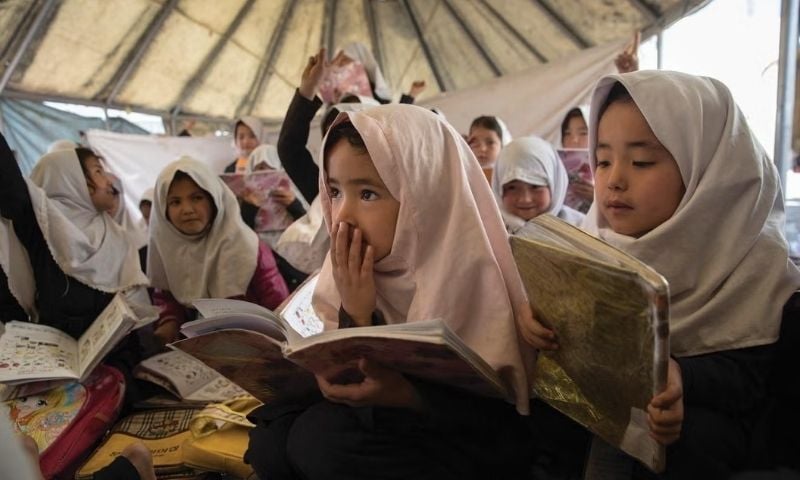
KABUL: Afghanistan has become the only country where girls and women are effectively barred from secondary and higher education, forcing some students into clandestine classrooms where simply attending lessons can carry serious personal risks.
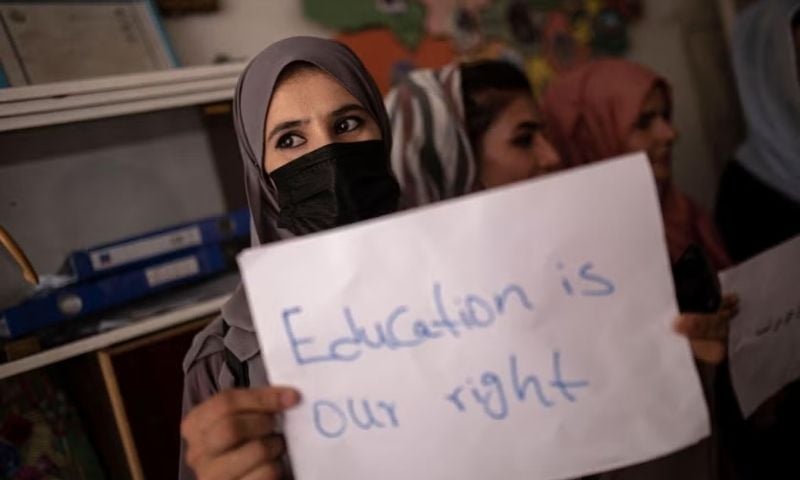
More than 2.6 million Afghan girls have been denied secondary education since the Taliban returned to power in 2021, according to UNICEF. Girls are barred from formal schooling beyond Grade Six, while women have been excluded from universities since December 2022.
Afghanistan Girls Risk Arrest to Study
Despite the restrictions, underground schools continue operating across Afghanistan, sometimes concealed inside primary schools or private buildings.
Students take precautions to avoid detection, including travelling separately and changing routes. Teachers and school administrators also face the possibility of raids.
ALSO READ: 180 Afghan Religious Scholars Call Armed Resistance against Taliban Religious Duty
Recent reporting on clandestine schools described students hiding during Taliban inspections, while some underground education networks have previously seen staff arrested after being discovered.
Some younger girls have even deliberately tried to fail Grade Six examinations so they can remain in formal classrooms rather than lose access to school altogether.
Education Ban Threatens Afghanistan’s Future
The consequences extend far beyond classrooms. UNICEF warns that girls excluded from education face increased risks of early marriage, child labour, abuse and gender-based violence.
The restrictions could also deepen Afghanistan’s shortage of skilled women. UNICEF estimates the country risks losing up to 20,000 female teachers and 5,400 female healthcare workers by 2030 if current restrictions continue.
For girls attending secret schools, education has therefore become more than an academic pursuit. It is an act of determination carried out under the constant possibility that their classroom could be discovered.