TOKYO: Japan said Monday that it was keeping an eye on North Korea, which will launch a satellite in the coming weeks, which Tokyo believes may be a ballistic missile.
Pyongyang has told Japan’s coastguard that a rocket will be launched between May 31 and June 11 and it would fall in waters near the Yellow Sea, East China Sea and east of Luzon Island in the Philippines, a Japanese coastguard spokesman told AFP.
However , in a tweet, the Japanese prime minister’s office said Fumio Kishida has issued instructions “on North Korea’s notification about the launch of the satellite which could be a ballistic missile.
According to the tweet, the Japanese prime minister has instructed personnel to gather intelligence, be cautious, and closely communicate with allies including the US and South Korea.
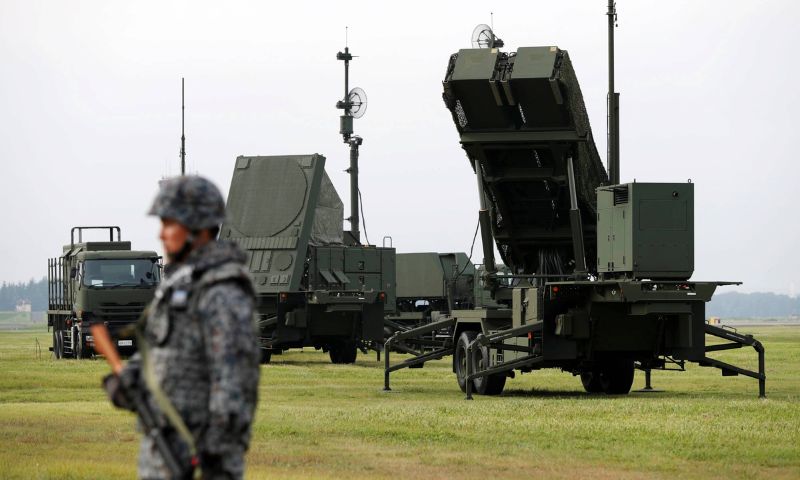
Additionally, the Air Self-Defense Force has been instructed by Japan’s defence ministry to shoot down any ballistic missile that is on course to be headed for its territory.
According to the ministry, the forces would be permitted to shoot down an object in mid-air using Patriot Missile PAC-3 and Standard Missile SM-3.
Even if it is referred to be a satellite, Kishida told reporters that employing ballistic missile technology for a launch would be against United Nations Security Council resolutions and pose a major threat to public safety.
In recent months, Pyongyang has increased the number of missile launches, some of which have set off emergency alert systems in some areas of Japan.
During this time, Seoul and Tokyo have been attempting to repair their long-broken relations, notably by cooperating more on North Korea’s military threats.
Asked about possible negotiations with North Korea leader Kim Jong Un, Kishida said that Tokyo was open to talks and he was interested in “making concrete progress”.
In the meantime, a statement from the vice-minister of foreign affairs of North Korea was released by official media, appearing to support Pyongyang’s unusually sympathetic stance to ties with Japan.
There is no reason the DPRK and Japan cannot meet if Japan avoids “being shackled by the past and seeks a way out for improving the relations,” Pak Sang Gil stated in his statement. –- AFP