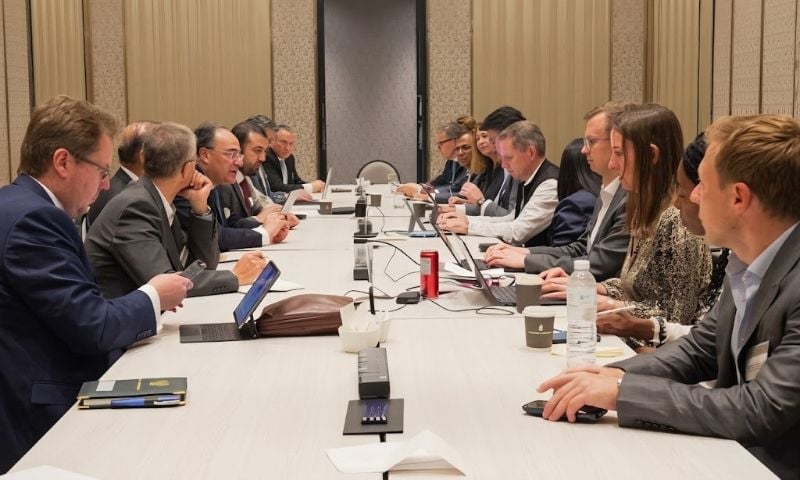
BANGKOK, Thailand: Pakistan is seeking to replace costly short-term borrowing with longer-maturity financing as it works to strengthen economic stability, sustain investor confidence and promote export-led growth, Finance Minister Muhammad Aurangzeb said during a symposium on the sidelines of the World Bank Group-IMF Annual Meetings 2026 in Bangkok, Thailand, on Thursday.
Aurangzeb participated in the Bank of America Small Talks Symposium, where he highlighted Pakistan’s renewed access to international markets, improving external-sector indicators, stronger foreign exchange reserves and positive net international reserves under the International Monetary Fund (IMF) definition.
Finance Minister Highlights Economic Stabilization, Structural Reforms and Export-Led Growth at BoFA Symposium
Federal Minister for Finance and Revenue, Senator Muhammad Aurangzeb, participated in the Bank of America (BoFA) Small Talks Symposium on the sidelines of the World Bank Group–IMF Annual Meetings 2026 in Bangkok, Thailand, to discuss Pakistan’s economic outlook and reform agenda.
The Finance Minister highlighted Pakistan’s renewed international markets access and efforts to replace costly, short-term debt with longer-maturity financing. He outlined improving external indicators, stronger foreign exchange reserves and positive net international reserves under the IMF definition. He reaffirmed Pakistan’s commitment to completing the IMF programme and sustaining policy credibility beyond it.
Discussions covered tax administration reforms, broadening the tax base, privatization and growing investor interest. The Finance Minister emphasized sustainable, export-led growth through tariff reforms, competitive inputs and targeted financing.
He also outlined measures to manage regional conflict, energy-price pressures and climate shocks while strengthening trade and investment partnerships.
— Ministry of Finance, Government of Pakistan (@Financegovpk) October 15, 2026
Pakistan focuses on economic reforms and investor confidence
The finance minister reaffirmed Pakistan’s commitment to completing its ongoing IMF programme and maintaining policy credibility beyond the programme’s conclusion. He stressed the importance of sustaining economic reforms to strengthen macroeconomic stability and build confidence among international investors.
Read Also: Pakistan Seeks Stronger Credit Rating, Longer-Term Financing
Discussions at the symposium covered tax administration reforms, broadening the tax base, privatisation and growing investor interest in Pakistan. The minister highlighted efforts to improve revenue collection and advance structural reforms aimed at strengthening the country’s economic foundations.
Read Also: Pakistan Eyes Cheaper Finance Without Adding to Debt
Aurangzeb also underscored the need for sustainable, export-led growth, emphasising tariff reforms, competitive inputs for businesses and targeted financing to support productive sectors and enhance Pakistan’s competitiveness in international markets.
He further outlined measures to manage economic pressures arising from regional conflicts, energy-price volatility and climate-related shocks. Strengthening trade and investment partnerships, he said, remained important to improving resilience and supporting long-term economic growth.