Key Points
- GUGO Motors and China’s Shengtang Group sign an MoU to explore electric bus manufacturing in Pakistan
- Partnership targets technology transfer, local manufacturing and export-ready vehicles.
- Chinese business delegation explores investment opportunities across electric mobility, manufacturing and other sectors.
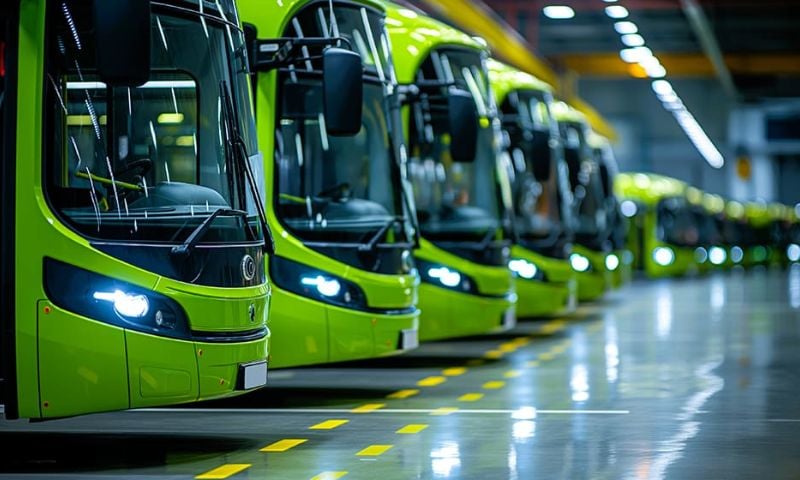
ISLAMABAD: Pakistan’s GUGO Motors and China’s Shengtang Group have signed a memorandum of understanding (MoU) to manufacture electric buses in Pakistan.
The joint venture aims to develop local production capabilities and explore export opportunities.
Adviser to the Prime Minister Haroon Akhtar Khan graced the MoU signing ceremony as chief guest. The proposed partnership seeks to promote technology transfer and produce vehicles under the “Made in Pakistan” banner.
The Pakistan-China Business Forum (PCBF) organised the ceremony to mark the 77th anniversary of the founding of the People’s Republic of China.
Addressing the gathering, Haroon Akhtar said the two countries should translate their longstanding friendship into tangible economic outcomes through industrial investment, technology transfer, manufacturing and export growth.
READ ALSO: Pakistan’s Space Dream Nears Liftoff As China Prepares To Choose First Astronaut
He said the Pakistan government was committed to facilitating Chinese investors and strengthening business-to-business cooperation to turn investment interest into commercially viable projects.
The adviser said electric mobility offered Pakistan opportunities to expand its manufacturing base, develop local supply chains and acquire capabilities in emerging automotive technologies.
China cooperation for high-value production
Cooperation with Chinese companies, he added, could support higher-value production and create employment for skilled workers and young people.
He also highlighted the government’s focus on facilitating investment in Special Economic Zones, promoting technology transfer, offering applicable incentives and improving the business environment.
Predictable policies, streamlined regulations and effective coordination among institutions were essential to attracting long-term investment, he said.
The Ministry of Industries and Production said it would facilitate partnerships between Pakistani and Chinese enterprises.
The Ministry emphasises turning discussions into projects that generate investment, strengthen local manufacturing, transfer technology and create jobs.
The ministry is coordinating with relevant institutions and the Chinese Embassy to facilitate the Chinese business delegations, arrange meetings with potential Pakistani partners and provide institutional support for engagements in Islamabad, Lahore and Karachi.
A 14-member Chinese business delegation led by Wei Linzhuo, president of the PCBF Beijing Office, is undertaking an 11-day business mission to Pakistan.
The delegation is exploring potential partnerships in electric vehicles, lithium-ion batteries, charging infrastructure, manufacturing, tourism, trade centres,
China Pavilions, electrical appliances, building materials, mineral equipment and pharmaceuticals.
Chinese Ambassador Jiang Zaidong expressed interest in strengthening direct engagement between Chinese investors and Pakistani businesses to identify opportunities for trade and investment.
The proposed electric bus venture comes as Pakistan seeks to expand domestic manufacturing, attract foreign investment and develop industrial capacity through partnerships with Chinese companies.
Pakistan’s ability to turn the proposal into an operational venture will depend on the final investment arrangements, technology transfer terms and implementation of the manufacturing plan.
China is a major supplier of electric vehicles, batteries and related technologies, giving Pakistani companies opportunities to pursue local assembly, component manufacturing and eventual exports through industrial partnerships.