Key Points
- Interior minister insists negotiations focused on terrorism, not politics.
- Naqvi says six proposed changes were accepted during the talks.
- The final draft was sent to Chief Minister Sohail Afridi.
ISLAMABAD: Pakistan’s Interior Minister Mohsin Naqvi has linked the imposition of emergency rule in the northwestern Khyber Pakhtunkhwa province to the failure of negotiations aimed at addressing terrorism, saying the extraordinary measure could have been avoided had the talks with the Pakistan Tehreek-e-Insaf (PTI) resulted in an agreement.
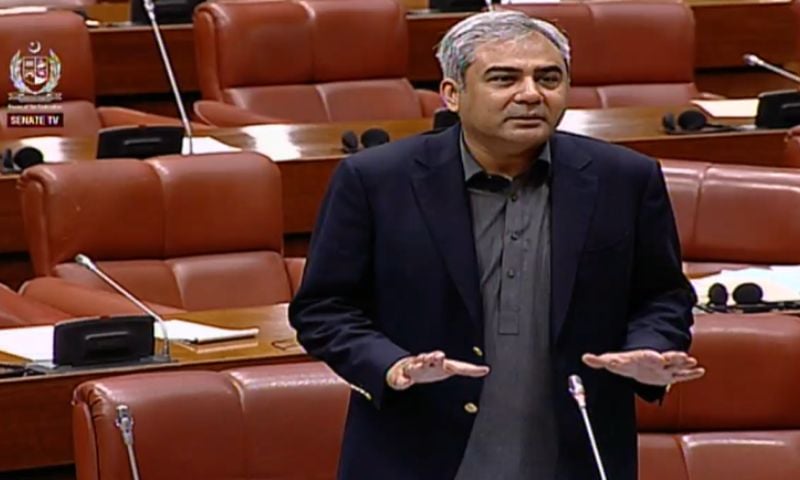
Addressing the Senate on Tuesday, Naqvi said the negotiations had focused on counterterrorism and security, stressing that the government could not allow police and military personnel to continue sacrificing their lives while political leaders criticised those who had laid down their lives fighting terrorism.
“If an agreement had been reached that day, there would be no emergency today,” he said, adding that none of the participants wanted emergency rule to be imposed.
Failed Negotiations
Naqvi told the Senate that negotiations had begun with seven or eight points relating to terrorism.
“PTI leader Asad Qaiser had assured the government that his party would support the government on those matters.” – Mohsin Naqvi
“PTI leader Asad Qaiser had assured the government that his party would support the government on those matters,” he said.
The interior minister said he had explained to Qaiser that his position and that of the Khyber Pakhtunkhwa government were different, maintaining that the discussions had not initially involved political issues.
According to Naqvi, six proposed changes were put forward during the negotiations and the government accepted all of them.
He said that after the text had been finalised, it was sent to Chief Minister Sohail Afridi, who forwarded it to PTI leader Murad Saeed.
Naqvi said the subsequent developments wasted two days of negotiations and prevented the arrangement from being concluded.
November 25 episode
Recounting an earlier political confrontation, Naqvi said the options of imposing an emergency and governor’s rule had also been available on November 26, 2025.
He referred to developments on November 25, when, according to him, the PTI was offered space to resolve a sit-in.
Naqvi said the party responded that it would postpone the sit-in only if it could speak by telephone with its jailed founder, former prime minister Imran Khan.
He said that after the telephone conversation, some PTI members rejected the proposed arrangement and insisted that Khan should record a video message.
According to the minister, Barrister Gohar was asked to arrange the recording. After waiting for two hours, Gohar reportedly said he would record a statement from behind bars.
Naqvi said the prime minister and president were informed before Gohar was taken to the jail, where he declined to record the message that day and said he would do so the following day.
The minister added that Gohar subsequently asked for his lawyers to be called before proceeding.
Naqvi also responded to objections raised by Senate Opposition Leader Raja Nasir Abbas, who argued that the Constitution had been violated. The interior minister said the Pakistan Muslim League-Nawaz and the Pakistan Peoples Party had examined the relevant constitutional provisions and concluded that no violation had occurred.
He maintained that the measure could be debated as right or wrong but defended it as justified.
Emergency defended
Naqvi told the Senate that the emergency had been imposed in accordance with the Constitution and was intended to address terrorism.
Law Minister Azam Nazeer Tarar announced on October 11 that the president had promulgated emergency and governor’s rule under Articles 232 and 234 of the Constitution. The government said the provincial government had ceased to function and its powers had been transferred to the governor, who would be assisted by an 11-member advisory council.
Security and political tensions
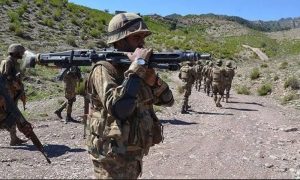
Khyber Pakhtunkhwa has faced persistent terrorist violence, particularly in districts bordering Afghanistan and the former tribal areas. The federal government says stronger coordination and additional resources are necessary to counter the threat.
Naqvi’s Senate remarks underline the federal government’s position that counterterrorism must take precedence over political disagreements. However, the failed negotiations and opposition objections have left the dispute over emergency rule unresolved.