Key Points
- Pakistan is preparing to send an astronaut into orbit aboard a Chinese spacecraft for the first time.
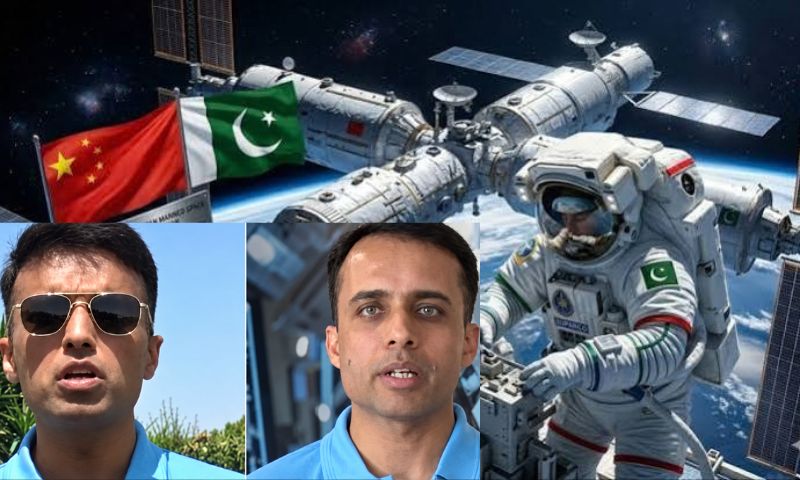
- Zeeshan Ali and Khurram Daud are undergoing intensive training in China ahead of the final selection.
- The mission would extend Pakistan-China cooperation from satellites and lunar exploration to human spaceflight.
ISLAMABAD: Pakistan’s space programme is preparing for a new milestone as China prepares to select one of two Pakistani pilots for a mission aboard its Tiangong space station, taking bilateral cooperation into human spaceflight.
Pakistani astronauts, Zeeshan Ali and Khurram Daud, have spent months training at the China Astronaut Research and Training Centre in Beijing. They are competing to become the first Pakistanis to travel to an orbital space station.
Pakistan’s Space and Upper Atmosphere Research Commission (Suparco) expects to make the final selection in mid-to-late October, according to Amer Gilani, who oversees human spaceflight cooperation at the agency.
The mission would also make the selected Pakistani the first foreign astronaut to travel aboard China’s Tiangong space station.
Pakistan has already had a citizen travel to space. Namira Salim was the first Pakistani to reach space in October 2023, when she flew aboard Virgin Galactic’s Galactic 04 mission. Her flight was suborbital, meaning it crossed into space but did not enter Earth orbit.
The China mission would be different, placing a Pakistani astronaut in orbit aboard a Chinese spacecraft and taking the astronaut to a permanently crewed space station.
The two pilots have been learning Mandarin, spacecraft systems and procedures for working in microgravity. Their training has also included centrifuge exercises to prepare them for the high forces experienced during launch.
They were selected from about 20 finalists drawn from an initial pool of Pakistani pilots and scientists. Candidates were assessed on medical fitness, psychological resilience and their ability to withstand the physical demands of spaceflight.
The selected astronaut will serve as a “payload specialist”, focusing on Pakistani scientific experiments rather than operating the spacecraft.
READ ALSO: Pakistan’s First Astronauts Arrive in China for Space Mission Training
Suparco received more than 300 proposals from universities in Karachi, Lahore and Islamabad for the mission. Chinese institutes selected four experiments, including biotechnology research linked to food security and climate change.
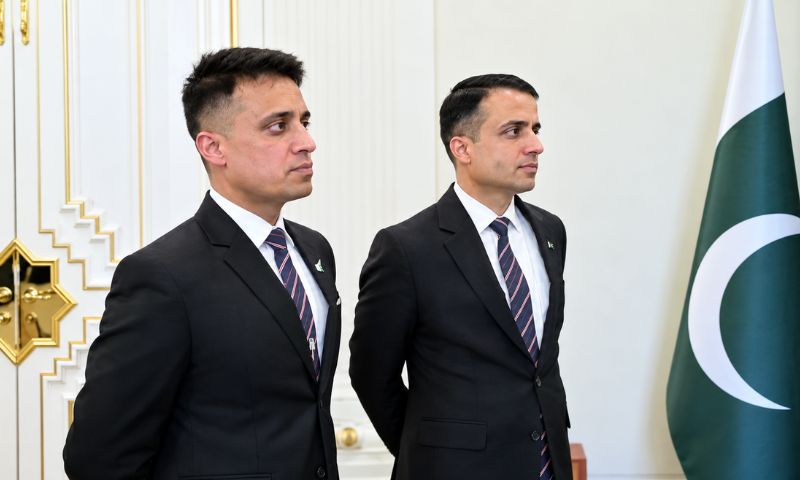
China has not announced which Pakistani pilot would be selected or the launch date. Gilani said the chosen astronaut would remain in China through the launch and return to Pakistan after a recovery period following the mission.
The Pakistani astronaut is expected to spend about a week in space, shorter than the roughly six-month missions normally undertaken by Chinese astronauts aboard Tiangong.
Pakistan-China space cooperation
Pakistan’s planned orbital mission is part of bilateral cooperation with China that has already included Chinese launches of Pakistani satellites and joint work on satellite navigation.
Pakistan is also developing a lunar rover for China’s Chang’e 8 mission, expected around 2028. The rover is designed to use artificial intelligence-based stereo imaging to identify obstacles, assess depth and navigate across the lunar surface without requiring continuous real-time instructions from Earth.
The astronaut mission will rely on Chinese infrastructure. The selected pilot will fly aboard a Chinese spacecraft launched from China, train under Chinese instructors and communicate in Mandarin while in orbit.
China’s Tiangong station consists of three main modules — Tianhe, Wentian and Mengtian — with a combined mass of about 77 metric tons. It has hosted more than 180 experiments covering areas including life sciences, materials, fluid physics, combustion and radiation exposure.
The planned mission would mark a new stage in Pakistan’s human spaceflight programme, taking the country from its first suborbital spaceflight in 2023 to an orbital mission aboard a space station.