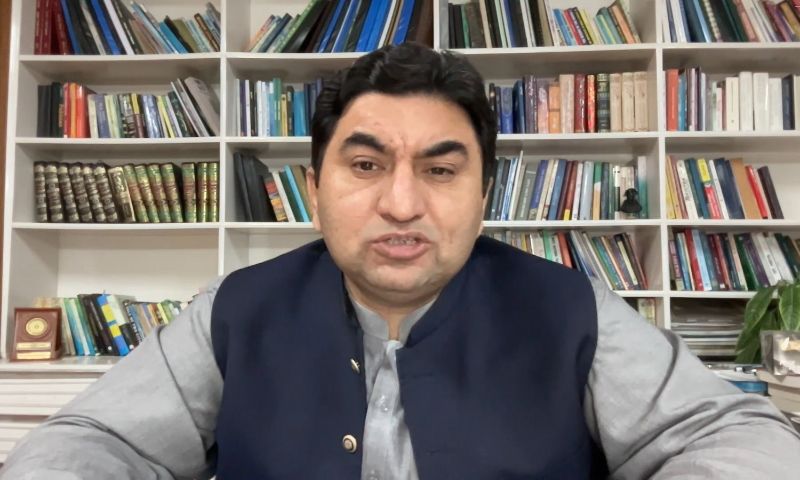
ISLAMABAD: Pakistan has strongly condemned Houthi militia attacks on Saudi Arabia and will continue providing diplomatic, political and, if required, defence support to the Kingdom, security expert Dr Qamar Cheema said.
Cheema, Executive Director of the Sanober Institute, said the Houthi attacks violated Saudi Arabia’s sovereignty and territorial integrity and that Pakistan had made clear its unwavering support for the Kingdom.
“Pakistan has categorically condemned the Houthi attacks which violated Saudi Arabia’s sovereignty and territorial integrity,” Cheema said.
He said Saudi Arabia had the right to respond under international law, adding that Pakistan viewed any attack on the holy sites as a “red line”.
“If this red line is crossed, Pakistan will not hesitate to respond along with Saudi Arabia against any miscreants or non-state actors,” he said.
Cheema said Pakistan’s defence relationship with Saudi Arabia had been strengthened through the Strategic Mutual Defence Agreement signed by the two countries in September 2025.
He also referred to the Makkah Defence Agreement between Pakistan, Saudi Arabia and Turkiye as a framework for collective deterrence and defence cooperation.
He said the defence cooperation included intelligence sharing, defence industrial collaboration, institutional coordination and military interoperability.
“The leadership of all three countries” was working to ensure that any attempt to undermine the security of Makkah, Madinah or Saudi Arabia’s sovereignty and territorial integrity would be met with a response, Cheema said.
He said Pakistan had already provided diplomatic and political support to Saudi Arabia and had strongly condemned the Houthi attacks.
Cheema said Pakistan would not hesitate to provide military support to Saudi Arabia for the protection of its holy sites if required.
“Pakistan will not hesitate to provide any kind of a military support to Saudi Arabia in the protection of the holy places,” he said.
He added that Pakistan was also working with Turkiye and Saudi Arabia to strengthen Saudi Arabia’s defence capabilities and make them more reliable.
Holy Sites a ‘Red Line’ for Pakistan: PM Sharif
Pakistan’s Prime Minister Shehbaz Sharif on Friday told the UN General Assembly that the holy sites in Saudi Arabia were a “red line” for Pakistan, condemning the Houthi militia attacks and stressing Islamabad’s unwavering support for the Kingdom.
PM Sharif condemned, “in the strongest possible terms”, the recent attacks by the Houthis against the Kingdom of Saudi Arabia, calling them “deplorable”. He expressed Pakistan’s complete solidarity with Saudi Arabia.
“Pakistan stands with the Kingdom of Saudi Arabia,” Prime Minister Sharif said while addressing the 81st session of the UN General Assembly in New York.
Prime Minister Sharif said the attempted drone attack by the Houthi militia on the holy city of Makkah had “outraged Muslims across the globe”, stressing that any threat to the safety and sanctity of the Haramain Sharifain was a “red line that must never be crossed”.
“No Muslim can even dare to think of committing such a heinous crime. Pakistan stands in complete solidarity with the brotherly people of Saudi Arabia, as we always have throughout our history,” PM Sharif said.
Prime Minister Shehbaz Sharif strongly condemns recent Houthi attacks on Saudi Arabia, saying the attempted drone attack on Makkah Mukarramah has outraged Muslims worldwide. Addressing the UN General Assembly in New York, he says threats to the safety and sanctity of holy sites… pic.twitter.com/2p2v2UY4LP
— Pakistan TV (@PakTVGlobal) September 25, 2026
Prime Minister Sharif also highlighted the Makkah Joint Defence Agreement signed by Pakistan, Turkiye and Saudi Arabia as a reflection of Pakistan’s commitment to peace.
“This alliance is not directed against any country; it is a collective commitment for defence, stability and peace in the region, and nothing more,” PM Sharif stressed.
Prime Minister Shehbaz Sharif says the historic Pakistan, Saudi Arabia, Turkiye Joint Defence Agreement reflects Pakistan’s longstanding commitment to peace. Addressing the UN General Assembly in New York, he stresses that the alliance is not directed against any country and is a… pic.twitter.com/NDEmslIWQK
— Pakistan TV (@PakTVGlobal) September 25, 2026
Prime Minister Sharif also called for the Strait of Hormuz and Bab al-Mandab to remain open, describing the two waterways as “arteries of the global economy”.
“They must remain open — connecting nations, not becoming choke points of confrontation,” he said. “These waters must carry the promise of prosperity, not the perils of war.”