










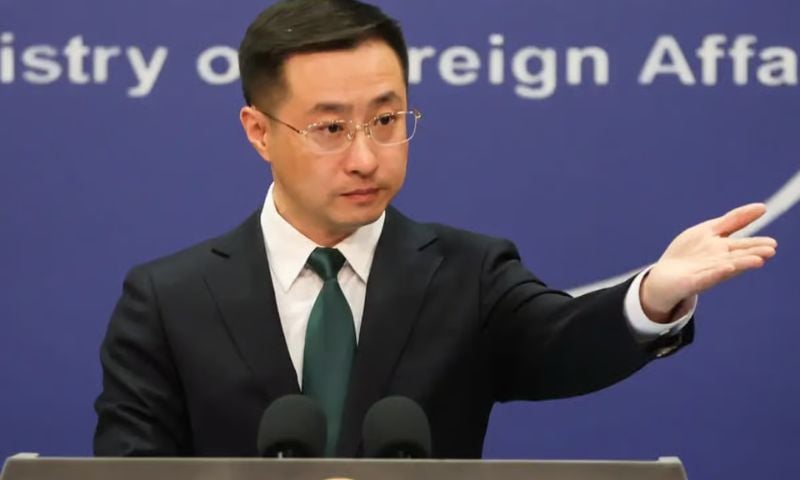
BEIJING: China has reiterated that dialogue and diplomatic negotiations remain the only viable path to resolving tensions between Washington and Tehran, as the United States intensifies economic pressure on Iran with a new wave of sanctions.
On Iran, “dialogue and negotiations are the only viable way out,” foreign ministry spokesperson Lin Jian tells reporters in Beijing.
“China opposes illegal, unilateral sanctions [and] our position is consistent and clear,” he stresses.
New US economic campaign against Iran
The Iranian foreign ministry, in a statement, has condemned the US’ new campaign of economic sanctions against the country, dubbed ‘Operation Economic Outcast’, calling it “tantamount to state terrorism against Iran and the world”, the ISNA news agency reports.
“The US’ abuse of the dollar as a tool to intimidate other countries to force them to follow its interventionist and international law-violating policies in relation to Iran is a violation of the national sovereignty and self-determination of all member states of the United Nations,” the statement said.
بیانیه وزارت امور خارجه درباره
تروریسم اقتصادی آمریکا علیه ایراناعلام جنگ اقتصادی علیه ایران در ادامه جنگ تجاوزکارانهای است که آمریکا و رژیم صهیونیستی در ۱.۵ سال اخیر به بهانههای واهی و بیاساس علیه ایران مرتکب شده و صلح و امنیت منطقهای و بینالمللی را به خطر انداختهاند pic.twitter.com/bhO6XJUEga
— وزارت امور خارجه (@IRIMFA) August 28, 2026
Additionally, the ministry says that the US campaign is a “continuation” of its joint war with Israel on Iran, which has been carried out “over the past 1.5 years under baseless and fabricated pretexts, thereby endangering regional and international peace and security”.
US must stop pressure for diplomacy to resume: Iran
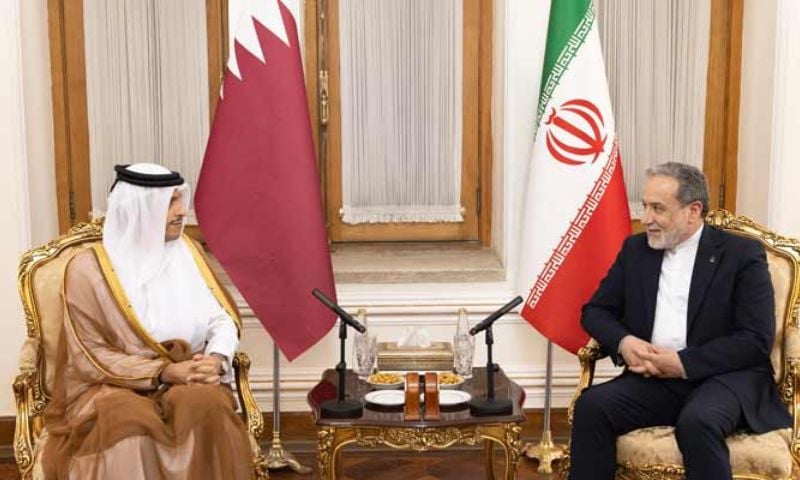
Earlier, Iranian Foreign Minister Abbas Araghchi said that diplomacy was still possible but depended on the United States recognising that pressure would not force Tehran to change its position.
“Putting diplomacy back on track isn’t impossible. It hinges on US understanding of one simple fact: pressure doesn’t work,” Iranian Foreign Minister Abbas Araghchi posted on X on Friday.
Araghchi said he “had creative discussions” with Qatari Foreign Minister Sheikh Mohammed bin Abdulrahman bin Jassim Al Thani.
Had creative discussions with H.E. the PM/FM of Qatar.
Putting diplomacy back on track isn’t impossible. It hinges on U.S. understanding of one simple fact: pressure doesn’t work. The U.S. should build trust, speak respectfully, acknowledge our rights, and uphold commitments. pic.twitter.com/9yQ2pOXe5R
— Seyed Abbas Araghchi (@araghchi) August 28, 2026
“The U.S. should build trust, speak respectfully, acknowledge our rights, and uphold commitments,” the Iranian foreign minister added.
ALSO READ: US Must Stop Pressure for Diplomacy to Resume: Iran
Diplomatic efforts involving mediators including Pakistan and Qatar have sought for months to end the conflict, which began with US and Israeli military action in late February.
Efforts to revive diplomacy
Araghchi met his Qatari counterpart in Tehran on Thursday to discuss the Strait of Hormuz, which Iran closed at the start of the conflict.
The meeting followed a week of intensive diplomatic contacts between Iran, Oman and Pakistan aimed at addressing the dispute and creating conditions for renewed negotiations.
A US naval counter-blockade of Iranian ports has added pressure on Iran’s fuel supplies amid a shortfall in domestic production.
The April ceasefire ended the most intense phase of fighting, but sporadic attacks, particularly around the Strait of Hormuz, have continued to complicate efforts to reach a lasting settlement.
A ceasefire was reached in April, followed by the signing of a memorandum of understanding in June aimed at paving the way for a final peace agreement. However, a comprehensive deal has yet to be reached.
Washington has since intensified economic pressure on Tehran, describing its campaign as “economic warfare”.













