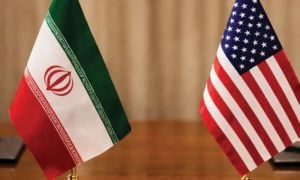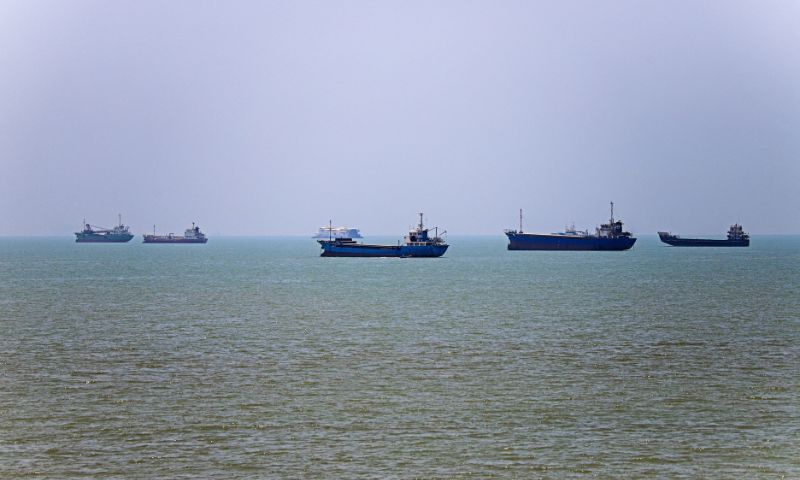



BEIJING: China on Tuesday called on the United States and Iran to restore safe passage through the Strait of Hormuz, as fighting between the two countries reignited over the management of the world’s most strategically important waterway.
“Restoring normal and safe passage through the strait as soon as possible is a shared aspiration of the international community,” Chinese foreign ministry spokesperson Lin Jian told a regular news briefing.
The spokesperson said Beijing would continue to make “unremitting efforts to help de-escalate” the situation.
China Calls For Safe Hormuz Passage | Asia One News
China has called on the United States and Iran to restore safe passage through the Strait of Hormuz. Beijing’s statement comes as fighting between the two sides escalates. #AsiaOne #asiaonenews #China #Hormuz #ShippingRoutes pic.twitter.com/LlHuZkcu81
— ASIA ONE NEWS (@AsiaOne_News) July 14, 2026
The appeal came as a series of maritime and military incidents underscored the deteriorating security situation around the Gulf and the Strait of Hormuz, through which roughly a fifth of global oil supplies pass.
The US launched a third night of strikes on Iran as President Donald Trump announced to reimpose a naval blockade on Iranian ports and floated a 20 percent fee on cargo in the vital Strait of Hormuz.
Iran started blocking the strait after US-Israel attacks in February, which prompted Washington’s blockade on Tehran’s ports — but restrictions eased after the sides agreed a preliminary deal in June.
On Monday, China called for the Strait of Hormuz to remain open to international navigation, urging all parties to ensure the “free and safe passage” of vessels through the strategic waterway.
ALSO READ: China Calls for ‘Free and Safe Passage’ Through Strait of Hormuz
Chinese Foreign Ministry spokesperson Lin Jian said the situation in the Strait of Hormuz should be “properly handled”.
“The Strait of Hormuz is a strait for international navigation. Resuming free and safe passage in the strait at an early date serves the interests of all sides,” Lin said.
He added that China stood ready to work with relevant countries and the international community to maintain communication and promote regional stability.
Tankers hit in separate incidents
Norwegian shipping company Stolt-Nielsen said its chemical tanker Stolt Magnesium caught fire early Tuesday after an “explosion of an unidentified external device” while sailing in the Arabian Sea off the coast of Oman.
Its subsidiary, Stolt Tankers, said the explosion occurred at about 12:40 a.m. local time in the vessel’s engine room. All crew members were safe and accounted for, and efforts to extinguish the fire were underway.
The location matched an earlier report by the United Kingdom Maritime Trade Operations (UKMTO), which said it had received information about an incident approximately 40 nautical miles northeast of Oman’s Qalhat.
Separately, UKMTO reported that a tanker was struck by a missile around 13 nautical miles southeast of Oman’s Limah while transiting the southern outbound shipping lane of the Strait of Hormuz on July 13.
UKMTO WARNING 087-26 – ATTACK
Click here to view the full warning ⤵️ https://t.co/K9ry6dSGTe#MaritimeSecurity #MarSec pic.twitter.com/KyMMsk7AqZ
— UKMTO Operations Centre (@UK_MTO) July 14, 2026
In another attack, two United Arab Emirates crude oil tankers — Mombasa B and Al Bahyah — were struck by Iranian cruise missiles while passing through the Strait of Hormuz, according to UAE authorities.
The UAE Ministry of Defence said the attack killed one Indian crew member aboard the Mombasa B and injured eight others, including six Indians and two Ukrainians, four of them seriously.
The strikes also caused significant damage to both vessels and triggered onboard fires, which were later brought under control.
The Ministry of Defence announces that the national tankers Mombasa and Al Bahiyah were targeted by two Iranian cruise missiles while transiting the southern shipping lane of the Strait of Hormuz, within Omani territorial waters.
The attack resulted in the death of one Indian… pic.twitter.com/i1HrXY0fKP
— وزارة الدفاع |MOD UAE (@modgovae) July 13, 2026
The ministry described the attack as a “blatant assault” and “a serious violation and clear breach of international law.” It said the UAE reserved the right to take “all necessary measures” to protect its sovereignty, citizens and national interests.
Regional condemnation
Qatar strongly condemned the attack on the Emirati tankers, calling it “a serious violation of the safety of international navigation, a direct threat to global energy supplies, and a clear breach of international law.”
In a statement, Qatar’s foreign ministry said the continued attacks represented “a dangerous escalation” that threatened regional security and stability. It urged Iran to comply fully with international law and prevent similar incidents from recurring.
Statement | Qatar Strongly Condemns Attack on Two UAE Oil Tankers in Strait of Hormuz
Doha | July 14, 2026
The State of Qatar strongly condemns the attack targeting two UAE oil tankers as they transited the Strait of Hormuz, describing it as a serious violation of the safety of… pic.twitter.com/1jQWTdnTgD
— Ministry of Foreign Affairs – Qatar (@MofaQatar_EN) July 14, 2026
The Gulf Cooperation Council (GCC) also denounced the attacks. Secretary-General Jasem Mohamed Albudaiwi described them as “an explicit violation” of United Nations Security Council resolutions protecting international navigation and commercial shipping.
He reaffirmed the GCC’s support for the UAE and its efforts to safeguard its security and maritime interests.
Oman reiterates neutral role
Amid growing tensions, Oman reaffirmed its commitment to maintaining freedom of navigation through the Strait of Hormuz.
The Omani foreign ministry said it would continue its “transparent and neutral cooperation with all parties to restore freedom of navigation” in accordance with international law and its obligations under the United Nations Convention on the Law of the Sea.
#بيان | في ضوء المناقشات والأطروحات المتصلة بالملاحة في مضيق هرمز، تؤكد وزارة الخارجية أن سلطنة عُمان تواصل تعاونها الشفاف والمحايد مع جميع الأطراف لاستعادة حرية الملاحة في المضيق، بما يتوافق تماماً مع القانون الدولي. وتؤكد سلطنة عُمان التزامها الكامل بواجباتها كدولة طرف في… pic.twitter.com/6D6XaKXAjj
— وزارة الخارجية (@FMofOman) July 14, 2026
Separately, Omani Foreign Minister Badr Albusaidi described the conflict as “a disaster” in an opinion article published in France’s Le Monde newspaper.
He argued that the US-Israeli military campaign against Iran had failed to achieve its stated objectives and lacked a United Nations mandate. Albusaidi said the region should move towards “a fairer, more realistic and more effective system” after decades of failed security policies.
Iran rejects US role in Hormuz
Iran’s military insisted that the Strait of Hormuz would never be reopened through “war, evil, and American aggression.”
Brigadier General Mohammad Akraminia, spokesman for Iran’s armed forces, cited by Mehr news agency, said that respecting the rights of the Iranian people was the only path towards reopening the strategic waterway.
“We are obligated to avenge the blood of the martyrs, especially the martyred leader of the Islamic Revolution,” he said.
🔴 Iran Army Spokesperson Brigadier General Akrami-Nia:
🔺 The Strait of Hormuz will never be opened through war, aggression, or American transgressions.
🔺 Respect for the rights of the Iranian people is the only way to open the Strait of Hormuz.
🔺 We are obligated to avenge… pic.twitter.com/0Jvv6LdVE2
— Mehr News Agency (@MehrnewsCom) July 14, 2026
Iranian state television also reported that five explosions were heard around the southern port city of Bandar Abbas near the Strait of Hormuz but gave no further details.
Earlier, the Islamic Revolutionary Guard Corps (IRGC) said it had targeted a US air base in Jordan with ballistic missiles. In a statement carried by Fars News Agency, the IRGC claimed it had no hostility towards the Jordanian people but urged them to oppose the presence of American military bases in the country.
US intensifies military campaign
The United States said it had completed a third consecutive night of military operations against Iranian targets.
US Central Command (CENTCOM) said the latest operation began at 4:45 p.m. Eastern Time on Monday and concluded about five hours later.
At 4:45 p.m. ET today, U.S. Central Command began launching the third consecutive night of strikes against Iran, at the Commander in Chief's direction. These strikes will continue imposing a heavy cost on Iranian forces and degrade their ability to attack innocent civilians and…
— U.S. Central Command (@CENTCOM) July 13, 2026
According to CENTCOM, US forces conducted precision strikes against Iranian military facilities in Bushehr, Chah Bahar, Jask, Konarak, Abu Musa and Bandar Abbas. The targets included coastal defence systems, missile and drone installations, and maritime capabilities that Washington said had been used to threaten commercial shipping.
The US military said the operation was intended to further reduce Iran’s ability to attack civilian vessels operating in the Strait of Hormuz.
— U.S. Central Command (@CENTCOM) July 14, 2026
CENTCOM added that more than 50,000 US personnel remained deployed across the Middle East and that American forces remained “vigilant, lethal and ready” to respond to further developments.
Speaking at the White House on Monday, US President Donald Trump said American forces were “hitting them very heavy tonight.”
“We’re knocking out all of their offensive capability, and we’re controlling the strait,” Trump said, adding that the United States was reinstating a naval blockade directed solely at Iran.
Iran’s military responded by warning that it would not allow the United States to “interfere” in the management of the Strait of Hormuz.
Trump notifies Congress of resuming war
Meanwhile, the White House said that President Trump had formally notified Congress that war against Iran resumed on July 7.
In a letter dated July 10, Trump said he had ordered military action in accordance with his constitutional responsibility to protect American citizens and safeguard US national security and foreign policy interests.
“I directed this military action consistent with my responsibility to protect Americans and United States’ national security and foreign policy interests,” Trump wrote.
The letter outlined previous administration actions, including a two-week ceasefire announced on April 7 and subsequent diplomatic efforts to secure a negotiated settlement.
Under the US War Powers Resolution, the notification establishes a new 60-day period during which the administration says it can continue military operations without additional congressional authorisation.
The latest military exchanges, coupled with attacks on commercial shipping, have heightened concerns about the security of international energy supplies and the risk of a wider regional conflict centred on the Strait of Hormuz.