


BEIJING: China on Monday called for the Strait of Hormuz to remain open to international navigation, urging all parties to ensure the “free and safe passage” of vessels through the strategic waterway amid renewed military tensions between the United States and Iran.
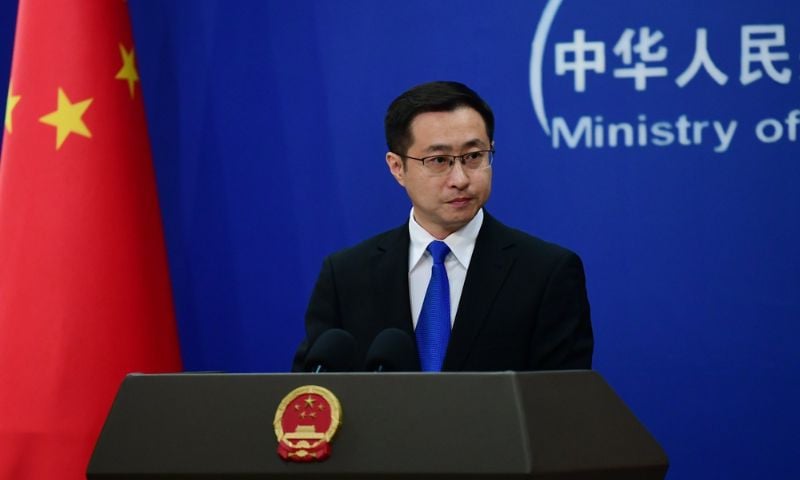
Speaking at a regular press briefing in Beijing, Chinese Foreign Ministry spokesperson Lin Jian said the situation in the Strait of Hormuz should be “properly handled”.
“The Strait of Hormuz is a strait for international navigation. Resuming free and safe passage in the strait at an early date serves the interests of all sides,” Lin said.
He added that China stood ready to work with relevant countries and the international community to maintain communication and promote regional stability.
Renewed US-Iran escalation
China’s remarks came after renewed military escalation between the US and Iran.
Iran’s Islamic Revolutionary Guard Corps (IRGC) said it had targeted US military facilities in Bahrain and radar systems in neighbouring Oman, according to Iran’s state broadcaster IRIB.
Earlier, the US military said it had completed a new wave of offensive strikes against dozens of Iranian military sites.
The US military said the operation was aimed at degrading Iran’s ability to continue attacks on international shipping through the Strait of Hormuz.
The latest attacks took place after attacks on commercial vessels operating in the strategically important waterway.
Last month, Pakistan mediated a memorandum of understanding between the United States and Iran aimed at ending their military conflict and advancing negotiations towards a lasting peace agreement.
However, following the latest escalation, US President Donald Trump announced that the Islamabad memorandum of understanding with Iran was “over”.
Trump suggests US could control Hormuz
Trump also said on Monday that the United States would probably take control of the Strait of Hormuz and should be reimbursed for protecting the vital maritime route.
Speaking in a phone interview with Fox News, Trump said: “We’re going to keep the strait, and we’ll probably run it. We’ll become the guardian of the Strait. Maybe we’ll call it the guardian angel of the strait. And we should be reimbursed for that.”
“We’re going to guard it. We’re going to get paid for guarding it — a lot of money,” Trump said.
“We’re going to be reimbursed, because the other nations are very wealthy. They’re on our side, and we can’t be expected to do that for nothing,” he added.
Iran rejected Trump’s remarks, with the Khatam al-Anbiya Central Headquarters saying Tehran would not allow Washington to interfere in the management of the Strait of Hormuz.
According to Iran’s state broadcaster Press TV, Khatam al-Anbiya spokesperson Ebrahim Zolfghari said, “We will not allow the US to interfere in the management of the Strait of Hormuz under any circumstances.”
“The US and the countries cooperating with its military bear full responsibility for all insecurity and the escalation of the war in the region,” he added, according to the broadcaster.
Shipping traffic through Hormuz declines
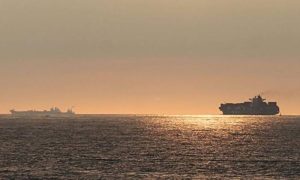
Meanwhile, tanker traffic through the Strait of Hormuz has fallen to its lowest level in nearly two months, according to shipping data.
Shipping industry sources, cited by Reuters, said that an increasing number of vessels were switching off their Automatic Identification System (AIS) tracking transponders, making it more difficult to assess the actual volume of maritime traffic through the waterway.
Analysis by shipping intelligence firm Kpler showed that oil and gas tanker movements had fallen to their lowest level since May 25.
Ship broker Gibson warned that any prolonged disruption to shipping through the Strait of Hormuz could have significant consequences for global energy markets.
“Should the renewed escalation in the strait lead to another prolonged closure of Hormuz, the world will find itself in a much tougher spot,” Gibson said in a market report.
“With global inventories rapidly depleted in recent months, this is a recipe for much tighter supply, higher prices and significant downside risk for tanker markets.”