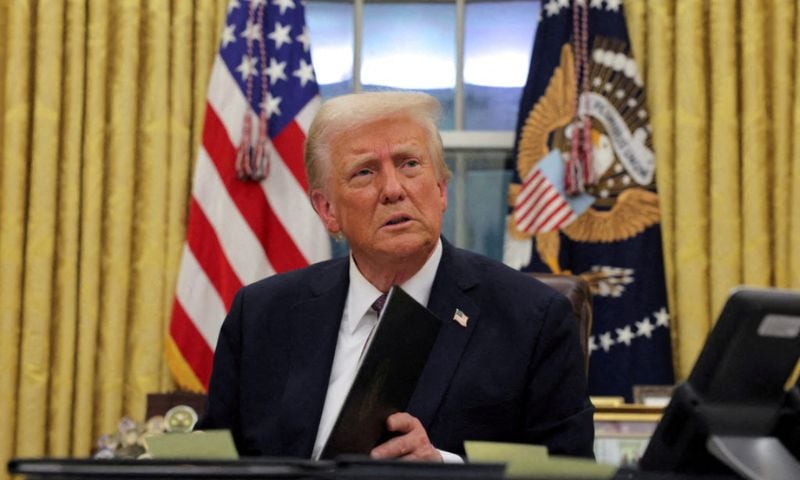



WASHINGTON: US President Donald Trump said Israeli Prime Minister Benjamin Netanyahu had requested a meeting at the White House, adding that the Israeli leader “knows who the boss is”.
In a brief telephone interview with Axios published on Saturday, Trump said the meeting could take place as early as next week after his return from the NATO summit in Turkiye.
“We get along very good. [Netanyahu] knows who the boss is,” Trump said, referring to himself.
Exclusive: Trump says Netanyahu "knows who the boss is" ahead of possible WH visit https://t.co/AOpoKJmnL5
— Axios (@axios) July 4, 2026
According to Axios, the proposed meeting would be the first between Trump and Netanyahu since their February meeting in the White House Situation Room.
The report said Netanyahu had presented a plan during that meeting for a joint US-Israeli military campaign against Iran.
Netanyahu’s office confirmed that the Israeli prime minister spoke by telephone with Trump on Friday.
According to a statement from the Prime Minister’s Office, Netanyahu told Trump that the United States remained “a guarantor of global freedom” and said Israel greatly valued the close relationship between the two countries.
The statement added that the two leaders agreed to meet soon in the United States.
Strained relations
Despite the public display of cordial relations, Axios reported that differences have emerged between the two leaders over regional security issues since their February meeting.
Citing a US official, Axios said several of Trump’s senior advisers believed Netanyahu had misjudged key regional developments.
“Many of Trump’s closest advisers think that Bibi was wrong about everything,” the unnamed US official told the publication, referring to Netanyahu by his nickname.
According to Axios, tensions escalated during a telephone conversation last month when Trump criticised Netanyahu over Israel’s military operations in Lebanon and accused him of showing insufficient appreciation for US support.
On June 18, Trump signed an Islamabad Memorandum of Understanding extending the ceasefire between the United States and Iran and launching negotiations.
According to Axios, Trump also pressed Netanyahu to cease Israeli military operations in Lebanon and support a framework requiring an initial Israeli withdrawal from southern Lebanon to help preserve the diplomatic process.
According to Axios, Trump said Washington and Tehran had agreed to pause negotiations in Qatar for one week until the funeral ceremonies concluded.
Pakistan eyes US-Iran deal within two months
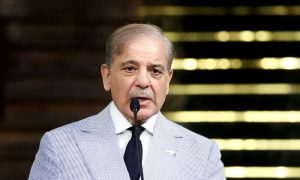
Mediator Pakistan’s Prime Minister Shehbaz Sharif on Saturday expressed optimism that the United States and Iran could reach a lasting peace agreement within the next two months.
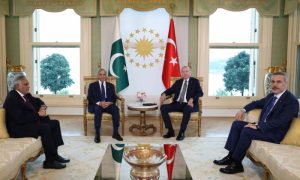
In an interview with TRT World during his official visit to Istanbul, Prime Minister Sharif said Pakistan would continue to facilitate the peace process after helping mediate the ceasefire agreement signed between Washington and Tehran last month.
“We hope and pray to Allah Almighty that long-lasting peace will come in place, Inshallah, in the next two months or so,” the prime minister said.
Prime Minister Sharif said Pakistan’s mediation between the United States and Iran is “a great honour” but acknowledged that it had been a difficult and complicated task.
“It has been a great honour for Pakistan to play the role of a mediator to bring the two countries together,” he said.
“While it was a very noble undertaking, at the same time it was a very difficult and complicated task.”
PM Sharif said Pakistan had maintained an honest and balanced approach while engaging Washington and Tehran throughout the negotiations.
The prime minister also thanked Turkiye, Saudi Arabia, Qatar and Egypt for supporting the diplomatic initiative for regional peace. “Without their support, it wouldn’t have been possible,” he said.
Prime Minister Sharif noted that the Islamabad Memorandum of Understanding had now been signed and technical discussions had begun following the high-level negotiations in Switzerland.
US-Iran technical talks continue
Responding to a question on the progress of negotiations, the prime minister said discussions between the United States and Iran were continuing.
He also acknowledged the role played by Pakistan’s Chief of Defence Forces and Chief of Army Staff Field Marshal Syed Asim Munir during the mediation process.
“I must bring on record that Field Marshal Syed Asim Munir played one of the most pivotal roles,” PM Sharif said.
“He was in touch with the Iranian leadership and the American leadership. He worked through the nights… There were moments when it felt that everything would fall through, but by the grace of Almighty Allah, he remained consistent.”
The prime minister also praised Deputy Prime Minister and Foreign Minister Ishaq Dar for diligent diplomatic efforts throughout the negotiations.
On Thursday, Pakistan said that indirect negotiations between the United States and Iran had made “positive progress” during meetings held in Doha under Pakistani and Qatari mediation.
Foreign Office spokesperson Tahir Andrabi said Pakistani and Qatari mediators had held separate discussions with the US and Iranian delegations, building on the outcomes of last month’s Lake Lucerne Summit and advancing implementation of the Islamabad Memorandum of Understanding.
“The parties have agreed to continue discussions over the coming period, with the next meeting to be scheduled at the earliest possible time following the funeral processions of Iran’s former Supreme Leader,” Andrabi said.
Islamabad MoU between US and Iran
The Islamabad Memorandum of Understanding was signed on June 18 by US President Donald Trump, Iranian President Masoud Pezeshkian and Prime Minister Shehbaz Sharif after Pakistan brokered a ceasefire between Washington and Tehran.
The agreement committed both countries to halt military operations, reopen the Strait of Hormuz to commercial shipping and negotiate a comprehensive agreement covering Iran’s nuclear programme, US sanctions and a permanent ceasefire within 60 days.
Pakistan and Qatar subsequently co-mediated the first round of high-level negotiations in Lucerne, Switzerland, on June 21.
The talks were attended by US Vice President JD Vance and Iranian Parliament Speaker Mohammad Bagher Ghalibaf.
Following the meeting, Pakistani and Qatari mediators reported encouraging progress, while Washington announced the easing of sanctions on Tehran.
Pakistan is the main mediator between the US and Iran after it secured a ceasefire on April 08 and hosted the highest level of talks between the two nations on April 12 and 13 in Islamabad.
Pakistan, which brokered the ceasefire and has continued to mediate between Washington and Tehran, has urged all parties to honour the agreement.