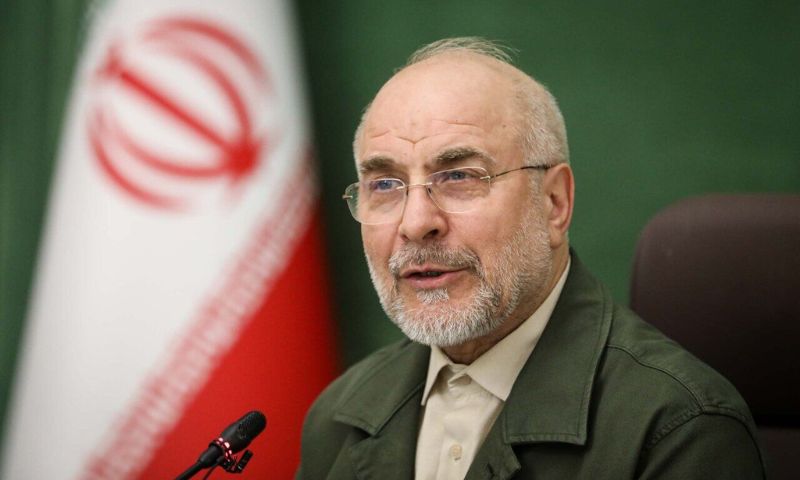



TEHRAN, Iran: Iran’s chief negotiator Mohammad Bagher Ghalibaf on Tuesday said that Iran was prioritising diplomacy with the United States to end the conflict as mediators Pakistan and Qatar continued diplomatic efforts to advance the US-Iran negotiations under the Islamabad memorandom of understanding (MoU).
“We are pursuing dialogue,” Ghalibaf said in an interview on state television, as Iranian and US delegations were due to hold separate discussions in Doha.
Ghalibaf said Iran was unable to export any oil during the US blockade on its ports, noting that exports have surged since the Islamabad memorandum of understanding (MoU) between Washington and Tehran.
“From the day the blockade was lifted until today, we have exported more than 40 million barrels of oil,” he said. “By contrast, during the previous 50 to nearly 60 days, we were genuinely unable to export even a single barrel of oil.”
US envoys Witkoff and Kushner in Doha
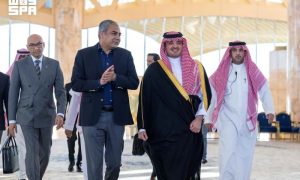
Earlier, Qatar said that US Special Envoy Steve Witkoff and Jared Kushner have arrived in Doha for consultations with mediators on regional issues.
Speaking at the foreign ministry’s weekly media briefing, Qatar’s Foreign Ministry spokesperson Majed Al-Ansari said Witkoff and Kushner were in Doha to consult mediators on several regional files, including ongoing mediation efforts, but would not meet Iranian officials.
“To the best of my knowledge, there are no direct meetings scheduled between the two parties in the coming days,” Al-Ansari told reporters.
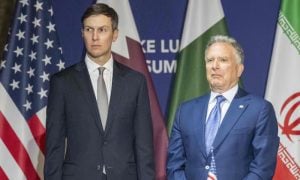
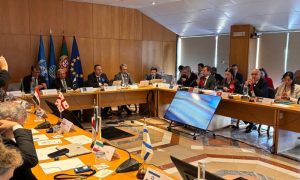
He said technical-level discussions had continued since the Lucerne summit in Switzerland, with Pakistani and Qatari mediators facilitating indirect contacts between the two sides.
Al-Ansari said the ongoing technical discussions covered several issues, including Iran’s nuclear programme, economic matters, state performance and security.
He said the mediators were currently acting as intermediaries during the technical negotiations between lower-level officials, expressing hope that the process would produce tangible results contributing to regional stability.
US-Iran talks under Islamabad MoU
The comments came a day after President Donald Trump said the United States and Iran would hold talks in Doha on Tuesday under the Pakistan-brokered Islamabad Memorandum of Understanding (MoU).
“Iran has requested a meeting. It will take place tomorrow in Doha,” Trump wrote on his Truth Social platform on Monday.
A US official also told AFP on Sunday that both sides had agreed to suspend military action and continue negotiations.
“Technical talks are slated to continue on all areas of the MOU,” the official said in an emailed statement.
“Both sides will stand down for now, and vessels can move freely.”
Iran, however, has denied that direct or technical talks with the United States had been scheduled this week.
Islamabad MoU framework
The latest diplomatic efforts follow the Islamabad Memorandum of Understanding signed on June 18 by US President Donald Trump, Iranian President Masoud Pezeshkian and Pakistani Prime Minister Shehbaz Sharif after Pakistan brokered a ceasefire between Washington and Tehran.
The agreement committed both countries to halt military operations across all fronts, including Lebanon, reopen the Strait of Hormuz to commercial shipping and negotiate a final agreement covering Iran’s nuclear programme, US sanctions and a permanent ceasefire within 60 days.
Pakistan and Qatar also co-mediated the first round of high-level US-Iran negotiations in Lucerne, Switzerland, on June 21.
The talks were attended by US Vice President JD Vance and Iranian Parliament Speaker Mohammad Bagher Ghalibaf.
Following the meeting, Pakistani and Qatari mediators said encouraging progress had been made, while Washington announced the easing of sanctions on Tehran.
Pakistan urges ceasefire compliance
Pakistan, which brokered the ceasefire and has continued to mediate between Washington and Tehran, has urged all parties to honour the agreement.
Pakistan’s Deputy Prime Minister and Foreign Minister Ishaq Dar on Sunday stressed the need for all parties to the Middle East conflict to uphold the ceasefire agreement.
Dar made the remarks during a phone call with European Union High Representative for Foreign Affairs and Security Policy Kaja Kallas.
During the telephone conversation, Dar and Kallas reviewed the evolving regional situation, according to a statement issued by Pakistan’s Foreign Office.
Ishaq Dar informed the EU’s top diplomat about Pakistan’s continued diplomatic efforts towards a comprehensive framework for peace and stability in the region.
“He also emphasised the necessity for all parties to abide by the ceasefire agreement,” the Foreign Office statement read.
Pakistan is the main mediator between the US and Iran after it secured a ceasefire on April 08 and hosted the highest level of talks between the two nations on April 12 and 13 in Islamabad.
On June 18, Prime Minister Shehbaz Sharif, President Donald Trump and Iranian President Masoud Pezeshkian signed the Islamabad Memorandum of Understanding to end hostilities and launch further negotiations.
On June 21, Pakistan and Qatar mediated the high-level US-Iran talks in Switzerland.
The first round of Pakistan and Qatar mediated US-Iran talks, led by US Vice President JD Vance and Iran’s Parliament Speaker Mohammad Baqer Ghalibaf, was held in Switzerland a week ago, and Washington waived sanctions on Tehran.
After the talks, Pakistan and Qatar announced significant progress in diplomatic efforts between the US and Iran following the conclusion of the first round of high-level talks in Switzerland.