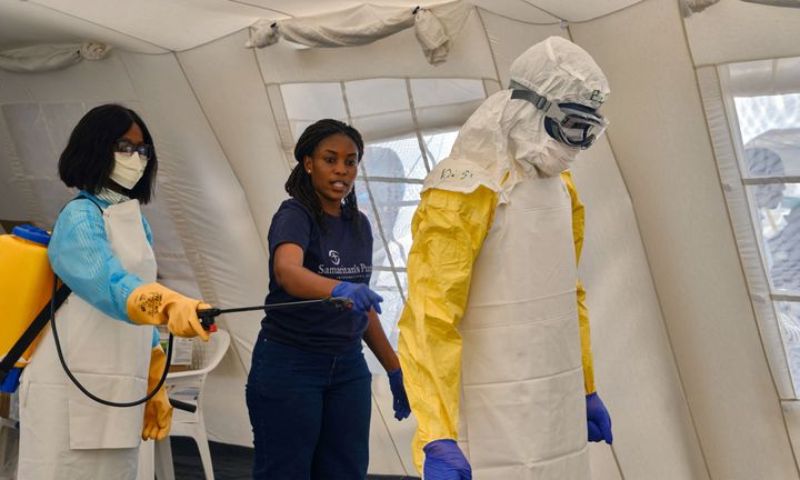



GENEVA: The United Nations on Tuesday warned that the ongoing Ebola outbreak could cost Africa up to $3.6 billion and result in the loss of hundreds of thousands of jobs, potentially triggering a wider development crisis.
The outbreak, caused by the Bundibugyo strain of Ebola, has infected 1,307 people and claimed 377 lives in the Democratic Republic of Congo since it was declared on May 15, according to government figures. The strain currently has no widely tested vaccine or approved treatment.
A smaller number of cases have also been reported in Uganda, while health experts have warned of the risk of the virus spreading to neighboring countries, including South Sudan.
“If we have the resources and we step up, we can contain this outbreak and prevent further losses,” said Damien Mama, United Nations Development Programme resident representative in Congo.
“If we do not, this health emergency risks becoming a much deeper and prolonged development crisis across the region and potentially the continent.”
Mama said the Ebola pandemic in DRC is more than just a local health crisis, underlining that over 90 percent of the confirmed cases are around Ituri province, which is also considered a key hub for cross-border trade with neighboring countries.
The United Nations Development Programme (UNDP) outlined three possible scenarios for the Ebola outbreak. Under the most favorable scenario, where the outbreak remains contained within the Democratic Republic of Congo and Uganda, the economic impact would amount to an estimated $1 billion reduction in Congo’s GDP, according to the report.
In the worst-case scenario, where the disease spreads to additional countries, including Rwanda and Angola, and coincides with rising fuel prices linked to the Iran crisis, the outbreak could reduce Africa’s GDP by $3.6 billion and lead to approximately 328,000 job losses, the report warned.
The WHO has issued an international alert over the outbreak, while clinical trials of experimental antiviral drugs are expected to begin in the coming days, according to the UN health agency.
The head of the Africa Centres for Disease Control and Prevention (Africa CDC) also told the BBC that trials could begin as early as this week.