
Key Points
- National Assembly approves Finance Bill 2026 with coalition backing
- Government targets Rs 15.264 trillion revenue collection for FY2026-27
- Opposition amendments rejected during heated budget session
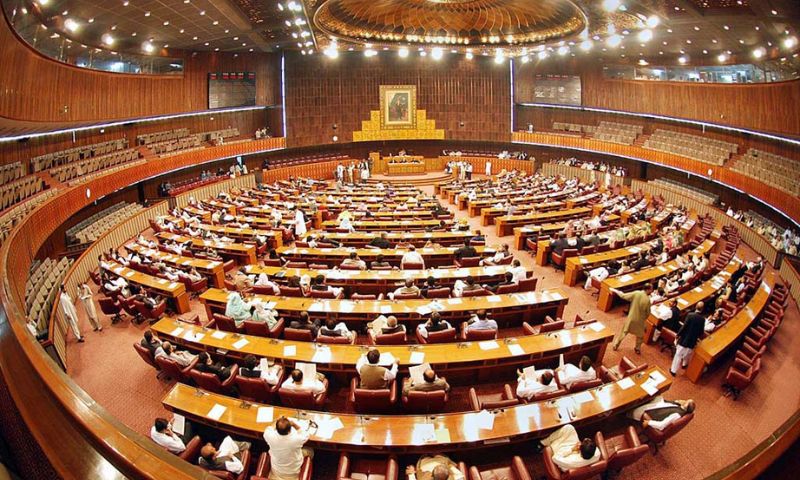
ISLAMABAD: The National Assembly on Tuesday passed the Finance Bill, 2026, for the fiscal year 2026-27, marking a key legislative step in finalising Pakistan’s federal budget amid protests from opposition lawmakers and procedural tensions in the lower house.
The bill was approved with the support of the government’s coalition partners after all amendments proposed by Finance Minister Muhammad Aurangzeb were accepted.
In contrast, opposition-sponsored amendments were rejected during the voting process. Following the passage of the legislation, the House was adjourned until 11 am on Wednesday.
Finance Minister Aurangzeb tabled the bill during a budget session. The budget session, mandatory under the constitution, was characterised by sharp political exchanges and disruptions from opposition benches.
The Finance Bill forms the legislative backbone of the federal budget, translating fiscal proposals into enforceable tax measures and spending authorisations for the new fiscal year.
The National Assembly passed the government’s tabled Rs 18.77 trillion federal budget for FY2026-27 earlier this month.
The budget outlines a mix of targeted tax relief and sectoral incentives designed to stimulate economic activity, broaden the tax base, and support a medium-term growth objective of around 4 per cent.
Key policy measures include relief for the salaried class, tax incentives for exporters and selected segments of the real estate and construction sectors.
Policymakers have framed these measures to revive industrial output, attract private investment, and improve overall business sentiment in a challenging macroeconomic environment.
Despite these expansionary elements, fiscal pressures remain significant.
The government is working against an estimated revenue shortfall of nearly Rs 1 trillion in the outgoing fiscal year.
In response, authorities have set an ambitious revenue collection target of Rs 15.264 trillion for FY2026-27. This represents a 17.6 per cent increase compared with the revised estimate of Rs 12.983 trillion for the current fiscal year.
ALSO READ: Pakistan Unveils Tax Overhaul in Budget 2026–27, Blending Relief with Digital Enforcement
Officials argue that the higher revenue target will be supported through improved and automated tax administration, documentation of the informal economy, and expanded compliance measures.
However, economists have repeatedly cautioned that achieving such growth in revenue collection will require both strong enforcement and sustained economic expansion.
They said an ambitious target is difficult for the tax machinery when external financing conditions remain tight and inflationary pressures continue to affect household incomes.
The parliamentary process leading to the bill’s passage has also reflected overall institutional concerns over the quality and timing of legislative drafting.
Standing Committee on Finance urges caution
The National Assembly Standing Committee on Finance had earlier urged caution over last-minute amendments introduced during the Finance Bill process.
Lawmakers on the committee warned that insufficient technical scrutiny could undermine legal clarity and create implementation hurdles once the budget takes effect.
Committee Chairman Syed Naveed Qamar emphasised the importance of a balanced and sector-neutral fiscal framework. He noted that such an approach would not only improve competition across industries but also contribute to a more efficient and resilient economic structure.
The committee’s observations highlighted ongoing tensions between the need for swift fiscal decision-making and the importance of detailed parliamentary oversight.
Inside the National Assembly, the opposition benches disrupted budget session proceedings as they protested the passage of the bill and the rejection of their proposed amendments.
Despite the protests, the government maintained its numerical advantage, allowing the legislation to move through the voting stages without alteration to its core provisions.
The newly passed Finance Act would take effect on July 1, 2026.
The government is expected to begin rolling out fiscal measures and tax adjustments in the coming weeks, as it seeks to balance revenue mobilisation with efforts to sustain economic growth.
The National Assembly will reconvene on Wednesday morning to continue its ongoing session, which is expected to address additional legislative and policy matters linked to the new fiscal framework.