
Key Points:
- Rupee gains 0.01% to close at 278.22 in inter-bank trade.
- Three-month trend shows stability in a narrow 277–279 range.
- Outlook remains tied to global dollar strength and external risks
ISLAMABAD: The Pakistani rupee extended its recent pattern of relative stability on Monday, posting a marginal gain against the US dollar in the inter-bank market as global currency markets remained broadly steady.
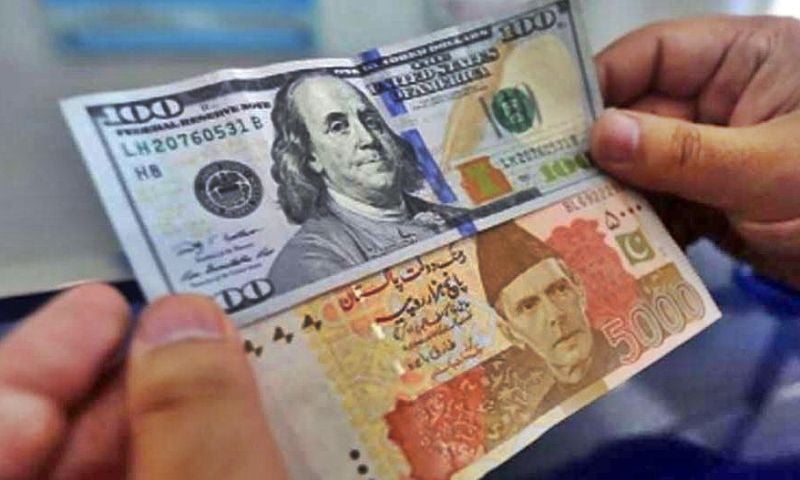
At close, the rupee settled at 278.22 per dollar, registering a slight appreciation of Rs 0.03 or 0.01 per cent compared with Friday’s close of 278.25.
The currency’s movement came against a backdrop of a steady dollar in international markets, where traders weighed evolving geopolitical risks tied to a tentative US-Iran understanding.
Currency traders also weighed renewed concerns following fresh rhetoric from Washington and Tehran over Middle East flashpoints.
Major global currencies, including the pound, euro, Australian dollar, and yen, also traded under pressure as investors leaned toward the greenback amid safe-haven demand.
In Asia, the yen hovered near multi-decade lows, reflecting broader dollar strength and expectations of a prolonged higher-rate environment in the United States, reinforcing pressure across emerging market currencies.
Rupee’s three-month trajectory
Over the past three months, the Pakistani rupee has largely moved within a narrow band, reflecting a phase of relative exchange-rate stability after earlier volatility.
Inter-bank data shows the currency trading broadly between the 278–279 range through June, compared with similar levels in May and a slightly firmer bias in April when it briefly approached the 277–278 range.
The three-month trajectory indicates a contained movement of roughly one per cent peak-to-trough, with intermittent pressure from import demand offset by steady inflows and administrative stability in the foreign exchange market.
In April, the rupee oscillated around the mid-278s, with occasional strengthening toward the upper-277 level, supported by improved sentiment and seasonal inflows.
Through May, the currency remained mostly anchored near 278.4 to 278.5, reflecting limited directional volatility.
In early June, the rupee briefly touched its strongest level in the period near 278.2, before settling back into the mid-278 range as dollar demand re-emerged in the inter-bank market.
Overall, the three-month trend underscores a phase of consolidation rather than sharp appreciation or depreciation, with the rupee appearing broadly range-bound against the dollar.
Market participants continue to watch external cues, particularly US monetary policy expectations, global oil price movements, and geopolitical developments in the Middle East, all of which remain key drivers for emerging market currencies, including the rupee.
Against this backdrop, analysts expect the rupee to remain largely range-bound in the near term, with movements closely tracking shifts in global dollar strength rather than domestic demand-side shocks.