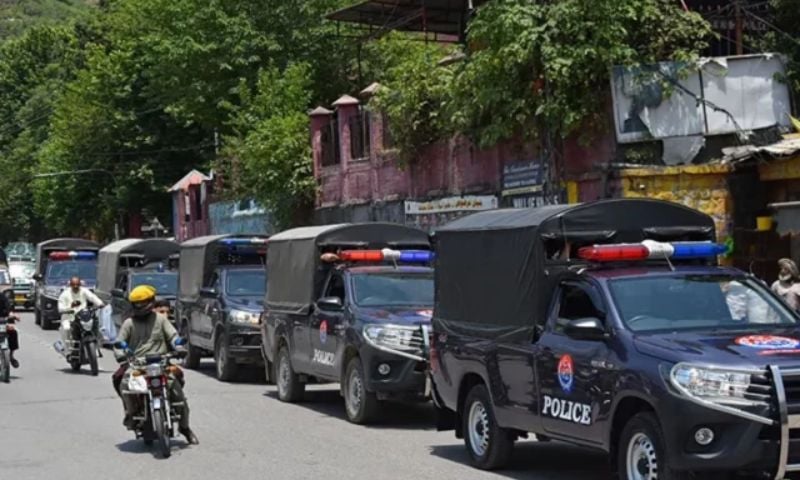
MUZAFFARABAD: The Azad Jammu and Kashmir (AJK) government on Thursday revoked earlier concessions granted in protest-related cases and reinstated 177 First Information Reports (FIRs) against members of the recently proscribed Joint Awami Action Committee (JAAC), citing violations of the October 4, 2025 agreement between the two sides.
On June 5, the AJK government declared the JAAC a proscribed organisation under anti-terrorism laws, stating that the group was “engaged in terrorism and acting in a manner prejudicial to the peace and security of the State.”
The ban followed the committee’s call for a protest scheduled for June 9. The group has previously led demonstrations demanding economic relief and political reforms, some of which turned violent in May 2024 and September 2025.
According to government officials, the JAAC breached the October 2025 accord by returning to violent street agitation instead of pursuing dispute resolution through the agreed implementation mechanism. As a result, all protest-related cases previously withdrawn under the accord have now been restored.
A formal notification issued by the Law, Justice, Parliamentary Affairs and Human Rights Department in Muzaffarabad confirmed that the decision was taken after approval by the AJK Cabinet in its 41st meeting on June 5, 2026, and endorsement by the President of Azad Jammu and Kashmir.
The notification stated that earlier orders granting relief in protest and agitation cases before various courts had been withdrawn. It directed police, judicial authorities, and administrative departments to implement the decision and initiate further legal proceedings.
Officials said the move effectively reverses concessions previously granted to individuals facing protest-related charges, maintaining that the terms of the agreement had been violated.
FIRs reinstated
The restored 177 FIRs primarily relate to demonstrations held across AJK in September and October 2025, when the JAAC launched a movement demanding governance and constitutional reforms. These protests escalated into violent clashes with law enforcement agencies, resulting in at least nine deaths, including three police personnel.
Key demands at the time included the abolition of political privileges, removal of 12 reserved refugee seats in the AJK Legislative Assembly, and reforms to the quota system.
Following the unrest, both sides reached a broader understanding in October 2025, under which a high-level committee was formed to examine contentious issues, including refugee representation.
In line with the agreement, the government had previously withdrawn several cases, and 177 FIRs were formally dropped through notifications issued in December 2025. A majority of the JAAC’s demands were subsequently accepted and addressed.
However, cases linked to fatalities during the unrest were retained and continue to proceed through legal channels. Authorities also noted that a proposal for a judicial commission to investigate the violence remains under consideration.
Background to renewed tensions
The latest escalation follows recent violent incidents in areas including Rawalakot, where members of the now-proscribed JAAC staged a sit-in outside the Combined Military Hospital.
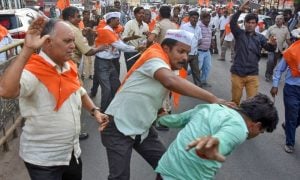
According to police, armed participants opened fire on deployed security personnel, resulting in the deaths of four personnel and injuries to around 20 others. Three JAAC-linked individuals were also killed by their own firing during the clashes. The confrontation occurred amid heightened political activity, with AJK elections scheduled for July 27.
Wider political context
The 53-member AJK Legislative Assembly includes 12 seats reserved for Kashmiri refugees who migrated to Pakistan following displacement from Indian illegally occupied Jammu and Kashmir in 1947 and 1965.
These include six seats for Jammu refugees, representing approximately 434,000 individuals, and six for Kashmir Valley refugees, numbering around 30,000. The arrangement has long been contested, with critics calling it disproportionately weighted.
The region has experienced repeated cycles of unrest, with major protests in October 2025 triggered by demands for sweeping governance reforms. At least nine people, including three police officials, were killed during those disturbances.
The JAAC had presented a wide-ranging charter of demands, including ending elite privileges, abolishing refugee-reserved seats, and dismantling the quota system. Following the unrest, both sides reached an agreement establishing a mechanism to review disputed issues, including representation in the assembly.
The political fallout included a no-confidence motion against then Prime Minister Chaudhry Anwarul Haq by the Pakistan Peoples Party, supported by the Pakistan Muslim League-Nawaz. Haq, who had assumed office in April 2023, opted to face the vote. Later, in November, Rathore was elected as the 16th Prime Minister of Azad Jammu and Kashmir.
With elections approaching and key constitutional issues unresolved, the government convened an All Parties Conference in Muzaffarabad. Most major political stakeholders participated, except the Pakistan Tehreek-e-Insaf and the JAAC, both of whom boycotted the proceedings.
The JAAC argued that participation would be futile, stating that its proposals submitted on May 30 had already been dismissed. It had suggested maintaining symbolic refugee representation until the Kashmir dispute is resolved, or replacing the 12 seats with four positions in the AJK Council chaired by the prime minister.
The conference ultimately rejected structural changes outside the existing constitutional framework, stating that only the elected assembly could decide amendments to refugee representation. The JAAC criticised the outcome as insufficient, accusing participants of prioritising self-interest over public concerns.
On June 7, the Azad Jammu and Kashmir Supreme Court upheld the government’s position, ruling that the 12 refugee seats in the Legislative Assembly are constitutionally protected and cannot be altered through administrative decisions, political agreements, or public pressure, according to a presidential reference advisory opinion.
The court reaffirmed that any change to the structure of the Assembly must follow the constitutional amendment procedure under Article 33 of the AJK Constitution. It ruled that no executive authority or extra-constitutional mechanism can bypass these provisions.
Statement by APHC-AJK leader
On Thursday, senior Hurriyat leader and Convener of the All Parties Hurriyat Conference Azad Jammu and Kashmir (APHC-AJK) chapter, Ghulam Muhammad Safi, rejected the perception that Kashmiris are anti-Pakistan, while reaffirming support for Pakistan’s role in advocating the Kashmir cause internationally.
“Through this gathering today, we want to tell the entire Pakistani nation, the leadership of Pakistan, Chief of Army Staff and Chief of Defence Forces Field Marshal Syed Asim Munir, and Prime Minister Shehbaz Sharif that those who create unrest in AJK and speak against Pakistan can only be miscreants,” he said, adding that this was not the position of the Hurriyat Conference or Kashmiris from occupied Jammu and Kashmir.