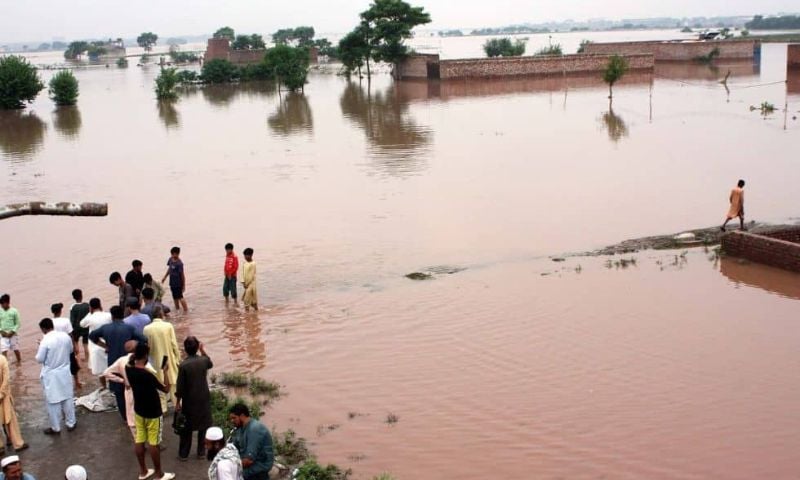
ISLAMABAD: As Pakistan grapples with rising temperatures, inconsistent weather patterns, and increasing climate-related disasters, the government has accelerated a broad agenda of reforms, investments, and policy initiatives aimed at strengthening climate resilience and promoting sustainable development.
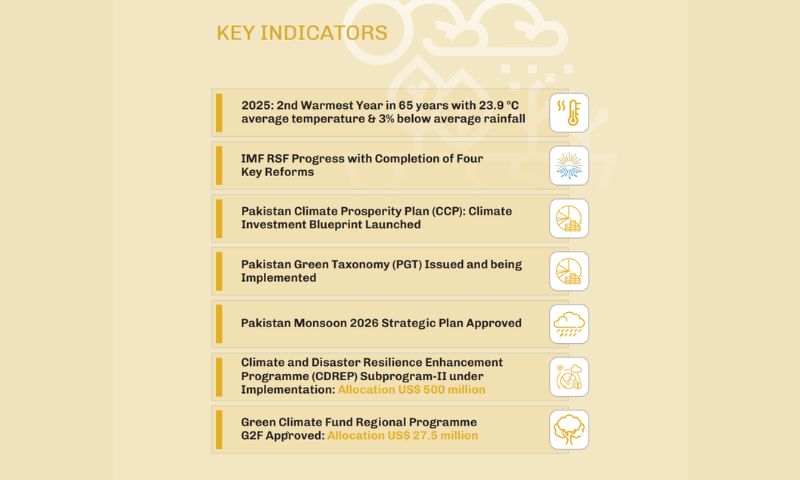
According to the Economic Survey of Pakistan released on Thursday, the 2025 was the country’s second warmest year in the past 65 years with a national average temperature of 23.9°C.
It said that rainfall stayed three percent below the long-term average, highlighting the increasing variability of weather patterns and the mounting pressure on water resources, agriculture, and livelihoods.
Against this backdrop, Pakistan has made significant progress in advancing climate-related reforms and attracting international support.
A major milestone has been achieved under the International Monetary Fund’s (IMF) Resilience and Sustainability Facility (RSF), with the completion of four key reforms.
These include the introduction of a carbon levy, development of an electric vehicle policy framework, issuance of climate-related financial risk management guidelines, and operationalisation of the country’s Green Taxonomy and Environmental, Social and Governance (ESG) disclosure guidelines.
The survey highlights the launch of the Pakistan Climate Prosperity Plan (CPP), a flagship investment-led framework designed to transform climate challenges into opportunities for sustainable economic growth, resilience, and prosperity. The plan aims to mobilise climate finance, encourage green investments, strengthen adaptation measures, and support low-carbon development across key sectors of the economy.
In another significant development, the Pakistan Green Taxonomy (PGT) has entered the implementation phase. Financial institutions and businesses will voluntarily report climate-related risks, opportunities, and taxonomy-aligned activities until June 2029, after which a phased mandatory reporting regime will be introduced. The initiative is expected to channel investments toward environmentally sustainable projects and improve transparency in the financial sector.
To strengthen preparedness against recurring extreme weather events, the government has approved Pakistan’s Monsoon 2026 Strategic Plan, a time-bound and anticipatory climate adaptation framework. The plan adopts a risk-informed approach aimed at minimizing flood-related losses through improved forecasting, early warning systems, disaster preparedness, and coordinated response mechanisms.
International climate financing continues to support Pakistan’s adaptation efforts. The Green Climate Fund’s regional “Glaciers to Farms (G2F)” programme has been approved with an allocation of US$27.5 million, focusing on addressing risks associated with glacier melt, water security, and climate-resilient agriculture in vulnerable mountain and downstream communities.
Additionally, the Climate and Disaster Resilience Enhancement Programme (CDREP) – Subprogram II, carrying a financing package of US$500 million, is currently under implementation. The programme seeks to strengthen disaster risk management systems, climate adaptation infrastructure, and institutional capacity to respond to climate-induced shocks.
The Economic Survey notes that Pakistan remains among the countries most vulnerable to climate change despite contributing less than one percent of global greenhouse gas emissions. The devastating floods of 2022, recurring heatwaves, droughts, glacial lake outburst floods, and erratic monsoon patterns continue to underscore the urgency of climate action.
Policymakers believe that integrating climate considerations into economic planning will be critical for safeguarding development gains and ensuring sustainable growth in the years ahead.